
Sometimes when I’m booked to do some research and appear on the telly I discover unexpectedly disturbing stories. In the summer of 2023 I turned up one of the most gruesome stories I’ve ever worked on.
The details were horrific, and after a five hour journey on various trains from the South Coast to the North of England I revealed the story to a shocked TV host. This was the story of The Congleton Cannibal.
Hue and Cry
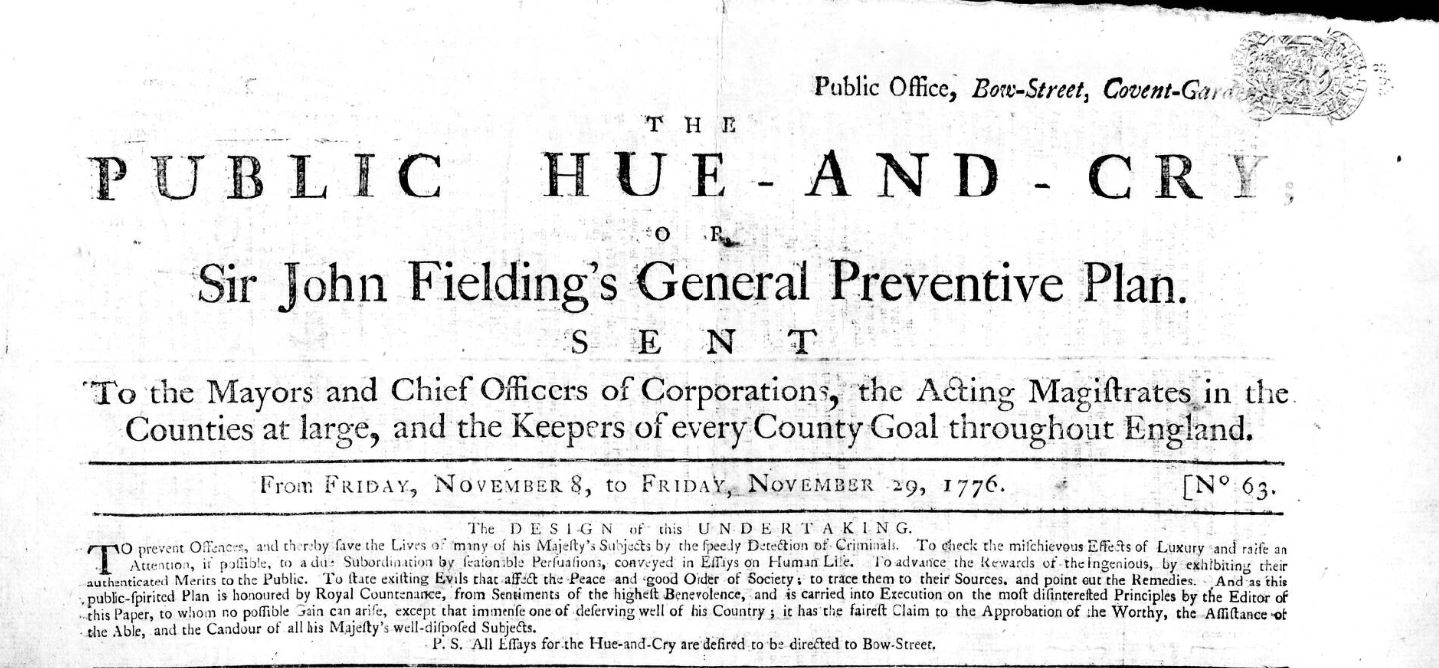
On 8th November 1776 The Police Gazette or “The Hue and Cry” as it was called, published the fact that one Samuel Thorley, a 60 year old Butcher by trade, born in Congleton was transported to detention at Chester Castle for murder. However this bland statement concealed a world of horror perpetrated by Samuel Thorley more than one hundred years before Jack the Ripper.
Anne Smith; Ballad Singer
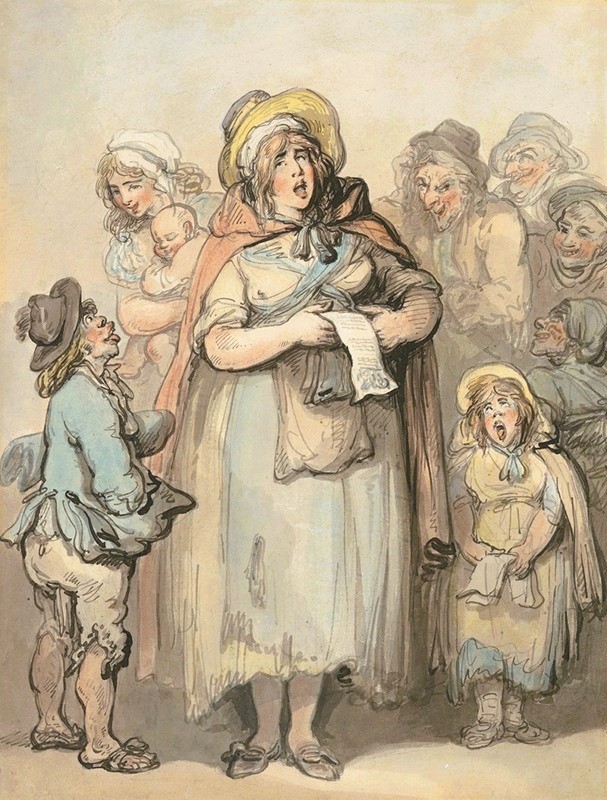
Anne “Nannie” Smith was described as a 22 year old woman, she was poor and had for a number of months sung ballads in Congleton and had supplemented this with collecting rags for resale, and any other work she could find to pursue an honest living. Anne was one step away from complete destitution, singing Ballads in the street was effectively busking, a way of begging without actually illegally begging, providing a service, meaning that she could avoid being arrested as a vagrant and beggar, and if people wanted to give her money for the pleasure of hearing her songs, who was she to refuse it?
The best way for her to make money as an itinerant Ballad Singer would have been to perform in the market at Congleton, where crowds of passersby would hear her, and the local tradesmen and farmers, after a profitable day, would be likely to spare her a pence or two, especially if they had had a good drink with their takings. She would have needed to be a beautiful singer to make enough to survive in this manner, and her voice would have made her known to many in the area.
On one cold Autumn Saturday in 1776 Anne took to the road through the woods, across the heathland, and past the wetlands brooks and river that would take her to Congleton to set up and sing in the Marketplace. It was her only direct route to the town, and would take her close to the local Church of St Peter’s. Unbeknownst to her this would seal her terrible fate.
Samuel Thorley; Butcher’s Follower and Gravedigger

Also travelling the same road was a man named Samuel Thorley. He was a surly older man (aged about 58), ‘of very furious temper and dangerous to affront or banter’. Samuel Thorley generally worked as a Butchers’ Follower meaning that he was untrained and too old to be an apprentice, so he cut and jointed carcasses with cleaver and butcher’s knife ready for the finer cutting and dressing of the meat by the butchers.
Samuel also took on grave digging and labouring, so the route to Congleton Market and the lie of the land around the Church of St Peter’s were therefore well known to Samuel Thorley, from long hours digging the graves of the dead when the local Butchers didn’t need his services.
A Bloody Discovery
The next day, Sunday, after Church Service, two young men passing the Howty Brook in Priesty Fields spied a woman’s blue petticoat floating in the water, they went to investigate, and found what looked like a novelty was in fact the first clue to a horror. As they searched the area the men came upon bloody innards floating in the brook, disjointed arms and legs, the horror continued with more body parts, a real Hue and Cry went up and more locals came into the field to help with the search; severed breasts and a tongue were found, and the mutilated, eviscerated, torso of a woman was recovered from the brook. An old woman who was present, upon seeing the men recover the severed head of a woman, looked at the face and exclaimed:
“It is poor Anne Smith, the Ballad Singer!”
All of these body parts were transported with haste by the men to a nearby barn to try to make sense of what was found. It soon became apparent that some muscular parts of the body such as the calves had been neatly removed with a knife and and were missing.
The Search for the Killer
The whole area was scoured for the perpetrator, villagers crossing the moorlands, tramping through the forests, and along the brooks and the River but no sign was found, and no one had seen anything untoward. Despite the search no sign of a murderer was found.
Speculation was rife in the town, with many theories as to who had killed poor Anne, the neighbourhood was in uproar. Samuel Thorley a “Butcher’s Follower” was at the forefront of the search making loud vocal and dire threats against whoever the perpetrator was, should the man be caught. However speculation started to take root concerning the expert dismemberment of poor Anne Smith, one canny local remarked that the atrocity had been carried out with such expertise that the man who did it must be, not just a butcher in the emotive sense, but also a Butcher in terms of his profession.
Once these rumours started to take hold, Samuel Thorley took his blood stained shirt to a local woman to have it laundered, and remarked to her that he felt that people would blame him for the terrible crime, and that he had decided to up and leave stating that he was “going to Leek, out o’ th’ noise” inadvertently he had invented a phrase that would take root and still exist over 200 years later.
Suspicions raised, the washer woman contacted the local Constable of the Parish . Samuel’s sudden flight, instantly put suspicion on him; he was a Butcher’s Follower, well versed in dismembering carcasses, and he had a reputation for a bad temper, bizarrely the Butchers he had worked for remarked that he had a fetish for eating raw meat from the carcasses he butchered, much to their bemusement and distaste. Putting all these factors together, and still looking for the missing parts of the body, as well as for Samuel Thorley himself, the search shifted to barns and premises in the area.
The search did not turn up Thorley, but did take in the Cottage where Thorley had been lodging. Once there, his elderly Landlady told a story of Thorley returning to the cottage on the day of the murder, wearing his blood stained butcher’s apron and wet from his boots to his waist.
Pork for Breakfast
Once in the cottage he had produced some “pork” from his apron and handed it to his landlady to cook ready for his breakfast in the morning. Interested in where he had got two such nice cuts of pork his landlady questioned him about it; he said that he had met a butcher on the road who had given him the meat from a pig that had died, Thorley then asked that she boil the ‘pork’ for him so that he may eat it for breakfast in the morning.
The following morning the landlady served Thorley his ‘pork’ which he duly ate part of, only to be ill from the eating of it, and so informed his landlady to throw the rest away. However, the landlady’s daughter disdained this waste and instead decided to keep the pork to be rendered down for its fat.
Having heard the story, the men seeking Thorley asked the landlady to produce the meat, which she duly did, it was conveyed to a local surgeon for his opinion. Noting the consistency of the the flesh and the lack of bristles, the surgeon passed his opinion that it was not pork, but rather, human flesh, in fact the calf muscle of a human leg. This closed the case on Thorley’s guilt, and the race was on to track him down.
Capture

Within a very short time Thorley was tracked down and captured. When confronted with the evidence, he made no argument and admitted that he was responsible for the gruesome murder. He had met Anne Smith on the road to Congleton, and had persuaded her to leave the road and go into a hollow in the heathland near the brook, out of site of the road.
It is not clear if he had done this through use of force, or guile, but once concealed from the road, he drew his butchering knife, at this point there was a suggestion that Annie got hold of the knife and ran off with it along the brook, Samuel claimed “laughing and taunting him”. He said that this made him angry, he chased her, took back the knife and cut her throat.
For me this account was just a very poor attempt to excuse his act of violence. If Annie had got the knife from his hand, it is much more likely that she would have ran screaming. Perhaps in Samuel’s warped mind he took this loss of control as an affront and a taunt, but overall it seems unlikely that Annie could have relieved a large violent man of his knife.
In a frenzy Samuel Thorley then eviscerated her as if she were an animal carcass, beheaded her, and then dismembered her, before butchering her corpse to get the cuts of ‘meat’ he desired. Most tellingly he cut her tongue out, this would seem to me to show a cruel and sadistic symbolism, to have robbed a ballad singer of her one known talent; her singing voice.

Having done this he threw the various parts of her body into the brook in the expectation that the flow of the water would take the body into the nearby river and away from the area.
Thinking that he had safely disposed of the evidence, he secreted the pieces of Anne’s body in his butcher’s apron, and made his way to his lodgings. The fact that he was covered in blood would not have startled anyone as, being a Butcher’s follower, this was not unusual, although being wet through from boots to waist was strange enough to have been remembered by his landlady.
Incarceration and Trial
His captors took him to the lockup in Congleton Town Hall, before the was transferred to Chester Gaol for incarceration and trial.
Once at Chester Castle Samuel Thorley was imprisoned, and after four months in a cell was so indifferent to his situation, and displayed such a lack of emotion and responsiveness to questioning, that it was decided to test him to see if he had the intelligence to stand trial, the test was basic, he was tasked with counting a score of nails which he duly did and was pronounced fit for trial.
The trial was a formality, Samuel Thorley openly admitted what he had done, the detail was gone over in court, and the outcome was a foregone conclusion. He was sentenced to be hanged, and after to be gibbetted on the heath near the place of his crime outside of Congleton. However the court was curious as to why Samuel Thorley had killed Anne Smith and eaten part of her, his chilling reply was simply;
“Having frequently heard that human flesh resembled young pig in taste, curiosity prompted him to try if it was true.”
Execution
Contemporary accounts emphasise his complete unconcern and indifference to both his trial and his fate, his only concern was to ask the executioner if he intended to strip him after his execution, when reassured that that was not the case he appeared somewhat satisfied.

On 10th April 1777 sentence was carried out, and Samuel Thorley’s body transported to the Heath outside of Congleton. There was a report that on the way the carter transporting the corpse had become drunk and managed to lose the body from the back of his cart, which required a search party to go and recover it.
Gibbetting and Public Display
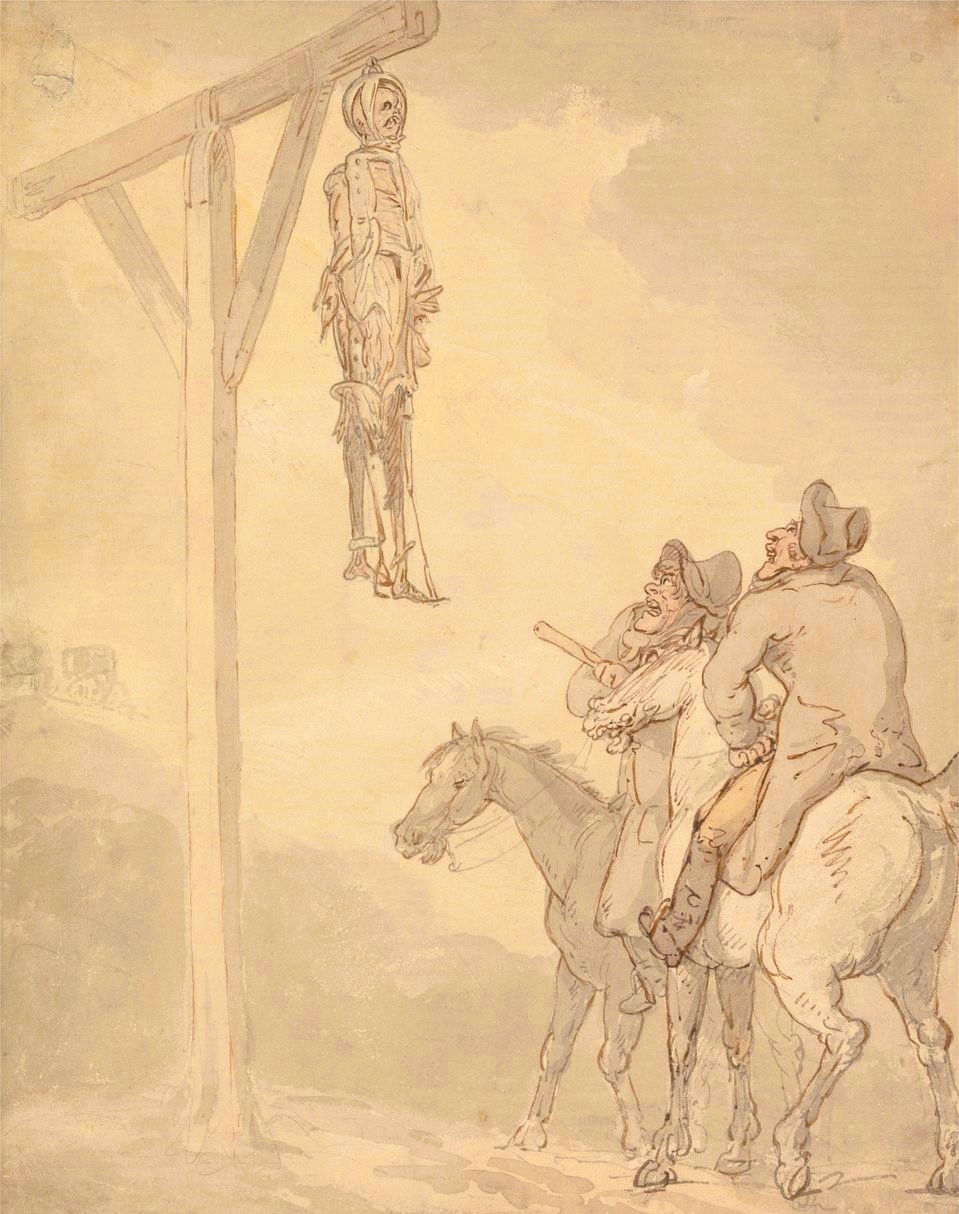
Once safely at the heath, Samuel Thorley’s body was hoisted into a metal cage and left to rot. This did not go unnoticed in the area and his gibbetted rotting corpse became a local attraction, the Headmaster of the local Grammar School even gave his charges the afternoon off after dinner to go and see Thorley in his gibbet.
The story of the gibbetting and its location was verified by another record I found, that of a special allowance being made, by way of a “Sheriff’s cravings”, to former Sheriffs of the County of Chester for their expenses in gibbeting the bodies of criminals condemned to be hung in chains, provided that the gibbetted in parts of the County outside the limits o f the County of the City of Chester, the executions having taken place within the latter . Thus in 1 777, Peter Kyffen Heron, the County Sheriff, was allowed to claim the expense of gibbeting Samuel Thorley at the West Heath, near Congleton.
Samuel Thorley Psychopath
Samuel Thorley showed all the deranged, cold, calculation of a psychopathic killer. He was a big man, a quick tempered and violent man, a bully, lacking in a sense of humour and human warmth, like many modern psychopaths he graduated from butchery of animals to butchery of a human being, and he was even cited by an early vegetarian in a medical journal as representing the ultimate in how the eating of meat fired up unnatural violent passions, and indeed he was seen as strange by the butchers he worked with due to his penchant for eating uncooked scraps of raw meat.
Many theories have been put forward in the past as to why psychopaths choose certain victims, but studies of the testimony of the psychopaths themselves show that there is rarely an underlying plan to choice of victim, on the contrary, the evidence shows that they tend to pick their victims purely based on opportunism, this is amply shown in Samuel Thorley’s case; Anne Smith was simply a young woman on her own, whose path crossed his, and an opportunity presented itself for him to waylay her in a place where there were no witnesses.
The violence and fury of his attack was probably the expression of a mixture of anger and excitement from causing pain, and his skills as a Butcher’s Follower both allowed him to try to dispose of the body and exert further “ownership” of Anne Smith by taking her apart.
His reason for taking away parts of her to eat, fits in with the standard behaviour of murderous psychopaths, that of trophy taking, and the taking of parts of poor Anne Smith to eat was the ultimate in trophy taking and ownership.
His surliness and indifference, is another psychopathic trait, he was emotionally remote, and just accepted his situation without emotion. His explanation as to why he had eaten Anne Smith’s flesh – that he simply wanted to see if her flesh tasted like Pork, was probably true to some extent, but acted as a conveniently truthful, but not full explanation, he undoubtedly did want to find out if the saying was true, however the inclination no doubt went much deeper as discussed above, however this was probably too difficult for him to put into words, and he had no interest in discussing it.
The Taint of Evil Lived On: Memes
One thing I’ve been asked is; “Could something of Samuel’s evil have lived on in the area?” The answer is yes, to some extent and in a certain way, for it lived on in both Memes and Genes.
We have already seen that Thorley’s remark of “Going to Leek, out o’ th’ noise” still lives on today in the area, although few knew what the origins of the saying were. But more than this, the memory of the terrible crime was passed down through the generations, and in the process the horror of what happened to poor Anne Smith was lost and replaced by a type of sadistic humour around the deed, as over 100 years later, in November 1885, just a few years before Jack the Ripper was murdering and mutilating women in London’s East End, the extremely popular humorous Penny Paper ‘Ally Sloper’s Half Holiday’ reprinted the story as a macabre item.

Retelling the story in itself was not that strange, but aiming it at an audience of mainly young men and boys, perhaps was, especially in a comic context. But then the paper went on to add a truly strange and somewhat distasteful addition to it, said to be reflecting two boys discussing it:

Every few years the story is resurrected in the local press, as late as 1954 it was reported in a local newspaper that the ghost of Annie Smith haunted the Howty Brook area. But then again the tragedy and horror of the story was often lost in a jokey irreverent tone, as in this headline:

The Taint of Evil Lived On: Genes
Perhaps more concerning was a weird coincidence I came across, as in 1833, just over half a century after Annie Smith’s murder, another man named Samuel Thorley, said to be the Congleton Cannibal’s Great Nephew, murdered a 21 year old woman at Northwich. She again was much younger than Thorley, and again he ruthlessly cut her throat almost severing her head. He then calmly handed himself in to the authorities making a complete and frank confession. His reason for killing her was that she had rejected his romantic advances.
This would have been strange enough as a coincidence, but 29 years later in 1862, a Richard Thorley cut the throat of a young woman he had been stalking and harassing for some time, and became the last man to be publicly executed in Derby.
Long Journey Home
The story of the Congleton Cannibal was a strange and chilling one, and having discovered and related it, I was glad to be on a train heading back to the coast at the end of it, I had five hours on the train journey home to think about the sadness of not knowing more about poor Annie Smith the Ballad Singer, lost to history by the actions of a psychopath.
Postscript
You can see me talking about the story of Annie Smith and the monstrous Samuel Thorley on Series 3 Episode 6 of “Celebrity Help! My House is Haunted!” on Discovery + and Really TV.

 Travelling Through Time to Trace Your Ancestors
One Reply to “The Congleton Cannibal”