

Having spent my family holidays every year on the Isle of Sheppey in the Thames Estuary as a child, it was great fun to be invited back there to do the historical research for Celebrity Help! My House is Haunted! Episode on Discovery + here if you have a subscription: https://www.discoveryplus.com/gb/video/celebrity-help-my-house-is-haunted-discovery-uk/shaun-williamson

Considering Sheppey is so close to London, it is surprising how long it takes to get there by Train, nearly five and a half hours from the South Coast!
Series now available on the Really TV Channel from May 1st.
You can catch the programme on Discovery + https://www.discoveryplus.com/gb/show/celebrity-help-my-house-is-haunted-discovery-uk
But the Isle of Sheppey itself has a fascinating and surprisingly macabre history, as we shall see.
Beowulf and the Monsters in the Marshes
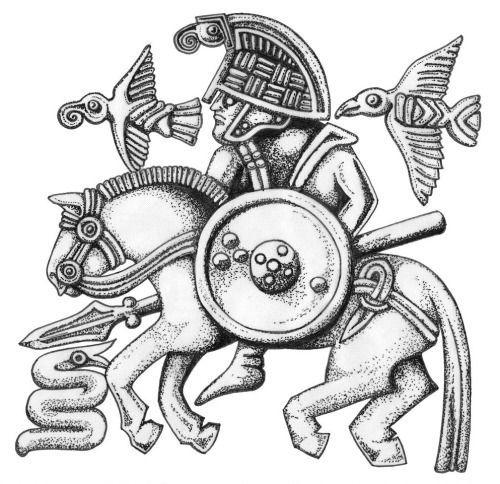
The Epic Poem Beowulf is the oldest in the literature of the English Language. There is a recent theory that speculates that it was actually written or possibly set on the Isle of Sheppey at an area of Marshland called Harty, where there was a Ferry across to the mainland across the Swale that separates the Island from the Rest of England.
The poem tells of a monster named Grendel who emerges from the marshes at night to attack, kill, and carry off the warriors sleeping in the Danish Lord’s hall of Heorot. No one could defeat the monster until a warrior from the kingdom of the Geats from Southern Sweden arrived and offered to help.
Beowulf laid in wait in the hall, and when the monster took hold of him, Beowulf gripped Grendel’s arm so tightly that when Grendel attempted to flee, Beowulf tore the monster’s arm clean off.
Grendel fled back to the marshes where he bled to death. The following night angry at the death of her son, Grendel’s mother attacked Heorot, Beowulf pursued her from the hall into the marshes until she dived into a dark deep pool and disappeared. Unperplexed Beowulf dived in after her and discovered an underwater cave where a desperate underwater battle took place, Beowulf only being victorious when he found a giant’s sword in the cave that had the power to kill the monster.
So Sheppey’s history is tied back into the Dark Ages and in Arthurian times when the Jutes (from Denmark) ruled Sheppey, and Harty was actually called Heorot in the C11th – the name of the Hall in Beowulf.
Vikings!

Between the years 811 and 855 Sheppey was repeatedly seized by Vikings who used the Island as a relatively safe overwintering place, ready to launch their raids up the Thames and around the coasts in the spring. Unfortunately they caused great famine among the people of the Island when they refused to eat the salted meat that the locals subsisted on over winter, and instead, slaughtered their breeding flocks of sheep.
In 1016 during the war for the throne of England fought between the Viking Cnut and the English King Edmund Ironside, Cnut seized the Island when he was repulsed by the English. Thirty six years later in 1052, when Earl Godwin, one of Cnut’s former allies, was rebelling against Edward the Confessor, ravaged part of the Island. After the Norman Conquest, Alnod Cilt, also known as Jordanus de Scapeia, the son of King Harold Godwinson and his mistress Edith Swannaschells (Edith Swanneck) and Grandson of Earl Godwin who had ravaged the Island in 1052, was allowed to live there after the Norman Conquest.
Going Dutch

As if Sheppey hadn’t seen enough death and destruction, in 1667 the Dutch Fleet sailed into the Thames Estuary and attacked Sheerness (Charnesse in Dutch) and occupied the Island for a week, much to the consternation of the inhabitants, who at least had the option of disappearing into the Marshes like Grendel for safety.
Shanties and Prison Hulks

Having seen the vulnerability of Sheppey, and how the Island could be used to control the entrance to the Thames, the Hanoverian Kings decided to fortify the Island and build a Naval Base there. Around this Navy Base grew up “Blue Town” at Sheerness. It was partly a shanty town built by Labourers from the Naval Dockyards, a rough neighbourhood noted for its insanitary conditions.
At that time Great Britain was at war with France and, being successful, lots of French prisoners were being brought back to England, and the cost of building new prisons like Dartmoor, which was built to house French Prisoners, was prohibitive, a cheaper solution was needed, and the Government came up the idea of using old battle ships, or hulks as they were called, to hold the French prisoners off the coast. A major site for these was along the Thames Estuary and in particular off of Sheppey. Some older abandoned hulks were squatted in by poor Labourers from the Dockyards, whole families living on them, and in 1801 over 180 Families were onboard just four hulks.
The Hulks were aptly described by Charles Dickens in Great Expectations:
“I was looking at the ships with a sense of vague curiosity and hope, and I was thinking how strange it was that the ships should come up and go down, and that the river should flow on, and that the prison-ships should lie among the other ships, and that the river and the ships and the tide should all be moving on so grandly, and that the prison-ships should be still.”
Later the ships were used to house criminals before they were shipped to Australia, during the 1820s Bellerophon housed 320 boy prisoners at Sheerness. Later in the Crimean War Russian and Finnish Prisoners held in the Hulks there.

Bones and Ghostly Lights from Deadman’s Island

From the time of the 1666 Great Plague of London, ships coming to London from countries known to have plague would be required to anchor off Burntwick Island, and any crewmen who died of disease were buried on Deadman’s Island.
The Prison Hulks became centres of contagious diseases in the early days, and the problem became worse when quarantined ships with Cholera and other infectious diseases onboard were anchored off of Burntwick Island as world trade with London increased.
The dead from the Hulks and quarantine ships were buried in graves in the mud of Deadman’s Island. Because of the actions of the tides washing through the estuary, the coffins were eventually exposed, and then bones of these disease-ridden corpses have been eroding out of the graves into the sea and washing up on Sheppey’s beaches, and still do to this day, there are thought to be hundreds of years of buried bodies on Deadman’s Island so there would appear to be little end to the grisly beach finds.
So many bodies had been buried on Deadman’s Island that in 1860, a few years after the Russian and Finnish prisoners were held on the hulks, a book called “The Boys Playbook of Science” remarked that there was an outbreak of ghostly lights on the Island Will-o-the-wisps ” :

Pirates and Smugglers
Sheppey was the perfect location (ironically considering the proximity of the Naval Base) for river pirates and smugglers to conduct their business. The masses of inlets and mist shrouded marshes gave ample opportunity for the evasion of Customs Men. Dickens once again gives a description of the environment:
“The marshes were just a long black horizontal line then, as I stopped to look after him; and the river was just another horizontal line, not nearly so broad nor yet so black; and the sky was just a row of long angry red lines and dense black lines intermixed. On the edge of the river I could faintly make out the only two black things in all the prospect that seemed to be standing upright; one of these was the beacon by which the sailors steered – like an unhooped cask upon a pole – an ugly thing when you were near it; the other, a gibbet, with some chains hanging to it which had once held a pirate.
Myths and legends were likely spread by criminal gangs to ensure casual prying eyes would not chance a visit to Deadman’s Island, and other marshy areas of Sheppey. Bones on the beaches gave credence to tales of the skeletons of dead disease ridden sailors, long dead foreign prisoners of war, and executed criminals, clawing their way out of the mud. This gave the lawbreakers free run for shifting their contraband and stolen goods from the Island to the powerful smuggling gangs that frequented the North Kent Coast from Faversham to the taverns of Deptford on the outskirts of London.
Changing Island
It wasn’t till 1860 with the coming of the Railway and road link via the Kingsferry bridge that some of the mystery of the Island started to dissipate and in a complete change it started to become a destination for holidaymakers and day trippers from London.
A long way from the precarious and unreliable ferry from the mainland, that the artist Hogarth had to use 130 years before!


 Travelling Through Time to Trace Your Ancestors