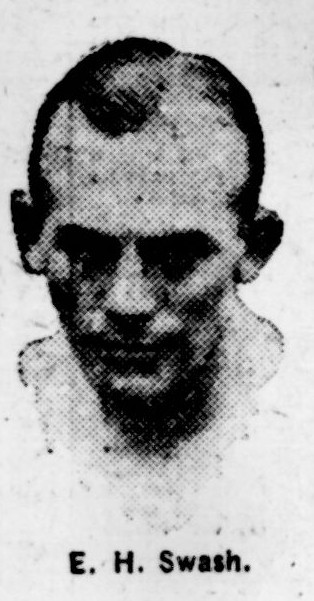
Joe’s Great Granduncle The Forgotten Two Times Featherweight Boxing Champion
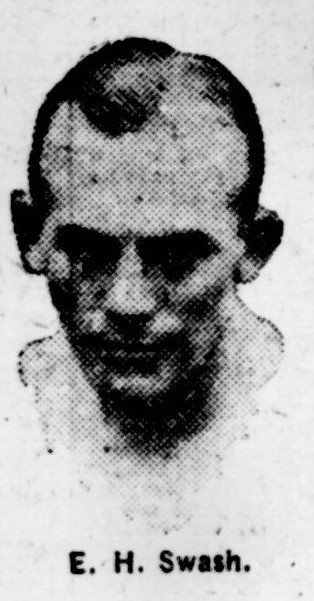
Origins of the Family
The Swash family name comes from the East of England, probably originating in the Coastal and Riverine Marshy areas of the Wash and East Anglia. It’s origins are not clear, but probably are associated either with “The Wash” or the area lapped by waves giving the description “swash” for the noise made by a wave over shingle. So possibly a family from The Wash or one that lived in the tidal areas of the east of England. There is a less likely derivation of the name, and that is from “Swash” referring to a sword stroke, and associated with a “Swash Buckler” i.e. someone of fights in a flamboyant way with a sword and buckler; a sword and buckler being the weapons of choice for civilians in England for three hundred years between about 1250 and 1550, so a Traveller, Guildsman, or a Ruffian, would default to carrying and fighting with this combination of arms.
Whatever the derivation, Joe’s Family were living in Norfolk in and around Norwich, in the Horsham St Faith area to the north of Norwich in the early 1700s.
BY the middle of the 1800s the Family had moved from the country to Whitechapel in London during a building boom where John the father of the family found work as a Carpenter.
Jumped forward three generations and we find Joe’s Great Granduncle (his Great Grandfather’s brother). He was the son of Robert a China and Glass warehouseman and foreman, who doubled as a Travelling Salesman.
Ernie in WW1
Ernie was born in 1898, and first gets noticed in the records when his military story begins at Pembroke I, the Royal Navy’s vast shore establishment at Chatham. Despite the name, Pembroke wasn’t a ship at all but a sprawling administrative and training complex — the gateway through which thousands of wartime recruits passed before being sent to sea or to depot ships around the country.
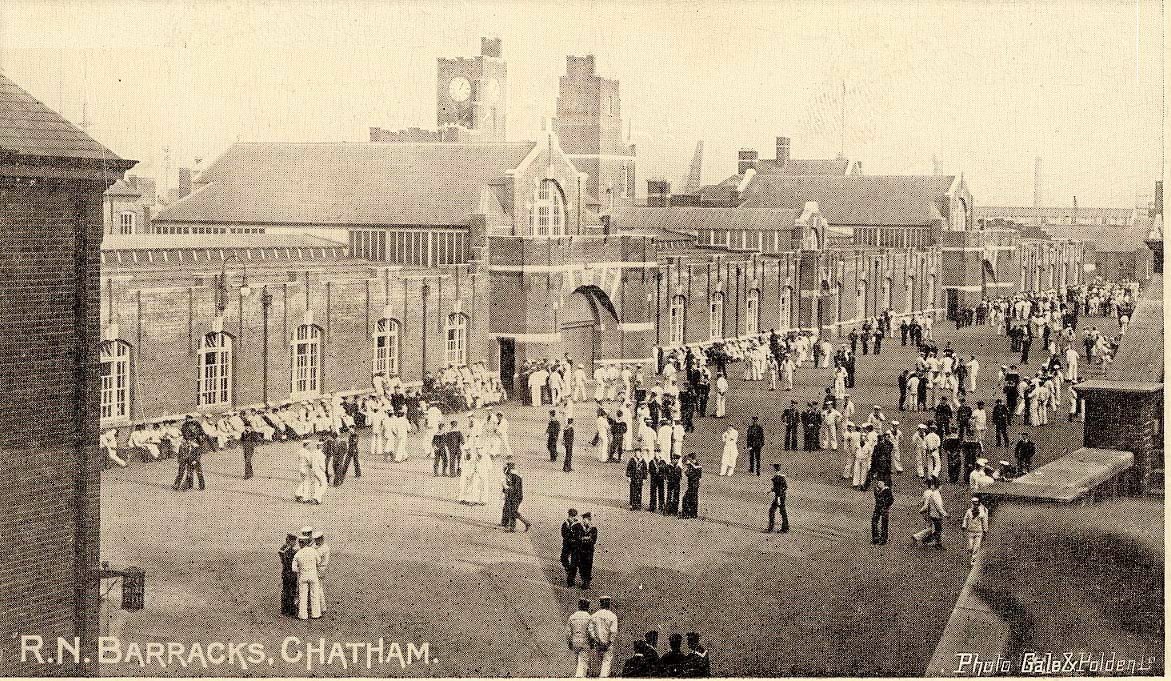
Ernie arrived there as an 18 year old recruit and was initially rated Stoker 2nd Class, the entry‑level grade for men destined for the engine‑room. Pembroke I handled everything: his medical examination, his kit issue, his initial training, and the formalities of his engagement. It was here that he learned the basics of naval discipline, boiler‑room safety, and the routines that governed life in the lower deck.
This early period at Pembroke I wasn’t glamorous, but it was foundational. The Navy used the Chatham base to turn raw civilians into functioning ratings, and Ernie’s record reflects that process: he was assessed, trained, and then held on the books until the Admiralty decided where he was needed. Once his initial training was complete, he was drafted out to his next posting — the depot ship HMS Crescent — beginning the long wartime chapter that would keep him in uniform until 1919.
When Ernie was shipped out to HMS Crescent on 13 July 1917, he wasn’t joining a ship heading into action. By that stage of the war, Crescent was long past her days as a sea‑going armoured cruiser. Built in the 1890s and already obsolete by 1914, she had been withdrawn from active fleet service and reassigned to a very different role.
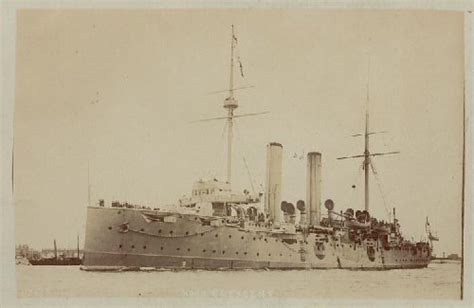
From 1915 through to the end of the First World War, Crescent served as a stationary depot ship at Invergordon, the Royal Navy’s major northern base in the Cromarty Firth. She functioned as a floating administrative hub and support ship, so part barracks, part drafting office, part training space, and part overflow accommodation for the destroyers, patrol craft, and shore establishment operating from the base.
But Ernie used his time well, honing his boxing skills and took every opportunity to “have them on” to all comers in the ring.
Civvie Street
Once back in Civilian life Ernie didn’t entirely cut ties with the armed forces, in 1921 we find him and his older brother Tom working for the Royal Army Service Corps (RASC) Motor Transport Division in Deptford Cattle Market, Ernie as a Clerk and Tom as a Labourer. Deptford Cattle Market was a massive centre for the import of live cattle from around the world, particularly British Colonies and the Americas, and supplies were still needed for the armed forces fighting in Russia against the Bolsheviks, and for men serving who hadn’t yet been de-mobbed. The interesting thing is that in the 1921 census Ernie and Tom are in a boarding house in Margate Kent, and in a fortunate turn of events the two women they would marry within the year were also staying there, whether by plan or accident can only be guessed at, and left to the reader’s imagination.
Back in the Ring
In the smoky boxing halls of interwar London, where the air hung thick with sweat, cigarette haze and the roar of working‑class crowds, a young Islington featherweight named Ernie Swash carved out a career that deserves far more attention than the record books give him.
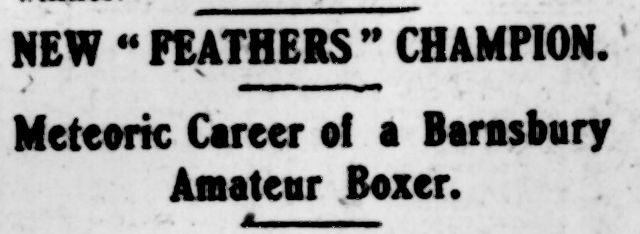
Born into the tight terraces of North London, Ernie came up through the amateur ranks with a reputation for sharp footwork and a stubborn, almost mule‑like refusal to back down. Boxing for Clapton Federation ABC, he didn’t just win — he dominated. In 1922 and again in 1923, he captured the English National Amateur Featherweight Championship, the most prestigious amateur title in the country. Winning it once marked you as elite. Winning it twice meant you were something special.
When he turned professional in 1924, promoters clearly thought the same. They threw him straight into the deep end. His opponents included future champions like Jack “Kid” Berg, who would go on to become one of Britain’s most celebrated fighters. Swash fought at the legendary venues of the era: Premierland in Whitechapel, The Ring on Blackfriars Road, and even the hallowed National Sporting Club in Covent Garden — a sign that he was taken seriously.
His professional record — 1 win, 7 losses, 1 draw — doesn’t tell the real story. These weren’t soft touches. These were the toughest, hungriest fighters on the London circuit, many of them destined for titles. Ernie was a classic small‑hall professional: the kind of fighter who kept the sport alive, who filled out cards, who tested rising stars, who fought because fighting was what he knew.
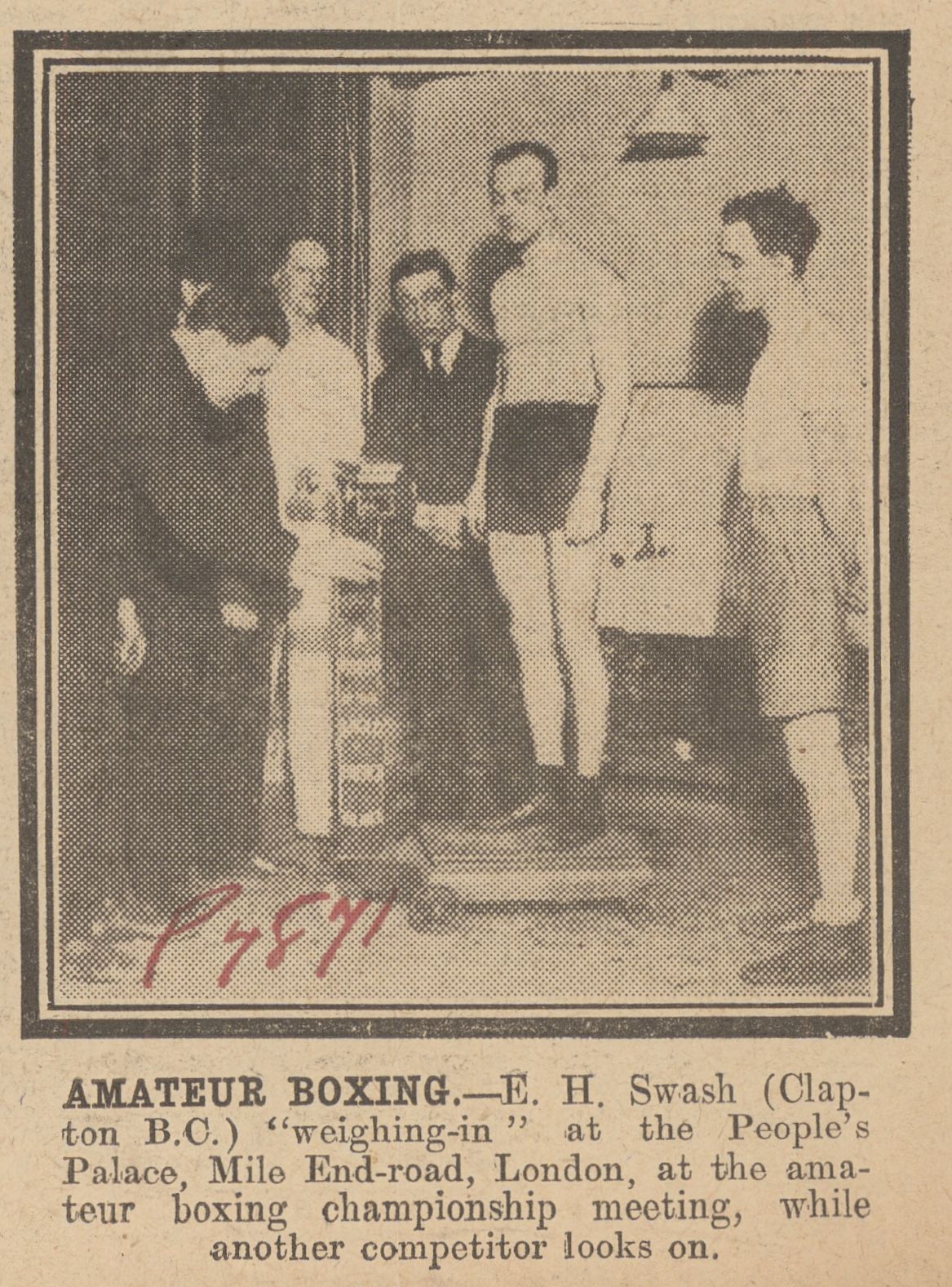
He was a double national champion who stepped into the paid ranks at the hardest possible moment, in the hardest possible city, against the hardest possible men. And that makes him exactly the kind of forgotten Londoner whose story deserved to be told.
Ernie lived to the ripe old age of 88 and his wife to 84.
Ernie’s brother Tom and his wife who had been away with Ernie and his girlfriend in the Hotel in Margate, were unluckier in life; in 1941, twenty years after having fun in Margate, Tom and his wife were killed during a German air raid on London during the Blitz. Life can be like that, you never know which way the dice of fate will roll.

 Travelling Through Time to Trace Your Ancestors