Hidden in Plain Sight:
Exploring the history of Alresford’s
Pulpo Negro Restaurant
As it’s St George’s Day, I thought I’d publish a little tale that ties one of my favourite Restaurants, in a favourite Town, to St George and a Mystery inscription.
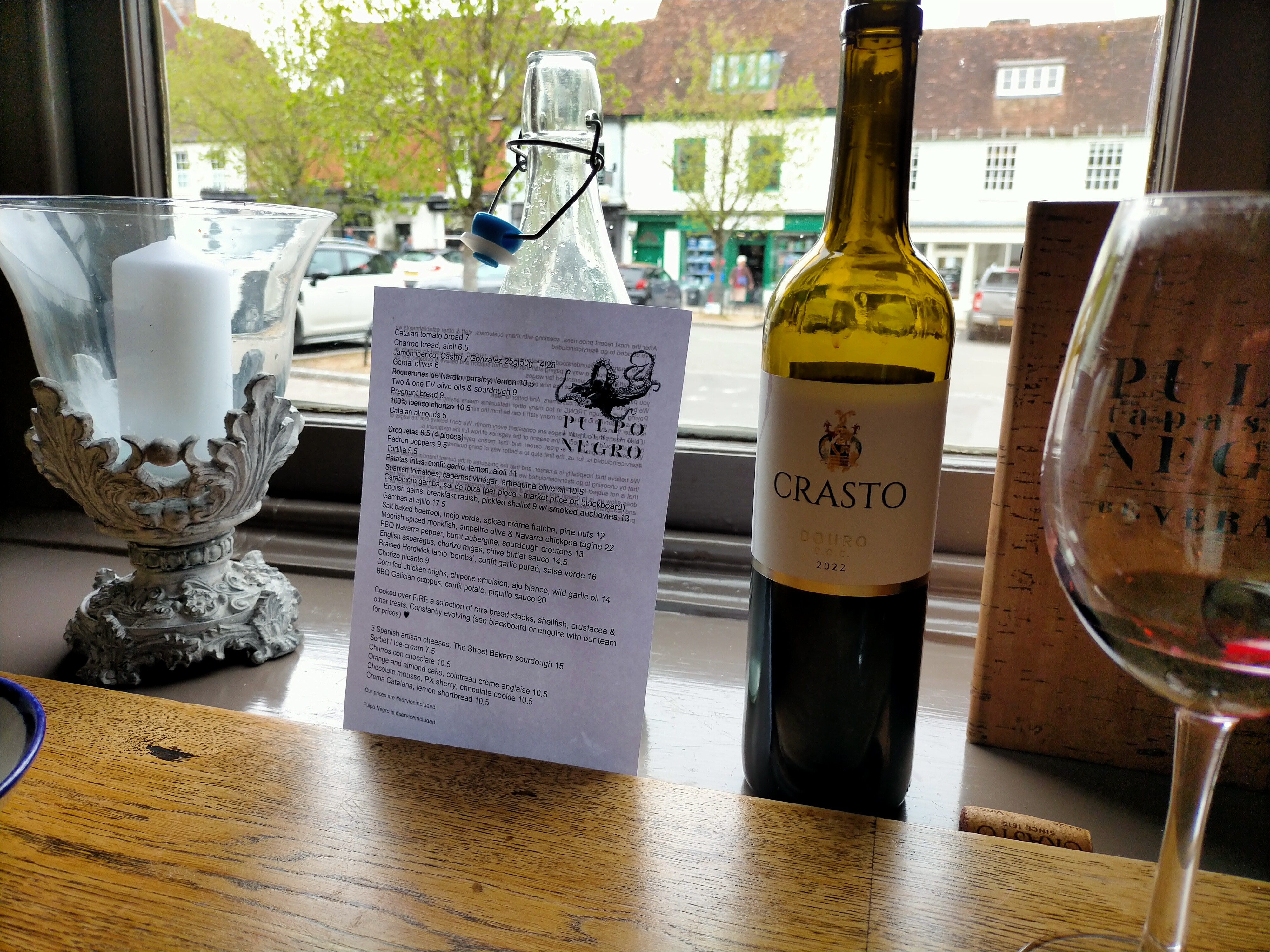
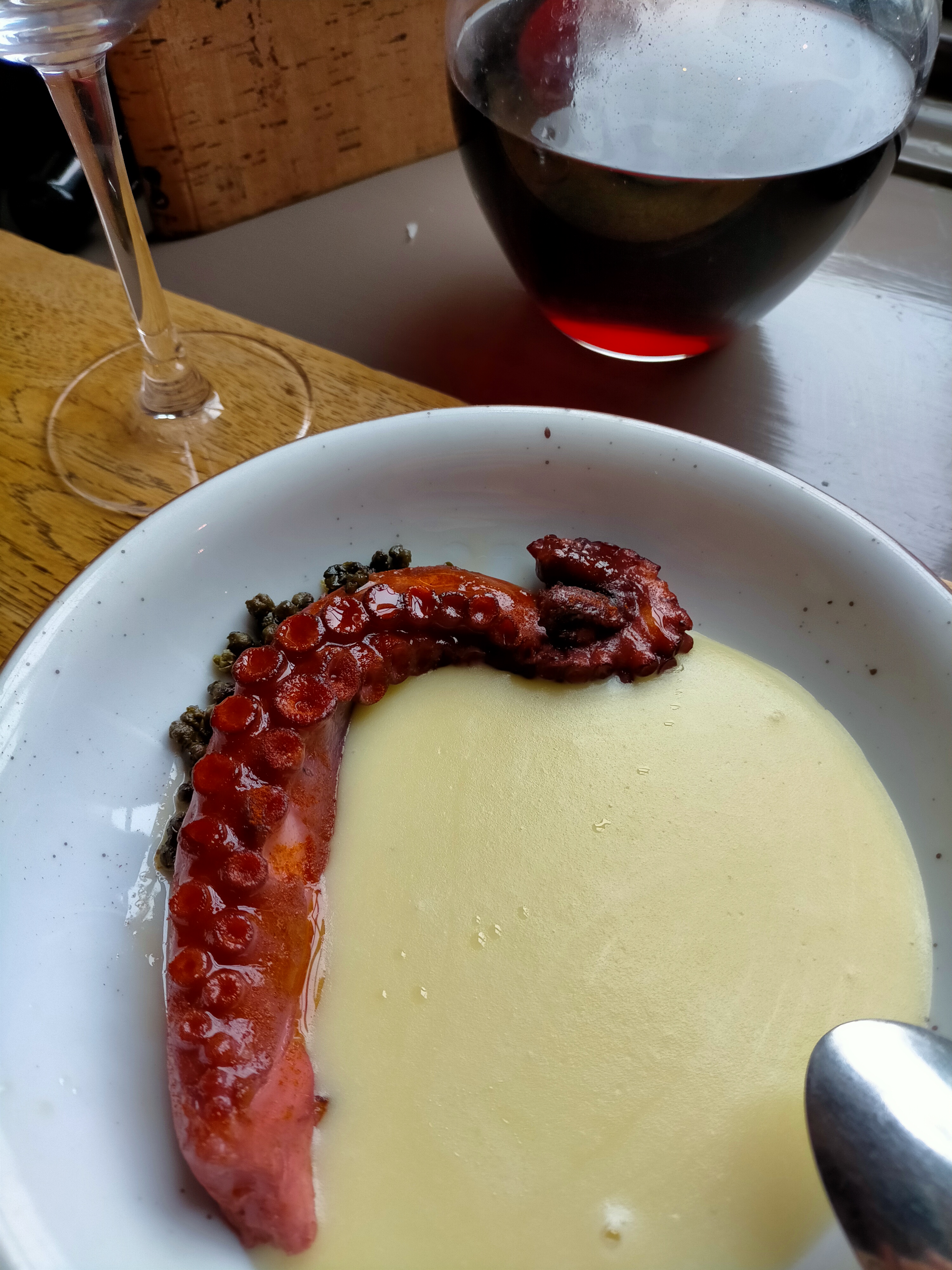
Pulpo Negro is our favourite Restaurant in Alresford, and apart from the food being fantastic, what makes it even more atmospheric and interesting is that the restaurant is on the site of a 15th century building linked to St George and the Battle of Agincourt!
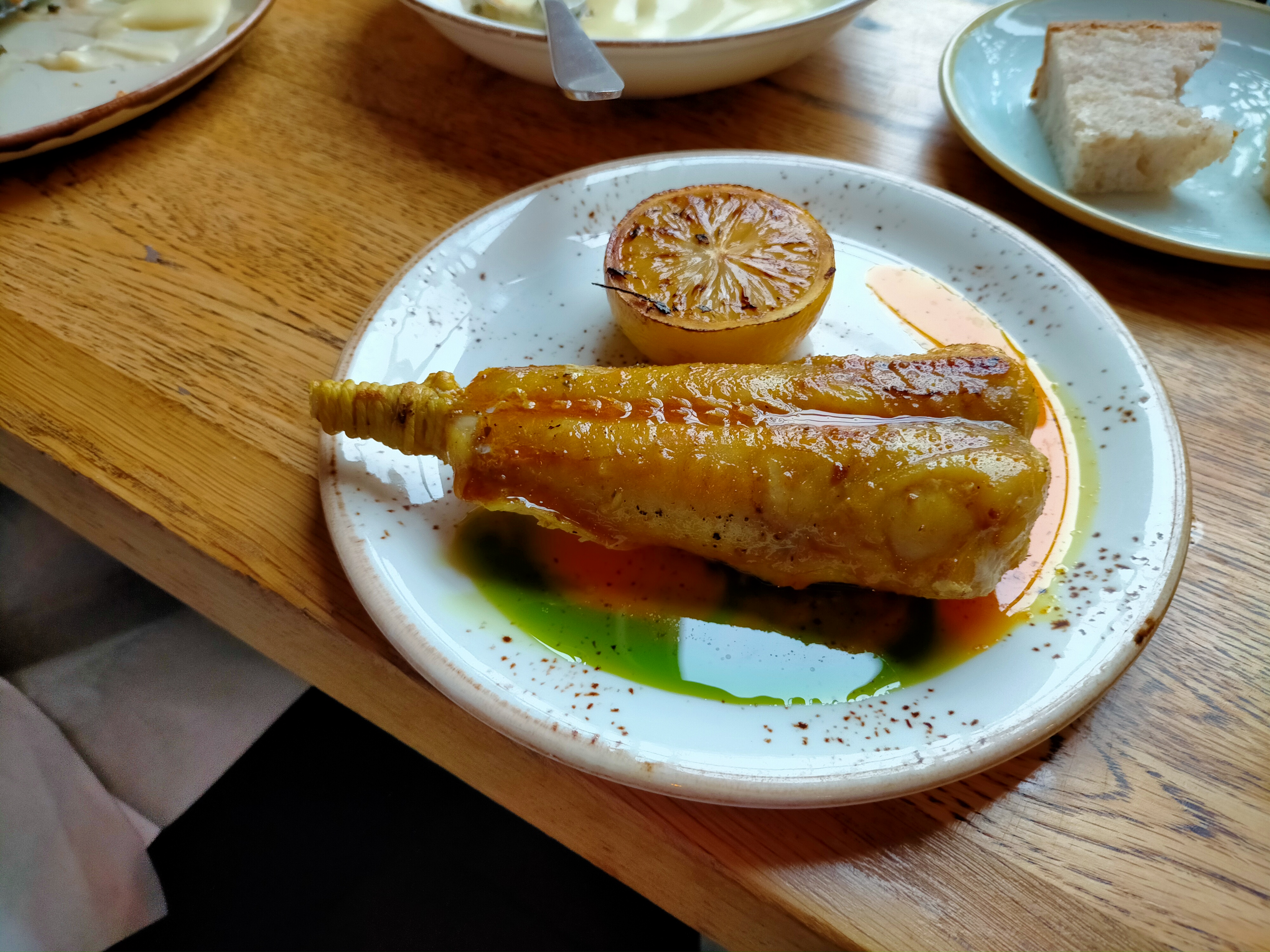
Pulpo Negro is a vibrant and highly regarded tapas restaurant located in the heart of Alresford, Hampshire. Specialising in bold, modern Spanish-inspired small plates, Pulpo Negro offers an ever-changing menu that celebrates quality cuts of meat, fresh seafood, and creative flavor combinations. Signature dishes often feature tender octopus, perfectly prepared monkfish, and expertly cooked cuts such as Iberian pork and lamb, all designed for sharing in a relaxed, sociable setting. The warm, intimate atmosphere combined with a carefully selected wine list makes Pulpo Negro a standout dining destination for both locals and visitors seeking authentic Mediterranean flair in this picturesque Hampshire town.
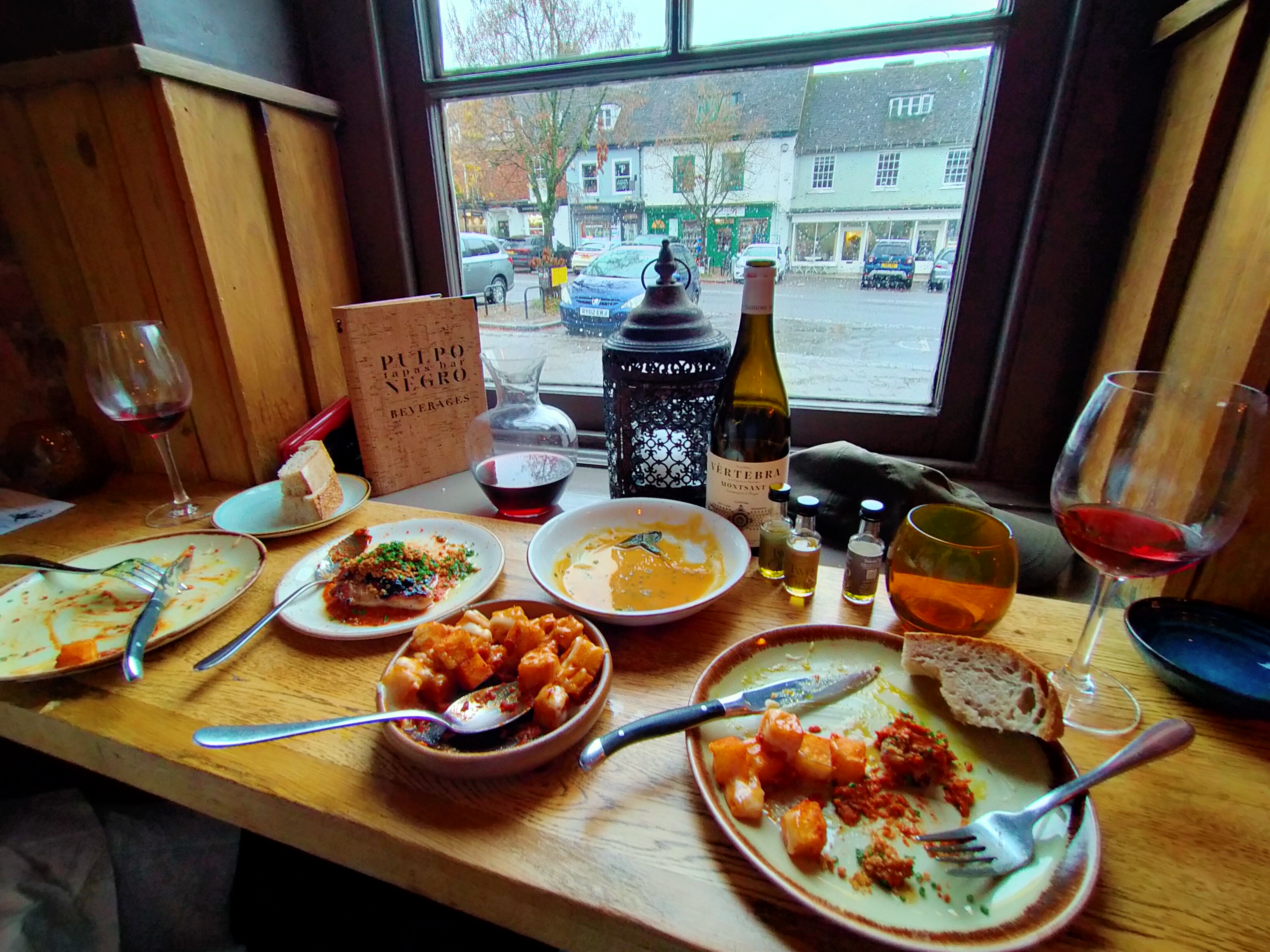
Whilst enjoying a recent lunch there with The Mrs, my eye was drawn to a cryptic carving in the stonework of one of the walls.
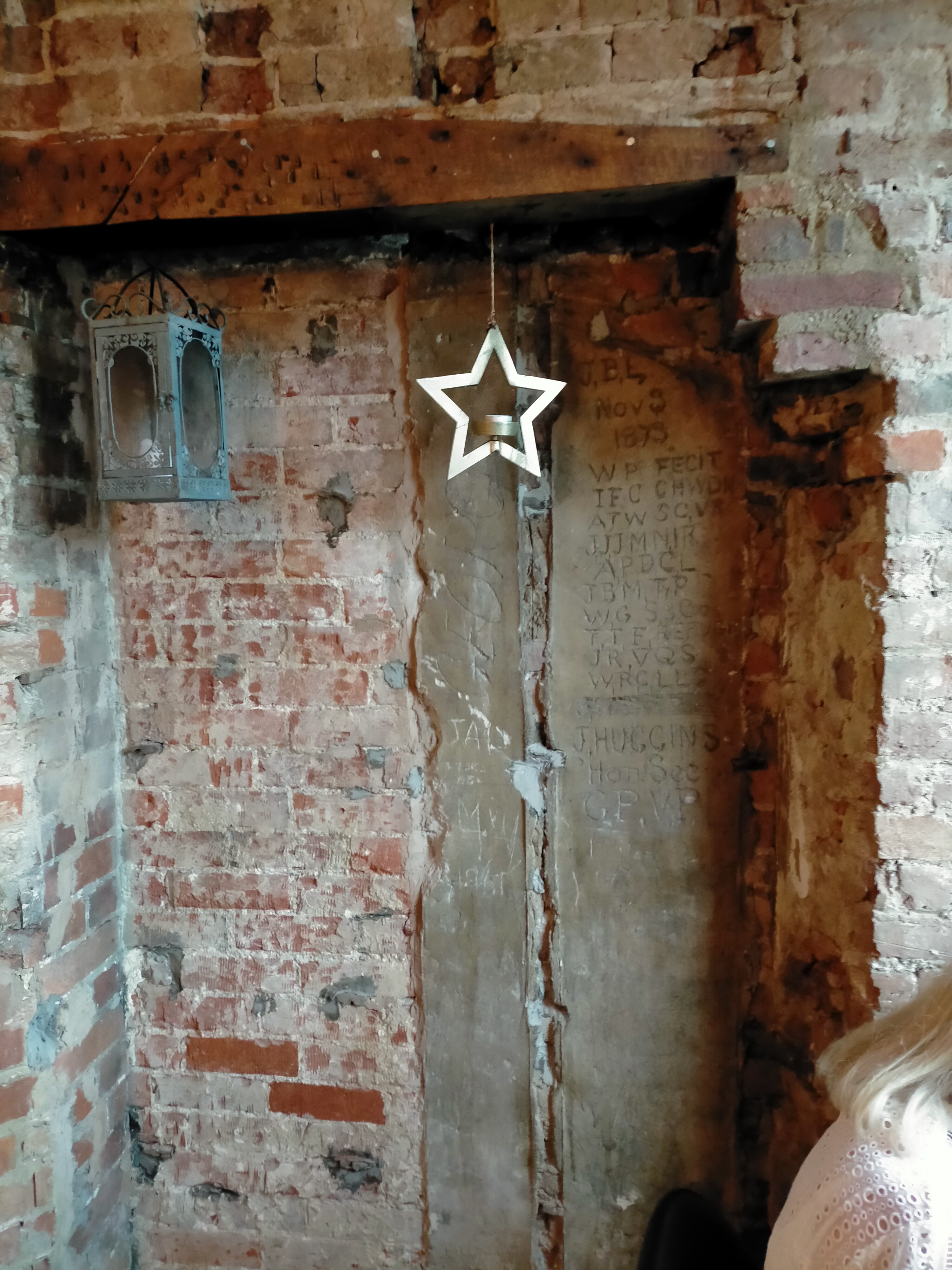
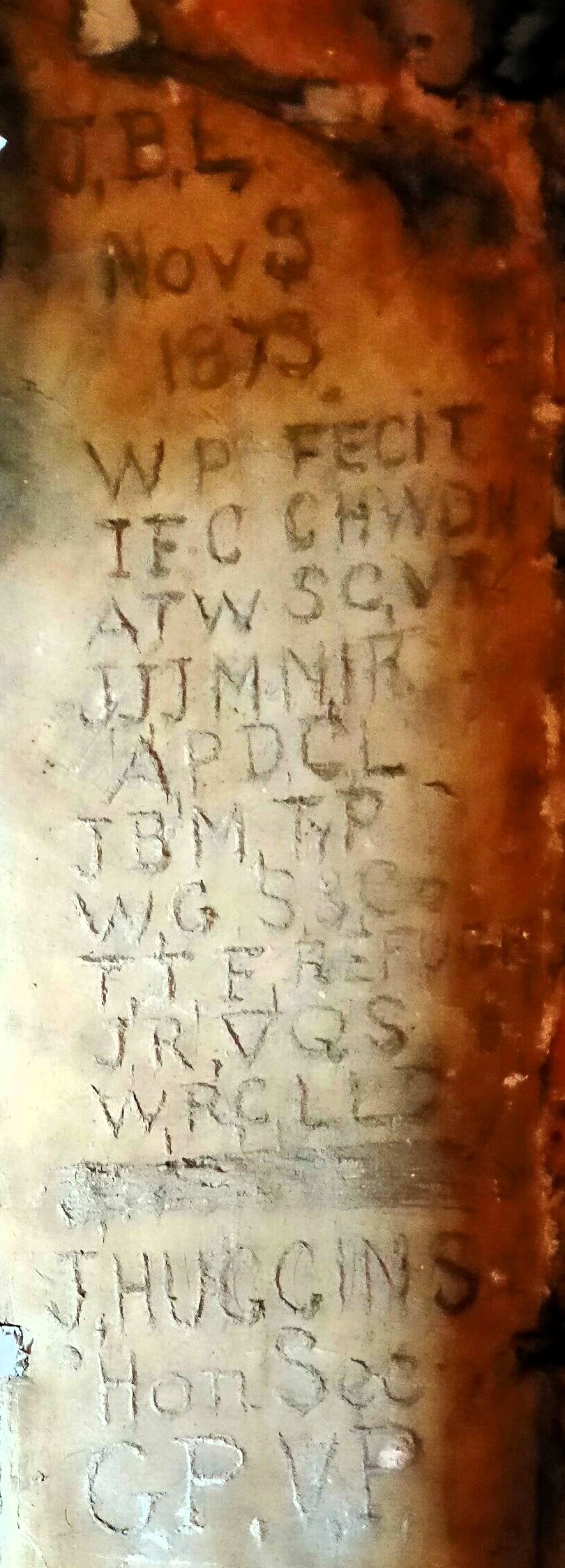
So while The Mrs watched the world go by through the window into Broad Street outside, I started clocking the inscriptions carved over 150 years ago into the stone wall. And being a Genealogist “I see dead people everywhere” so once home the investigation began.
The George Inn/Hotel
The first thing to investigate was the building itself.

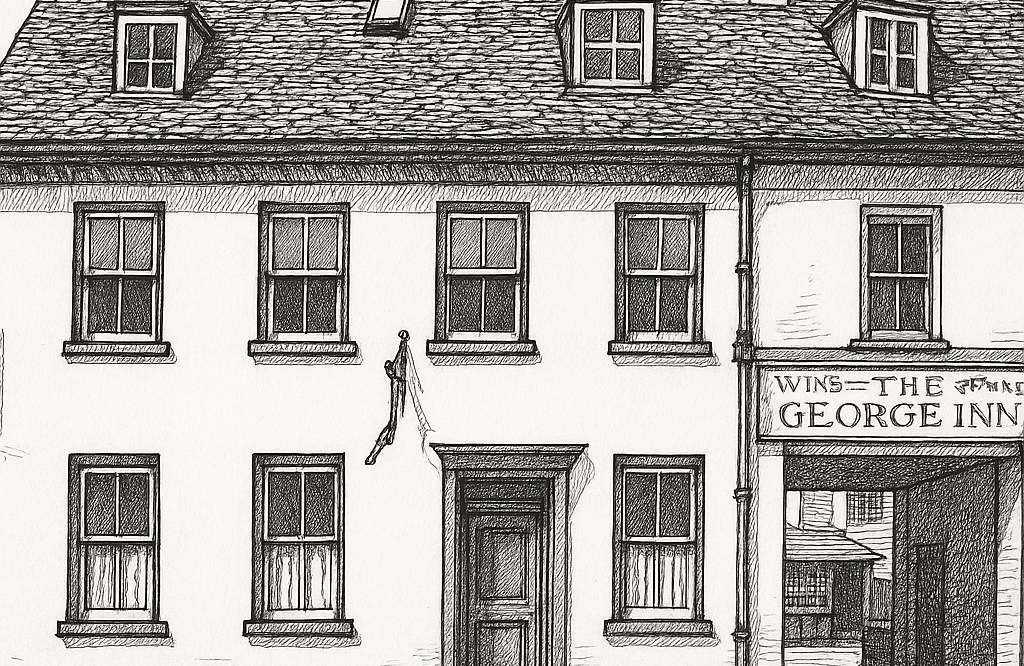
The George Inn/George Hotel is the building that now houses Pulpo Negro halfway down Broad Street in Alresford. This stands in the building that was formally The George, otherwise The George Hotel, or The George Inn, all referring back to St George.
In 1410, William and Christina Totterne paid £46 8s for the site including a tenement called Broadeyate, (Broadgate) leased for life from the Bishop with two acres of arable land, they proposed to trade as a Hospice or Inn called The Angel, with the Sign of an Angel in 1415, but was generally still referred to by the locals as the Broadgate rather than the Angel Inn. The site and the building was owned by Winchester College at the time. In 1418 a new building was proposed to be put on the site for the princely sum of £50, which converting Labour Costs from then to now, equates to around £400,000.
However the Innkeeper asked if the name could be changed to “The George” in celebration of the assistance given by Saint George to Henry V in order to win the battle of Agincourt in 1415, and in 1423 a new sign was erected that comprised a figure of St George standing atop a post with a tablet below bearing shields of arms and writing. The cost of this was a princely £3 13s 4d; with some additional payments for the erection of the sign including 4d (four pence) being given to the man who dug the hole to put the post in, and an additional 4d to the men who put the pole in the hole and stood the sign up.
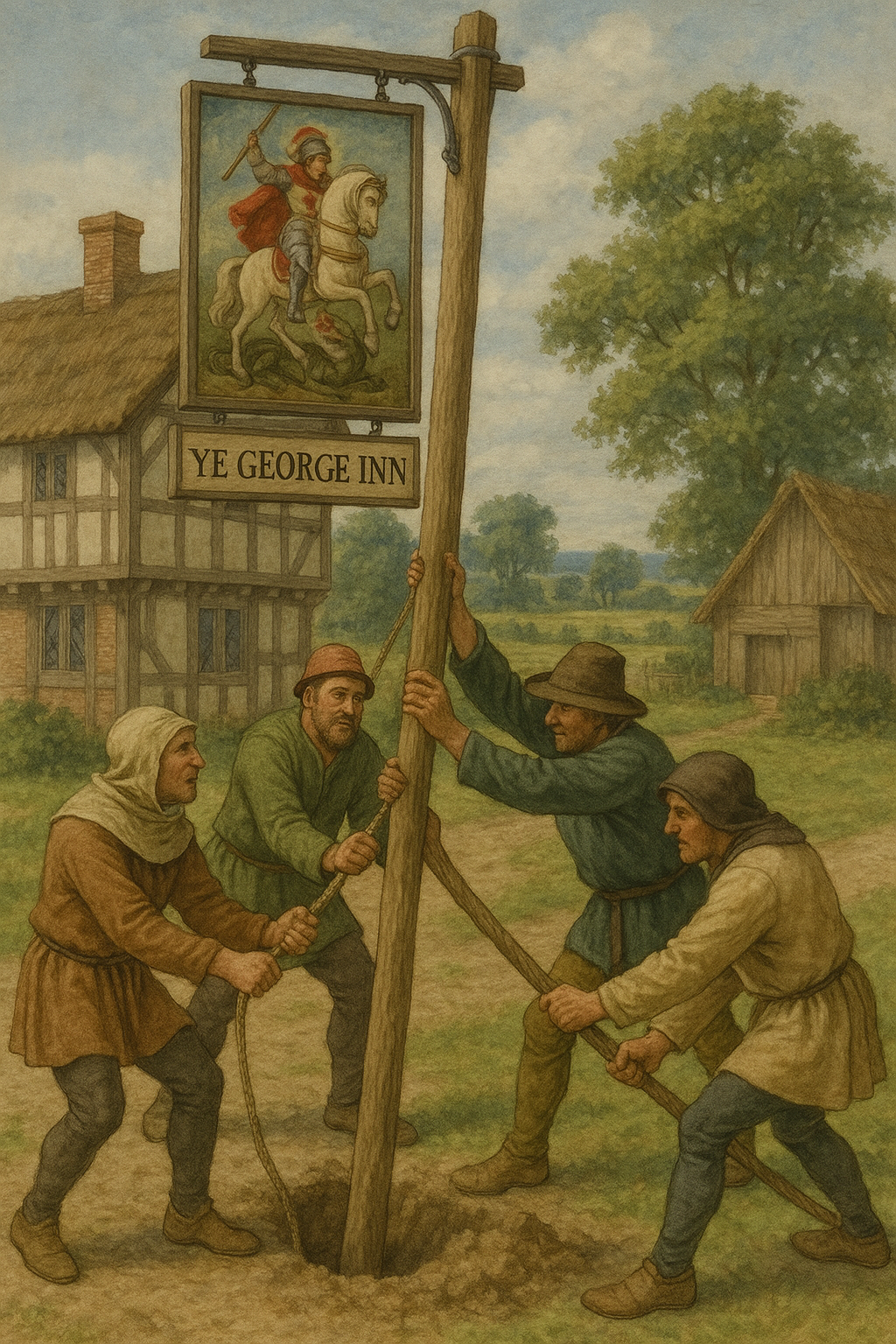
Later, in 1439, the Inn was burned to the ground, and duly rebuilt by 1460. Alresford was famous for its fires partially destroying the village through the ages.
After changing hands in terms of Landlords over the centuries, and being destroyed for a second time in the great fire in Alresford of 1689 and duly rebuilt, we finally come to the 1870s when The George Hotel (as it became known) was in the hands of a Landlord named James Burbey Loe.
Further to this, The George Hotel was noted as the Headquarters of the Alresford Independent Friendly Society established in 1871.
I could now start to try to track down what the cryptic initials on the wall meant.
J.B.L. and The George Inn
The first name on the inscription is J.B.L. this corresponds to be James Burbey Loe (1834-1901) the Landlord of The George Hotel during the 1870s. Given that we were sitting in what would have been his hostelry so this was a good start in the investigation, the inscription matching the historical record.
James was a farmer’s son who had been lucky enough to have had a little education and was apprenticed to a Chemist in Southampton probably from around 12 years of age, working to learn his trade in return for bed and board away from home with the Chemist’s family, and perhaps the odd bit of spending money, but no wage. After serving his apprenticeship for seven years, during which he was not allowed to drink intoxicating liquor nor marry he started his own business as a Chemist and Druggist in West Street Alresford, probably with some backing from his father. Once settled in his business in Alresford in 1859 he married a farmer’s daughter named Fanny Smith, and during the 1860s they would raise three children, two girls and a boy.
By 1869 James had used his knowledge as a Chemist to move into Manufacturing Mineral Water, Alresford having, and still has, abundant supplies of crystal clear pure water from the chalky beds of the River Itchen, and James knowledge meant that he could carbonate it to sell it as a non-alcoholic option to beer for thirsty travellers, passing through Alresford between Southampton and London who were more used to the dangers of drinking the water in the big cities, and would have welcomed a safe alternative.
George did well for himself, and when the George Inn became available he took that on as “The George Hotel”, through the 1870s.
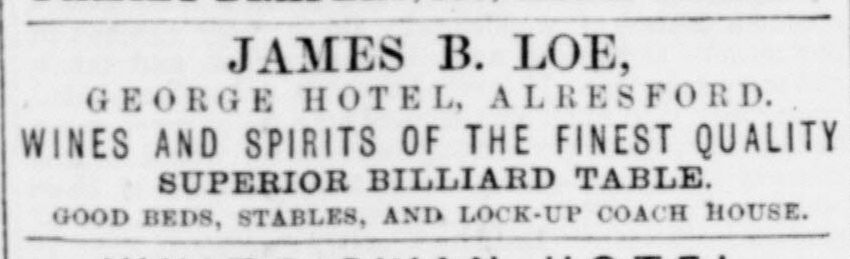
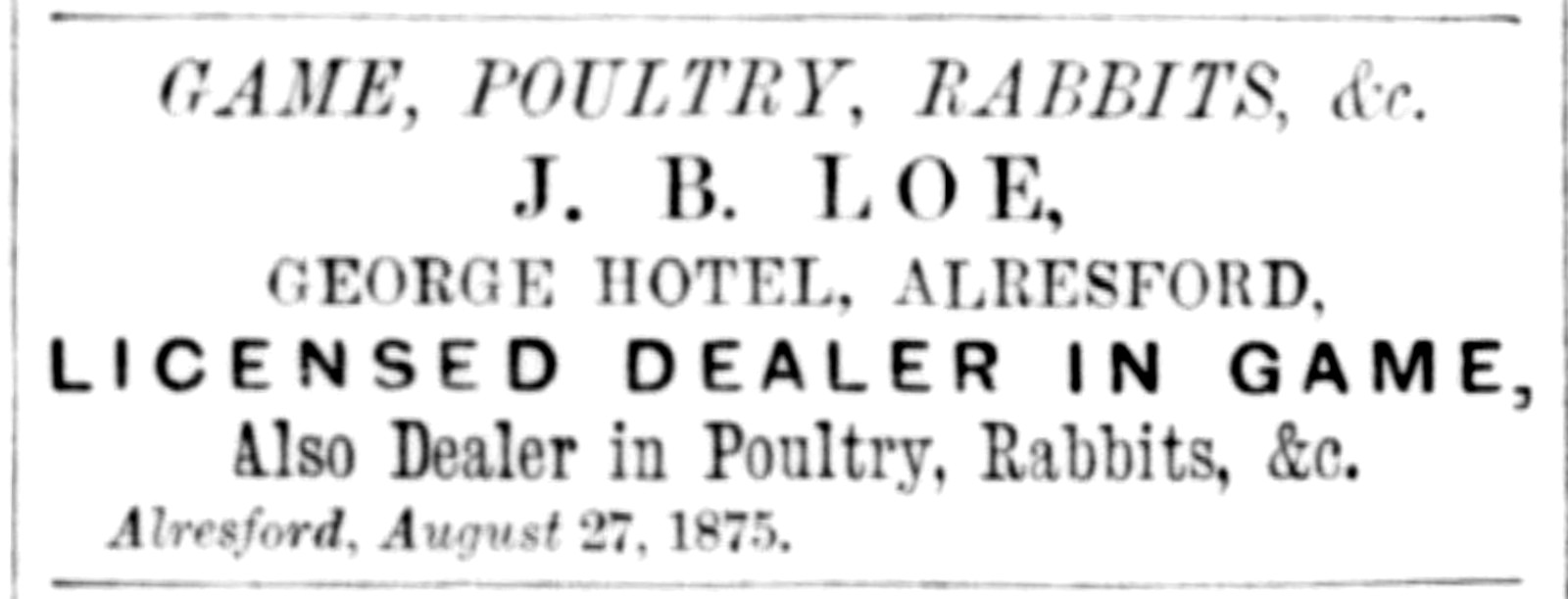
Not only did he run the Inn but also became a licensed dealer in Game.
James had a number of unexpected tragedies in his life, his three year old son died of Dropsy in 1871, as did his daughter Rosa at 19 months old, implying a contagion of some sort in the family, and in 1874 tragedy struck when his wife Fanny died.
By 1879 James had sold his holding in the George Hotel and by 1880 he had moved to Guildford, where he became a Fishmonger and Poulterer, and in 1881 married for a second time to a lady eight years his junior named Eliza Harriet Dexter.
But it is his time in Alresford that meant that he appeared on the carving on the wall of Pulpo Negro, as James played a big part in the area especially in the Alresford Independent Friendly Society, which was headquartered in The George Hotel Alresford.
The Alresford Independent Friendly Society
This brings us back to The Alresford Independent Friendly Society, established in 1871, was a community-driven organisation headquartered at The George Hotel in Alresford, owned by James, that he and his wife Fanny threw themselves into. James provided the space in George’s Yard and within the Hotel to hold meetings and social events, and Fanny provided the catering. It was James Loe’s affection for this Society that caused him to have the names of his friends and associates carved into the wall of his George Hotel.
The Society’s primary aim was to provide mutual aid and financial support to its members, particularly in times of hardship, illness, or bereavement. Friendly societies like this were vital in the 19th century, offering working-class individuals and tradesmen a safety net prior to the widespread availability of state welfare.
The society fostered a strong sense of camaraderie among its members, organising social events and gatherings to reinforce community bonds. It also played a role in local charitable efforts, ensuring that those in need received assistance. The inscriptions found at Pulpo Negro suggest that key figures in the town, including business owners and churchwardens, were actively involved in its operations.
So having found out about James Burbey Loe, let’s see what else we can find, inscription by inscription.
WP Fecit
This translates from the Latin as “WP made me”. I would surmise that WP are the initials of the Stone Mason/Monumental Mason who carved the inscription, or possibly the person who paid for the work. There is a chance that WP is actually a man named William Pescod (1818-1906) who was a Painter who moved to Alresford, and whose brother George Pescod, a Master Plumber (both water plumbing and Gas Plumbing) and Painter was heavily involved in the Alresford Independent Friendly Society.
We can imagine James Loe saying that he wanted to immortalise the members on the wall of his Hotel, and George Pescod saying; “Well my brother Bill can carve stone, why not let him do it?”
IFC CHWDN
When I saw the next inscription I believed initially that “IFC” represented “Independent Friendly Committee” however the CHWDN following it seems to be an abbreviation of “Churchwarden”, this made me research the best known Church Warden at the time in Alresford, who was a man named John Flood Chapman. It therefore seems that the J of John had been rendered in the Roman Monumental tradition of an “I” instead of a “J”, as the Latin form of John as Iohannes or Ioannes which is odd as J’s are carved on other parts of the inscription, but this is the most likely explanation I can find, giving IFC.
John Flood Chapman (1816 – 1879), and his son, also John Flood Chapman (1850 – 1920), was an Ironmonger from East Street in Alresford, both were associated with the Society and one (or both) served as the treasurer. The elder was a long standing and highly respected Churchwarden in Alresford.
ATW SC VR
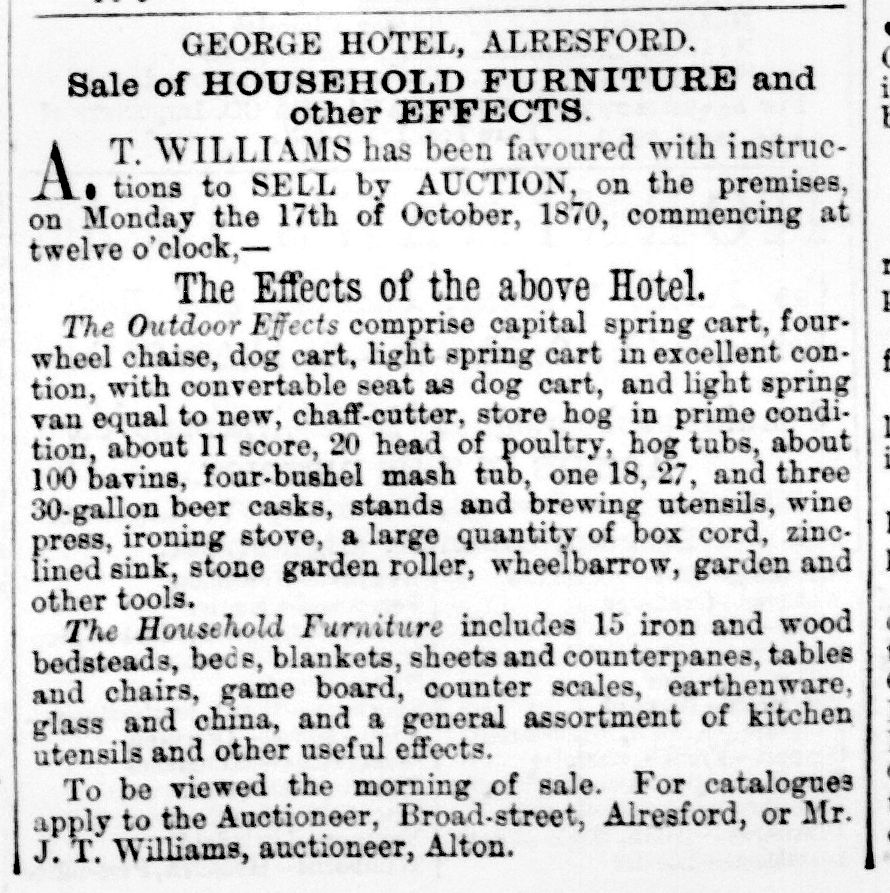
Was Alfred T Williams (1835 – 1891 ) Auctioneer and Upholsterer in Broad Street, and later an Estate Agent in Alton. Although what SC and VR stand for is not clear, although they could stand for Senior Clerk and Valuer. Interestingly in 1870 he was the Auctioneer who sold off the contents of The George Inn, at The George Inn, at the time that James Loe took the Inn over and renamed it the George Hotel, so the men were close associates.
JJJM NIR – A, PD, CL -JBM, TyP
None of the meanings of these inscriptions have yet been deciphered.
W, G, S&Co
This looks like it is referring to a member of the committee and his business.
T,T,F, REFUGE
Although not certain, the “Refuge” may be referring to the “Patriotic Orphan Home” set up at 50 Broad Street in 1855 to care for Orphans of Servicemen killed or maimed in the Crimean War. This was organised by Miss Matilda Onslow of Upton House with funds from the Charity set up by Queen Victoria for this purpose.
J,R, VQS
This is not clear although VQS could refer to “Voluntary Quarter Sessions” or even “Volunteer Quartermaster Sergeant” as the local Hampshire Volunteer Regiment Bands often took part in the entertainments during the Society’s annual events.
W, R, C, LLD
Would appear to be a Doctor of Law, so possibly a local Solicitor or Barrister.
Name Removed
The next inscription has been carefully and thoroughly chiseled out of existence. Someone had obviously done something to seriously upset the other members of the Friendly Society Committee and had their name permanently expunged from this part of history!
John Huggins Hon Sec GP VP
John Huggins the Honorary Secretary of the Society, the GP and VP are uncertain, but may be references to “General Practice” and “Veterinary Practice” although this is not certain, and John Huggins was never qualified as a Doctor in the formal sense, and he definitely sold remedies for Sheep and other domestic animals.
John Huggins came to Alresford in 1836 working as an assistant to the local Surgeon, Mr Rennie, where he worked for two years until Rennie’s death in 1838. At the time Surgeons ran their trade as independent businesses, and at Rennie’s death the business was sold to a Mr Lipscombe, another Surgeon. John Huggins stayed working as an assistant to Mr Lipscombe, based in East Street Alresford, for a further seven years, until he decided to set up his own business as Chemist in Alresford, and, having found that the business suited him, continued running his Chemist’s business in Alresford from then onwards.
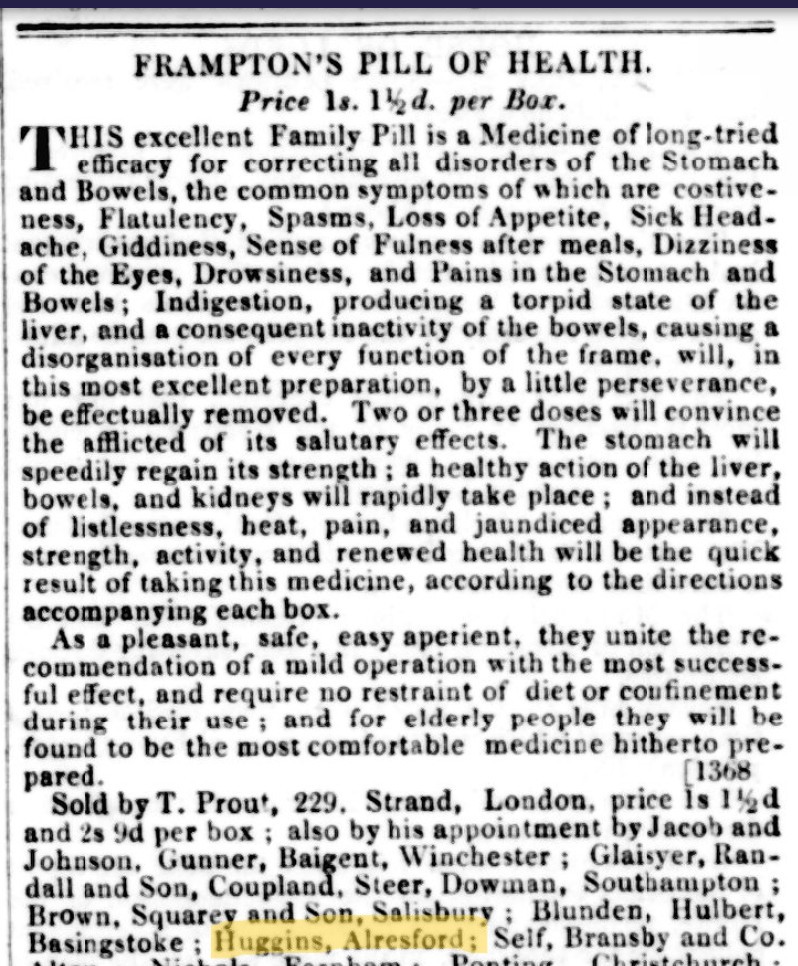
A chemist at the time not only dealt with pills and potions for the local people, it generally being cheaper for people to self medicate than to pay for a Doctor, and John Huggins having been in the town since the 1830s and worked with two local Surgeons, would have had a very good reputation, beyond just being a “Shop Keeper” who sold minor medications. Looking at the numerous adverts that John Huggins was mentioned in, he stocked some “wonder cures” of the time such as “Frampton’s Pill of Health, which looked like it would cure more or less anything that ailed you:
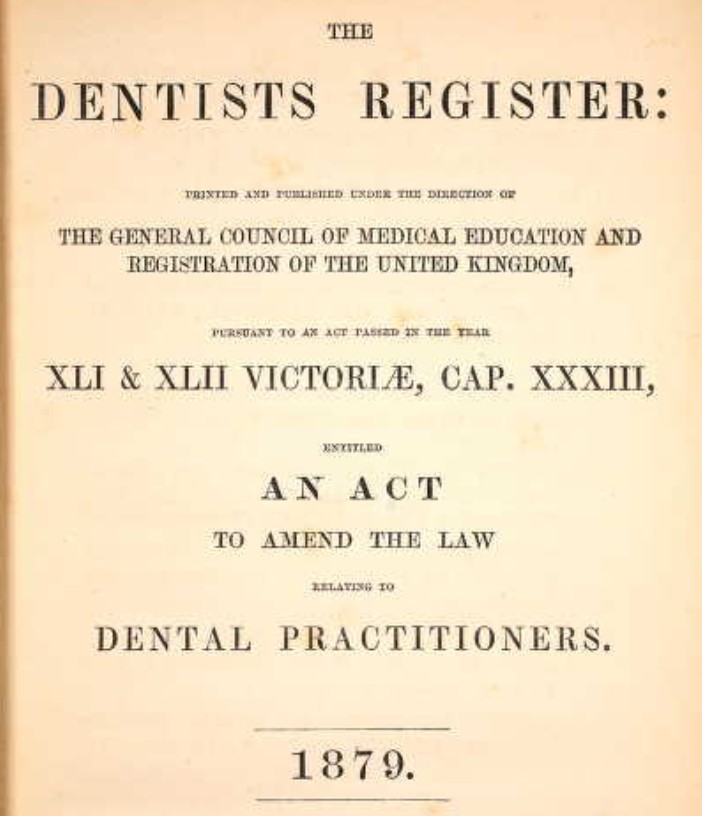
By the 1840s John was also a registered Dentist, probably from many years earlier, but it wasn’t until 1879 that people claiming to be Dentists had to show they had either experience or training, and were charged £5 to register and 5 shillings annually thereafter, so he was obviously making a good income from the practice, £5 being roughly equivalent in buying power to several hundred pounds today, or a few thousand pounds when compared to average wages.
Perhaps surprisingly by modern standards, John Huggins’ Chemists shop also sold Cigars, which were seen as beneficial medication to promote calmness (unfortunately with the then undiagnosed side effects of Cancer, Heart Disease, and Lung Disease!). Less controversially, from at least 1847, he also stocked Schweppes Soda Water and Lemonade.
John’s clientele included the more well-to-do of the area including the local Gentry, The Baron Tichborne and his family, who lived at nearby Titchborne Park, to the point where he was able to describe their characters, and the fact that the eldest son would ride to his shop to select cigars to buy.
By the 1860s John was not only selling an embrocation to cure lameness in sheep, but was also an an for the “Farmers’ Fire and Life Insurance Institution”.
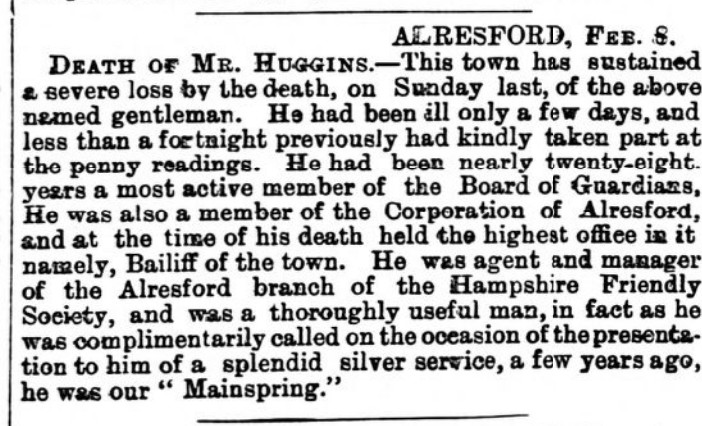
John was married twice but appears to have had no children, he died in 1879 aged 65. He received a glowing obituary in the local press:
Footnote to the Inscription
A Controversy – The Tichborne Case
Perhaps the most controversial occurrence in the busy little Town of Alresford in the later 19th Century was the “Titchborne Inheritance Case” and John Huggins became part of it.
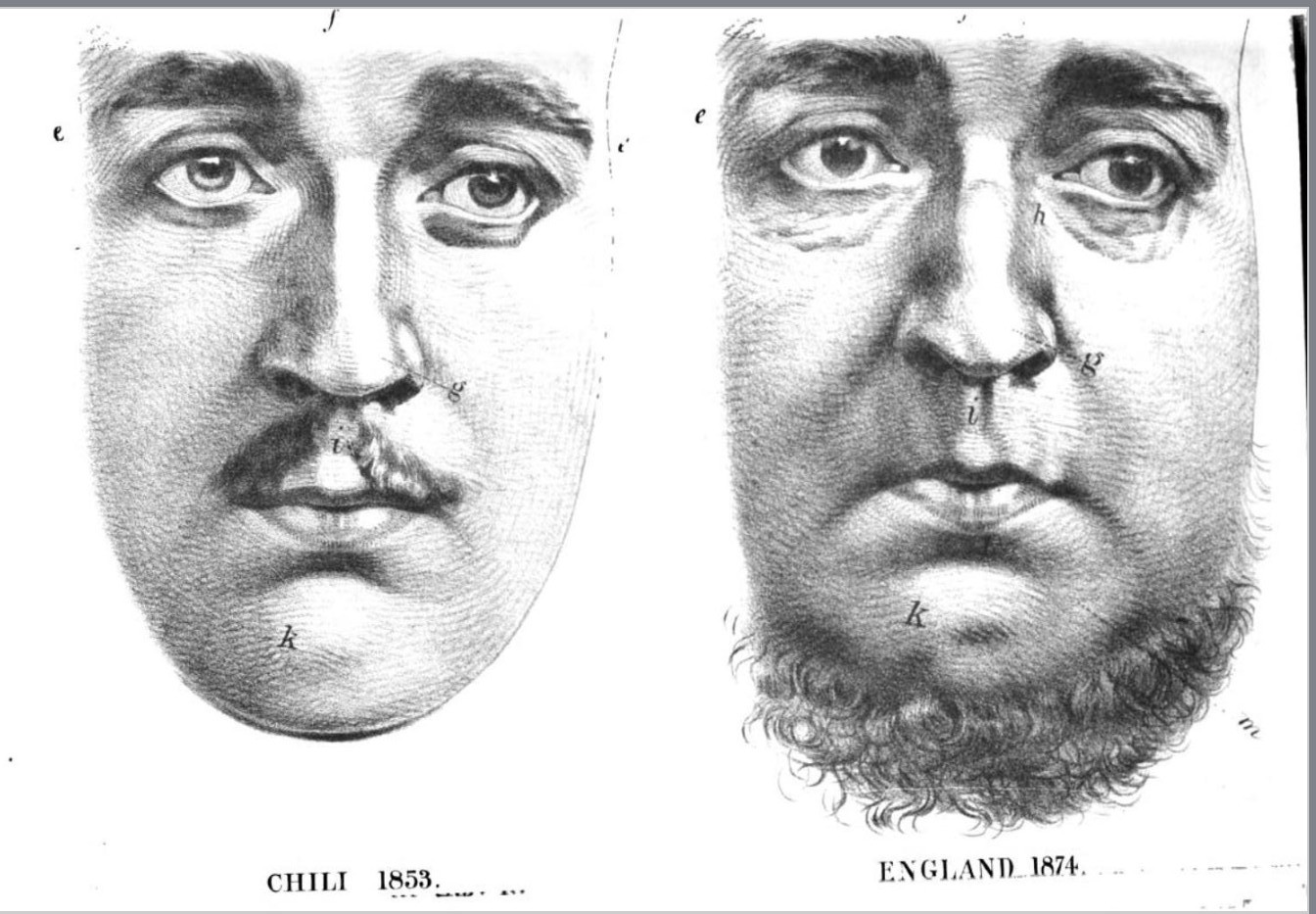
The Tichborne case was one of Victorian England’s most sensational legal battles, captivating the public in the 1860s and 1870s. It revolved around a man known as Thomas Castro or Arthur Orton, who claimed to be Sir Roger Tichborne, the missing heir to the Tichborne baronetcy.
Roger Tichborne was presumed to have died in a shipwreck in 1854 at the age of 25. His mother, Lady Tichborne, refused to accept his death and advertised extensively for information. In 1866, a butcher from Wagga Wagga, Australia, named Thomas Castro, came forward, claiming to be Roger. Despite his rough manners and lack of resemblance due to his corpulent size, Lady Tichborne immediately accepted him as her son, though other family members were skeptical.
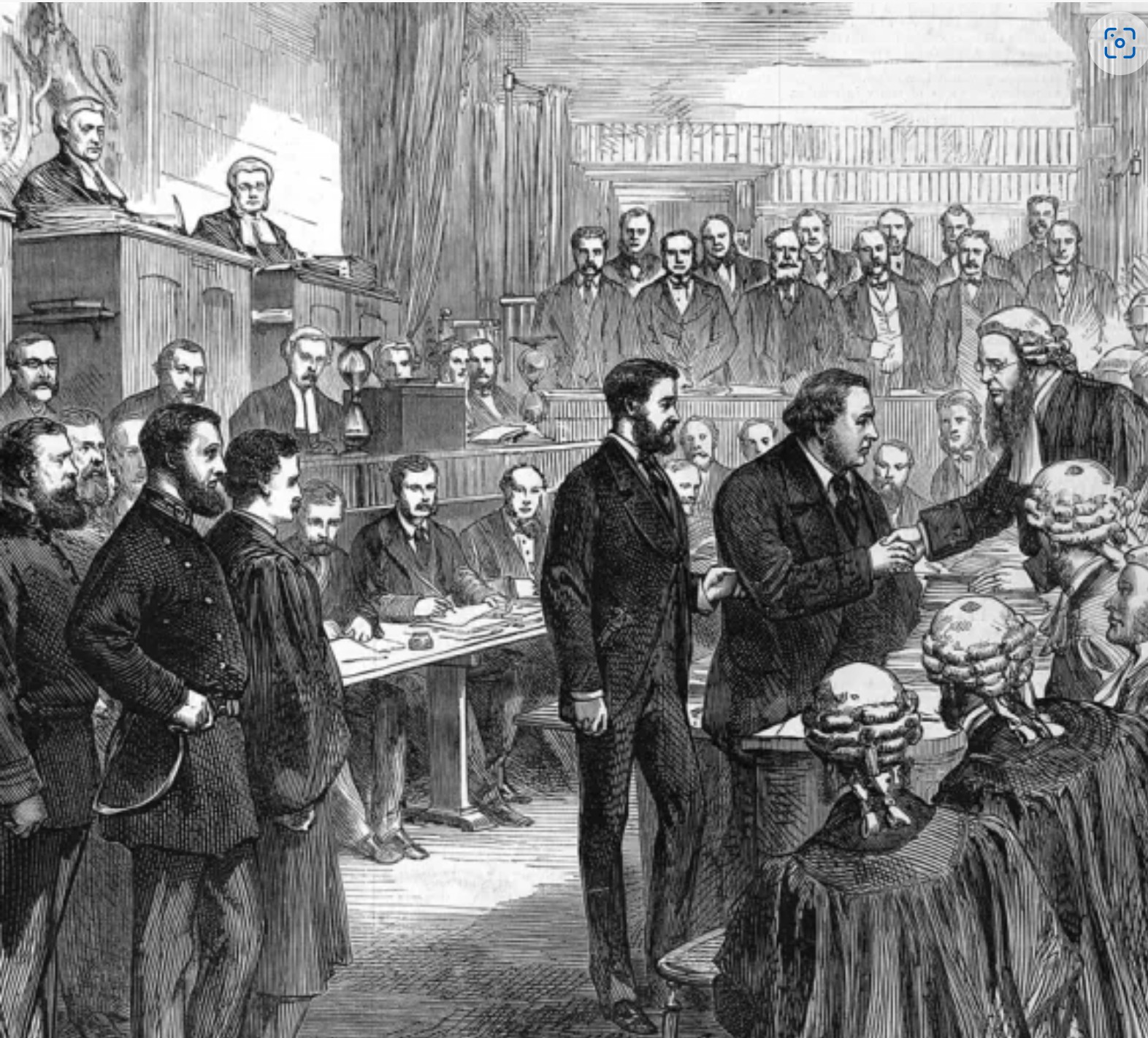
The case went to court in 1871, where evidence emerged suggesting that the claimant was actually Arthur Orton, a butcher from Wapping in London. After a lengthy trial, the courts ruled against him, and in 1874, he was convicted of perjury and sentenced to 14 years in prison. His lawyer, Edward Kenealy, was disbarred for his conduct during the trial. Even after his release, the claimant continued to insist he was Roger Tichborne, though he later confessed to being Orton (for a fee)—only to retract his confession shortly afterward.
The case sparked widespread public interest, with some believing the claimant was genuine, while others saw him as an impostor. It remains one of the most intriguing identity fraud cases in British legal history.
Interestingly many local people absolutely supported him, and it was mainly the family who didn’t. Given the huge inheritance at stake it would be easy to see how vested interests would have become entrenched, the family risking losing a fortune, and the locals likely to be on the receiving end of valuable patronage should he inherit with their support.
John Huggins appeared prominently in one part of the case as can be seen here:
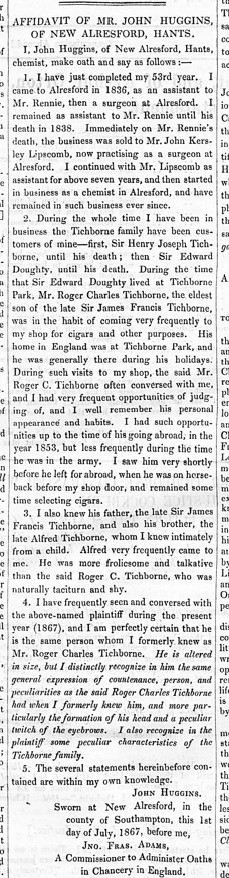
So, was the claimant Roger Titchborne the heir? Or was he Thomas Castro from the Australian Penal Colony, or indeed just the plain Arthur Orton the Cockney Butcher from Wapping?
Just like the inscription on the wall of Pulpo Negro, the full story may never be known.
But in any case, Happy St George’s Day!
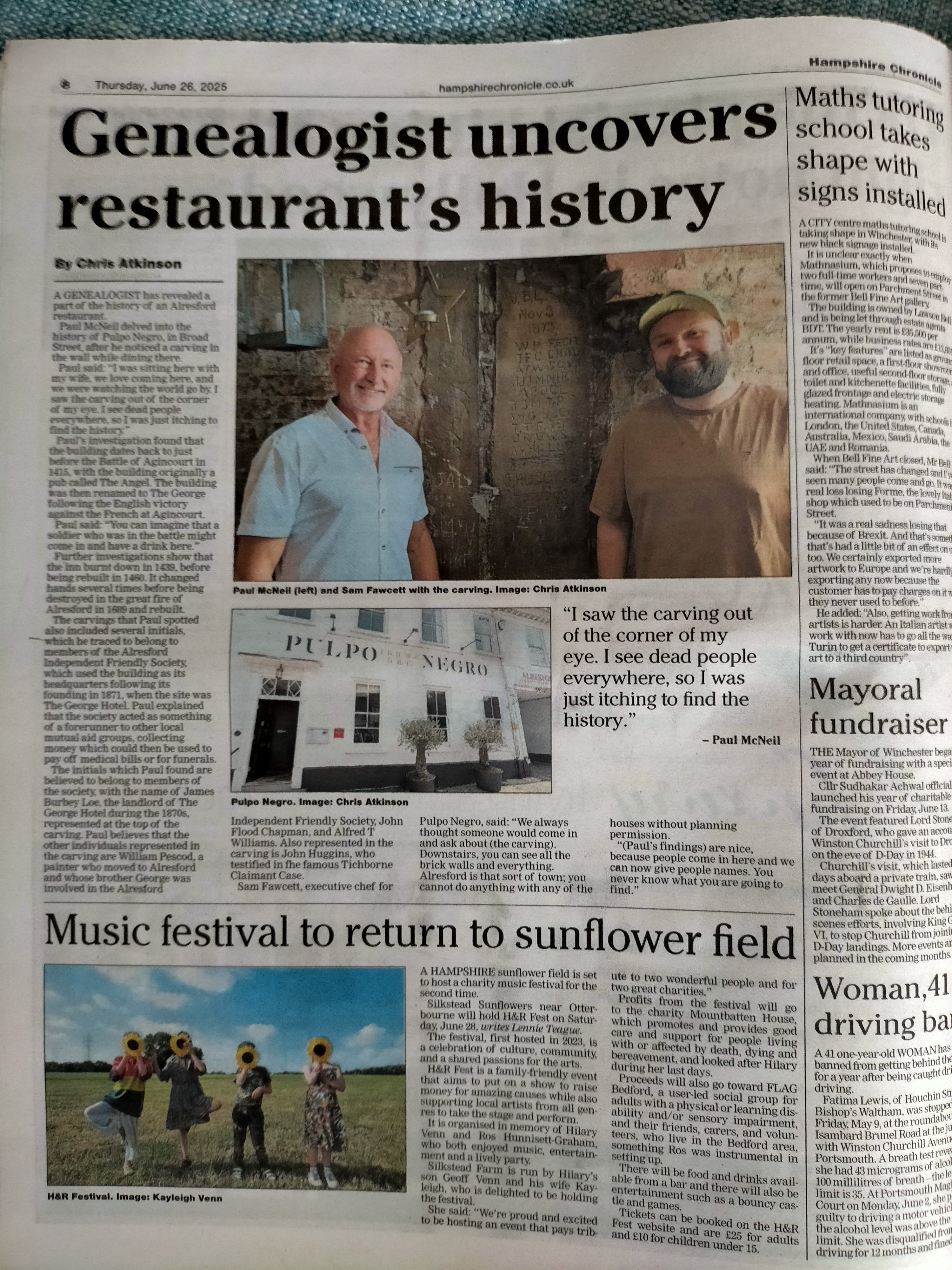
It even made the Hampshire Chronicle Newspaper:


 Travelling Through Time to Trace Your Ancestors
One Reply to “Eating with the Ancestors”