Origins of the name
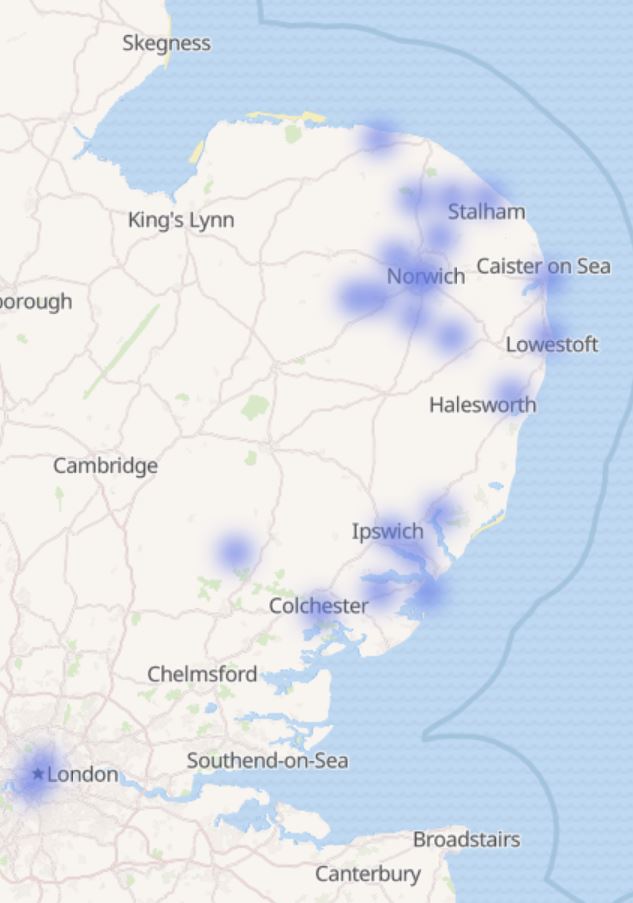
The name Spall is unusual and very rare. Unusual from the point of view of being a the spelling changing variously over the years to Spaull, Spaul, Spall, and even Spawl on occasions. It would tend to be given to a person living near the Church of St Paul or possibly from a village with St Paul in its name due to a Church of the same name being in the village. It is rare in as much as there are only a few concentrations of the name in England up to the 18th century, and in its more or less original form of ‘Spaull’ was distributed as shown on the map below. In Timothy Spall’s Family case it originated in Suffolk in the area around the Ipswich and Woodbridge.
I have however researched a different interpretation of the origin, in that it could be a straight derivation of an Old English word with the same root as “split” and “splinter”, and indeed Spall in old English means a splinter or chip off a larger object, so could be a work nickname for a man who worked with a hammer, either as a Blacksmith hammering spall off of a hot iron, or a wood worker, or even a mason working with a Spalling Hammer which had an axe like head for splitting and dressing stone.
Dallinghoo Agricultural Labourers
Just north of Ipswich is the small village of Dallinghoo where Timothy Spall’s family originated. There were also a scattering of Spalls around the coastal counties of England from at least the early 1800s implying that at least some of the family took to seafaring in the early days. Also there was a fairly large concentration of Spauls in the Shoreditch and Holborn areas of London some of whom may have come from Norfolk, but others may not have been related and may have derived their name through a connection with St Paul’s Cathedral in London, the other likely root of the name.
We first come across this part of the family living in the Dallinghoo Registration District, working on the land as Agricultural Labourers around the village in the early 19th century.
Suffolk Men in Staffordshire
Most of the family were unremarkable during these early generations working the fields and farms of the Suffolk coast,and it wasn’t until the 1860s that Robert Spall, Timothy Spall’s Great Great Grandfather, born in Westleton Suffolk, moved from his home after his father had died, and went to Burton on Trent in Staffordshire, to work as a Maltster in the growing Brewing Industry. One of the only members of his family to have travelled outside of Suffolk in many generations. Received some fascinating local knowledge from Patricia Helen Bridges of the “Family History in Suffolk ….Suffolk Surname List” on Facebook:
“Going to work in Burton on Trent was a regular occurrence. Farm labourers from Norfolk and Suffolk would work in the Maltings through the winter. They would go after the harvest and return for the harvest. Many a mother was given a fancy tea pot from the potteries on their return home. Often these workers were referred to as The Norkies.”
Suffolk men going to Burton on Trent to work in the Breweries was actually an annual migration, tramping the roads, hitching lifts on carts, later by train, hundreds of Suffolk and Norfolk men made the annual migration of 150miles. As the work in the fields dried up and the work in the Breweries surged the East Anglians travelled to their workplaces, managing to find work all year around by this migration,when agricultural work on its own would mean long periods of near starvation outside of the harvest season. A long journey followed by hard work, men would wrap rags around their feet to replace worn out boots and protect their feet from the heat of the fermenting Barley that they would rake as part of the brewing process.
A year later Robert was back in Suffolk with his mementoes of Staffordshire pottery, and married a local girl Sally Folkard, from Parham and settled in Hacheston, where the couple started to raise their family.
Robert had spent his time wisely in Staffordshire at the Brewery and had learned a New Technology; how to Operate a Steam Engine. This was a particular skill much in demand, for in the days before petrol and electricity Steam was King for machinery,and ‘Engine Driver’ at this date most often meant a ‘Stationary Engine Driver’ as opposed to a Train Driver, as Stationary Engines drove all machinery in the Rural Landscape, from workshops, to Harvesting machines, winches and cranes,wherever a constant source of motive power was needed where a horse couldn’t provide it, a Stationary Steam Engine did the work. This skill meant more money, less strenuous work, and a better position in life than that of the Agricultural labourers of previous generations.
Mrs Girling and Shakers
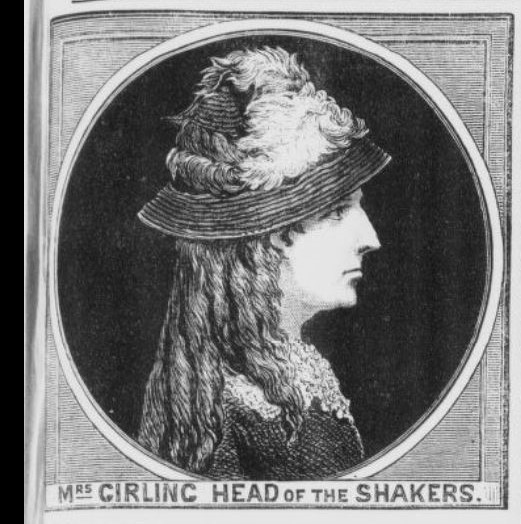
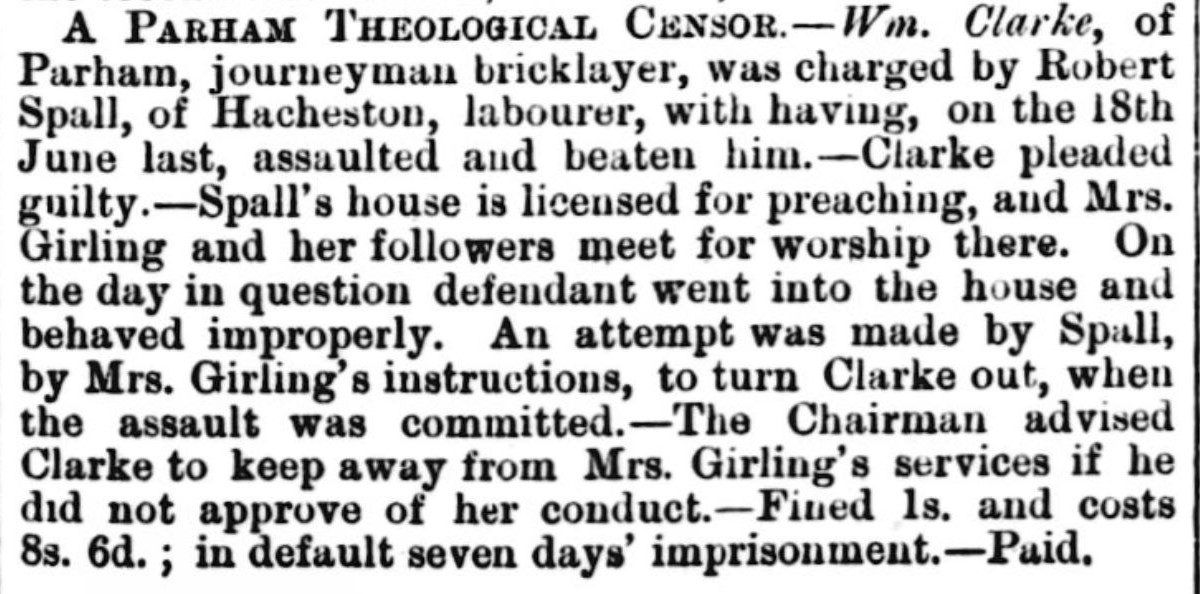
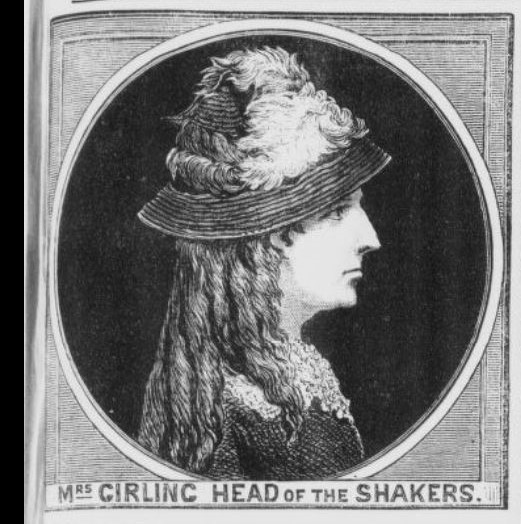
The couple had three children in the 1860s; James William (Timothy Spall’s Great Grandfather), Mary Ann who sadly died as an infant, and Robert Edward. By the 1870s Chrystable was born, followed by a move to Framlingham where we find that Robert has his house licensed for preaching, he may have originally been a Wesleyan Methodist, but he opened his house to a Mrs Mary Girling, a charismatic preacher who originally identified as a Wesleyan, but due to her claim to be an incarnation of God, soon founded her own following called “The Children of God” otherwise known as “The Shakers” because of their habit of going into a fit like state of ecstasy during worship. This brought problems as many common people from the established Church took severely against her preaching as blasphemous, and took to violence to try to stop her. Unfortunately Robert was on the receiving end of this when a local Bricklayer decided to disrupt the service in Robert’s house, Robert intervened, a Bricklayer became violent and Robert was beaten by the man.
At the peak of the disturbances, a small riot broke out on another occasion when a group of Labourers claimed to be a group of toughs between 40 and 50 strong, disrupted another service and threatened to kiss Robert, Sally his wife, and one of their children, this was meant in parody of Mrs Girling’s teachings as members of her Congregation kissed as friends before and after each service, but no more than a family might when coming together. Needless to say there was a deal of pushing and shoving but no serious assaults. This ended up in court where the ringleaders were made to apologise and pay costs, and warned not to attend any of Mrs Girling’s Services again.
Robert stayed in Framlingham where their last child Walter Harold was born in 1884. During the 1880s and 1890s Robert may have fallen out of employment and taken up labouring to make ends meet in between finding work as an Engine Driver, as some of the Engine Driving work on farms was seasonal.
The eldest son James William (Timothy Spall’s Great Grandfather) left Suffolk found work as a Horse Superintendent and Carman (horse drawn cart driver) and eventually settled in South London.
Robert Edward worked as a stationary Engine Driver, ran the “Staff of Life” pub in Ipswich from 1906-1907 and then worked as a Steam Wagon Driver, at a time when Steam, Horses, and Petrol were competing to see which would become the basic means of transport on roads,he would die suddenly in 1917.
Chrystable married a Corn Merchant’s Granary Man and Carter, and lived in Framlingham.
New Technologies and Entrepreneurship
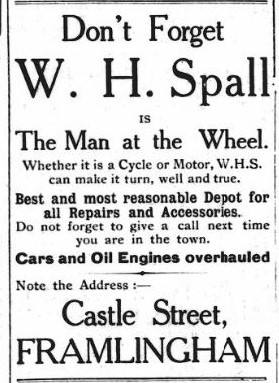
Walter Harold is interesting. He was the youngest child, and went into a new technology in transport like his brother Robert, starting small as a Mechanic on Bicycles,next becoming a Domestic Chauffer, and then deciding to start a business of his own.
The problem for Walter was that he chose the year of 1914 to start his business a few months before the outbreak of The Great War. Needless to say Walter joined up in the following year 1915 Walter joined up, despite having suffered from Bronchitis for some years and contracting Pneumonia in the winter of 1914. Given his skills as a mechanic, it wasn’t a surprise to find Walter working as a mechanic in the Army Service Corps (ASC),but his Bronchitis got progressively worse, and in xxxx we find him hospitalised and back in blighty:
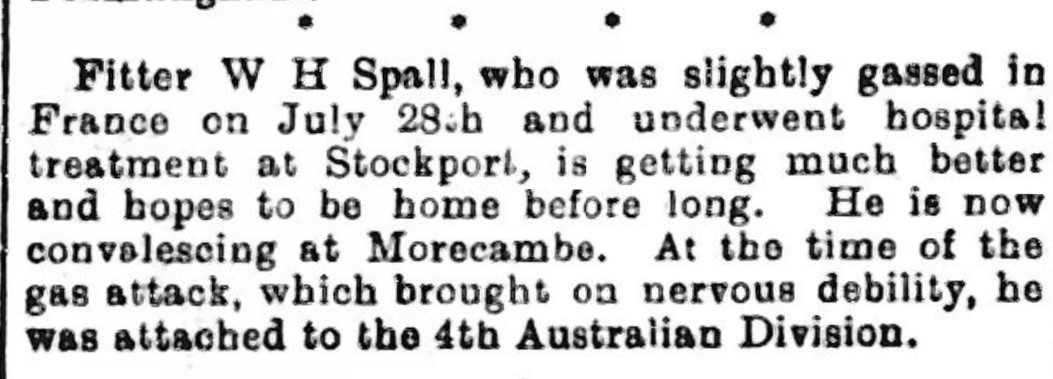
His unit had been transporting a column of Australians, when he had been subject to the effects of a Gas attack. It is likely that it was a minor effect for most of the column, but Walter’s Bronchitis made him particularly vulnerable. After his treatment he was considered unfit for military service and in March 1917 was discharged from Military Service, and was awarded the Silver War Badge to show that he had been discharged honourably due to his debility.
We now follow Walter through a remarkable set of local Newspaper adverts that act like a diary of his business life, and give a clear picture of the the man and the economic times he lived in.
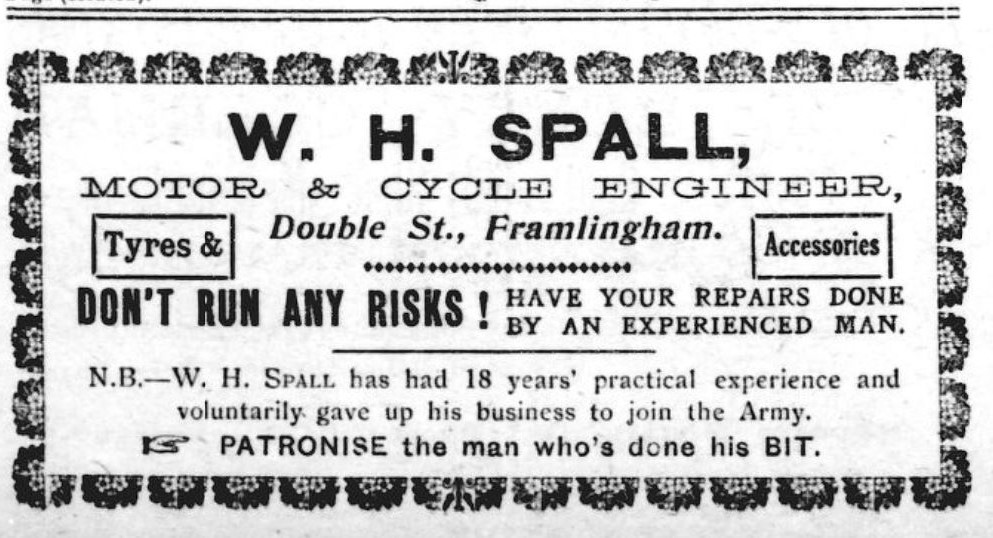
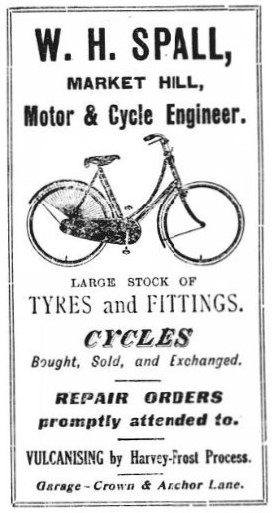
Walter set up in business again and tried to drum up custom by appealing to people’s patriotism,; “PATRONISE the man who’s done his bit.” And to some extent this worked with Walter setting up in a local garage.
At first Walter saw some success but by 1920,with the War over and huge numbers of men returned from the War and out of work, and the aftermath of a World Wide Pandemic of the Flu that killed millions, many working men and small businesses found themselves floundering in the new reality and Walter appears to have been one of them:
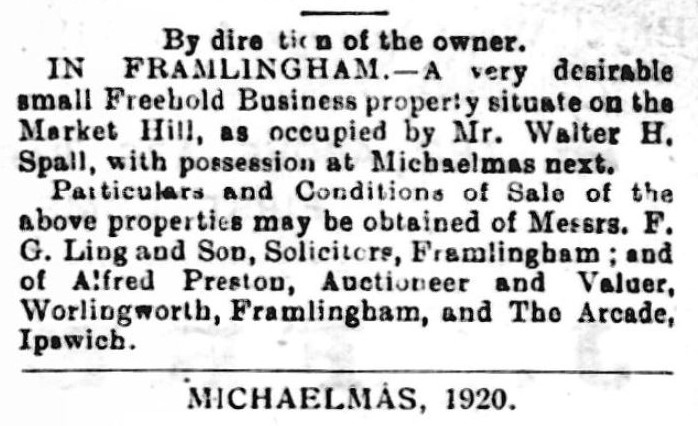
But Walter was down, but not out. Walter was a fighter and in 1921 he had thrown his hat back in the business ring by setting up an Engineering Business dealing in Gas, Oil, and Petrol Engines, as well as new fangled Electric Lights. he was obviously an incredibly practical man with great engineering skills,and an amazing tenacity.
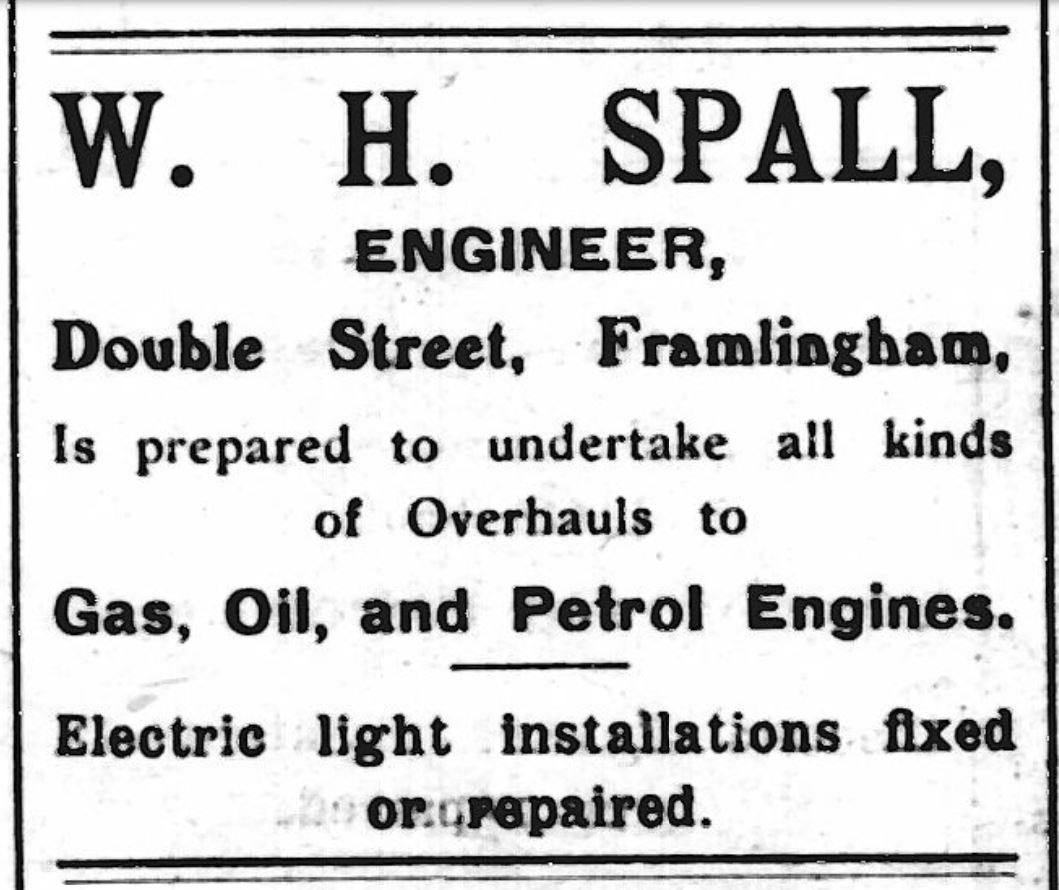
Walter managed to keep the business running for a couple of years but times were hard for everyone in small rural communities, and by 1922 he was advertising for work, and by 1923 he was struggling again and a again appealed to the better nature of of the local customer base by highlighting his lack of employment:
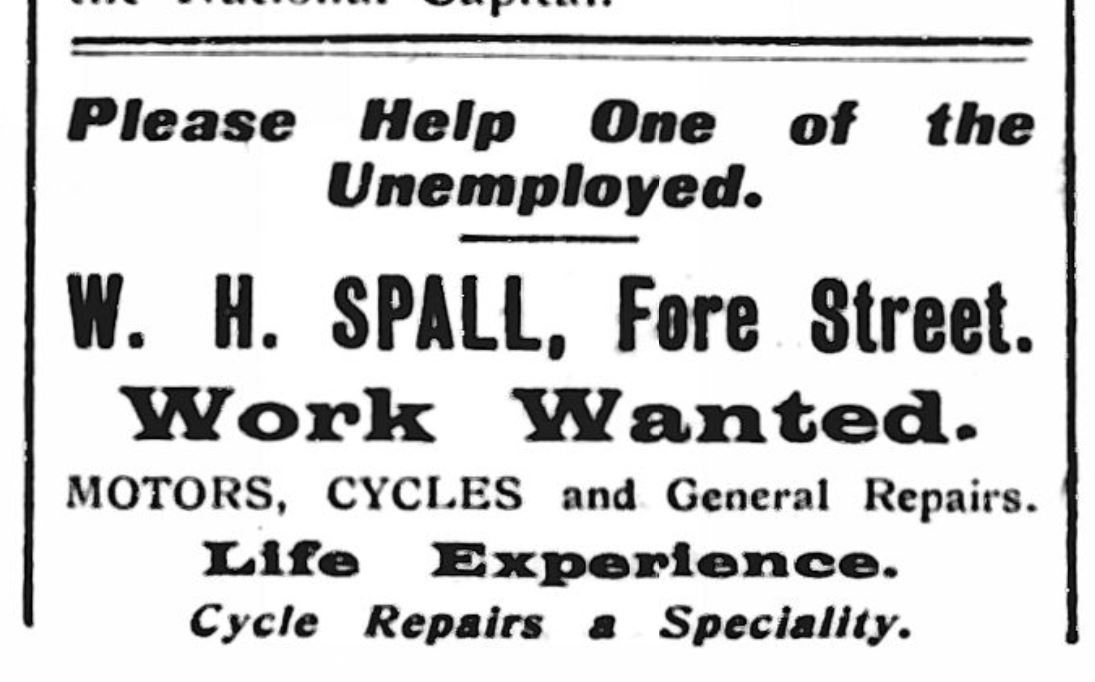
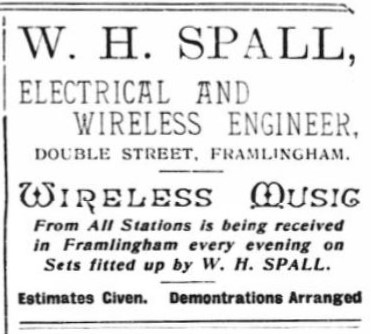
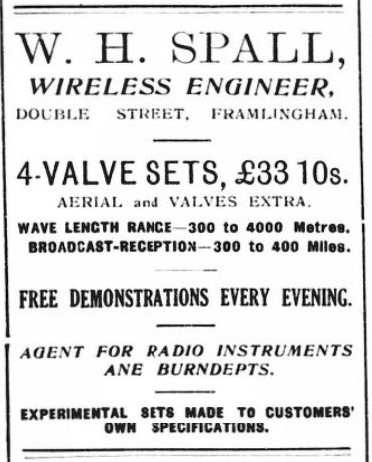
Walter even tried to innovate by moving into the Wireless Business, selling the benefits of Wireless sets in homes i.e. live Music on tap) rather than the features of the sets themselves, a smart business move, and a classic tactic that is taught in sales schools all over the world in modern times, but one that Walter identified through his own intelligence.
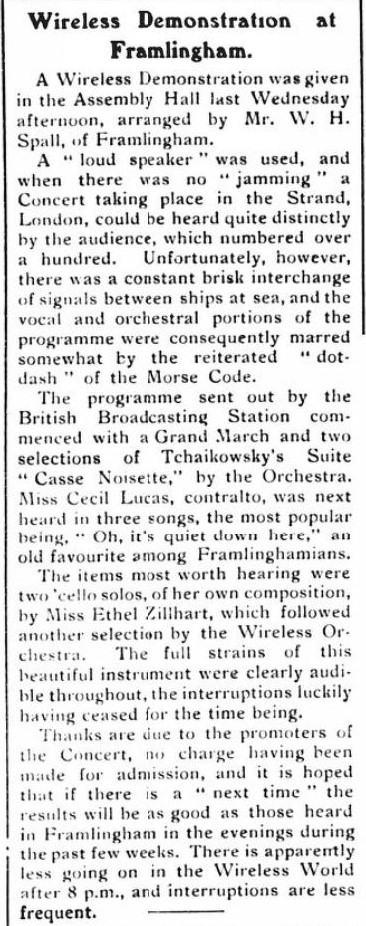
He next put on a demonstration of the power of the wireless,which although not entirely successful, once again showed his amazing entrepreneurship, and he aimed to sell to the top end of the market.
How Walter’s business developed in the 1930s is hard to say, but In 1939 Walter and the Family had moved to Ipswich and was working as a Fitter and Erector, a Steel Construction Engineer, he lived on in Ipswich until 1958.
An interesting insight into the Spall Family Tree and an early Suffolk entrepreneur who showed tenacity and intelligence in trying to make a living in New Technologies in the first half of the 20th Century.
Many of the Spalls still living in the area are descendants of the ancestors of Timothy Spall the Actor.
If you liked this and you’re interested in more of Timothy Spall’s Family History Stories you can read another one here Timothy Spall’s Christmas Family Tree

 Travelling Through Time to Trace Your Ancestors
One Reply to “Spalls, Shakers, and Norkies: Timothy Spall’s Suffolk Roots”