When we looked at Robbie Williams’ Farrell Line in the last instalment of his family story we found out about Robbie’s Farrell family line ( Robbie Williams’ Farrell Family Story )and here we look at Robbie’s “Williams” family line.
Nobody wants a War but if you have to go to War the worst thing you can do is be on the losing side. And it is thanks to brave hard men like Robbie William’s Great Grandfather that the Allies ended up on the winning side in The Great War, and their sacrifice and that of their 800,000 comrades who never returned forced the Government to allow working men the vote which led to middle class women receiving the vote, although it would be another 10 years before Working Class Women received the vote in the UK. So they can be thanked for giving us the free society we now live in.
Sniper
The Sniper took careful aim, momentarily checked his breathing then squeezed the trigger. There was a crack, the rifle forced itself into his braced shoulder and the German soldier fell back in a heap before he’d even heard the gunshot. The Sniper pulled back the bolt, the brass cartridge case was flung out to the side, he pushed the bolt forwards and rammed a new round in “up the spout”. Breath, squeeze, pull, push, and repeat. Eight steel helmeted Germans lay dead, almost an entire squad; Officers and NCOs heavy amongst them. The momentum of the rest of the German attack broke down, and the Lewis gun over on the right of him punched the rest of the German advance to a halt. This little squad of Worcesters had beaten a whole Company of German attackers and would live to fight another day.
The Sniper was Corporal John Thomas Williams, Robbie Williams’ Great Grandfather. He was 22 years old. His job sounds cold and clinical, but the enemy were there to kill him and his comrades with bomb and bayonet, he was caught in a zero sum game where there could be only one winner, and the loser wouldn’t live to tell the tale.
Trading a Steam Hammer for a Rifle
On 25th September 1914, the month after Great Britain declared war on Germany, a 19 year old steam hammer operator, walked away from his home on Cawney Hill Dudley, and instead of making his way to the Iron Mill where he worked a a multi-ton beast of a Steam Hammer, that smashed white hot metal into shape, and walked into the Dudley Army Recruiting Office and joined up for the duration of the war. He specifically asked for the local Regiment, the Worcesters, and from that point was part of the 1/7th Territorial Battalion.
BEF
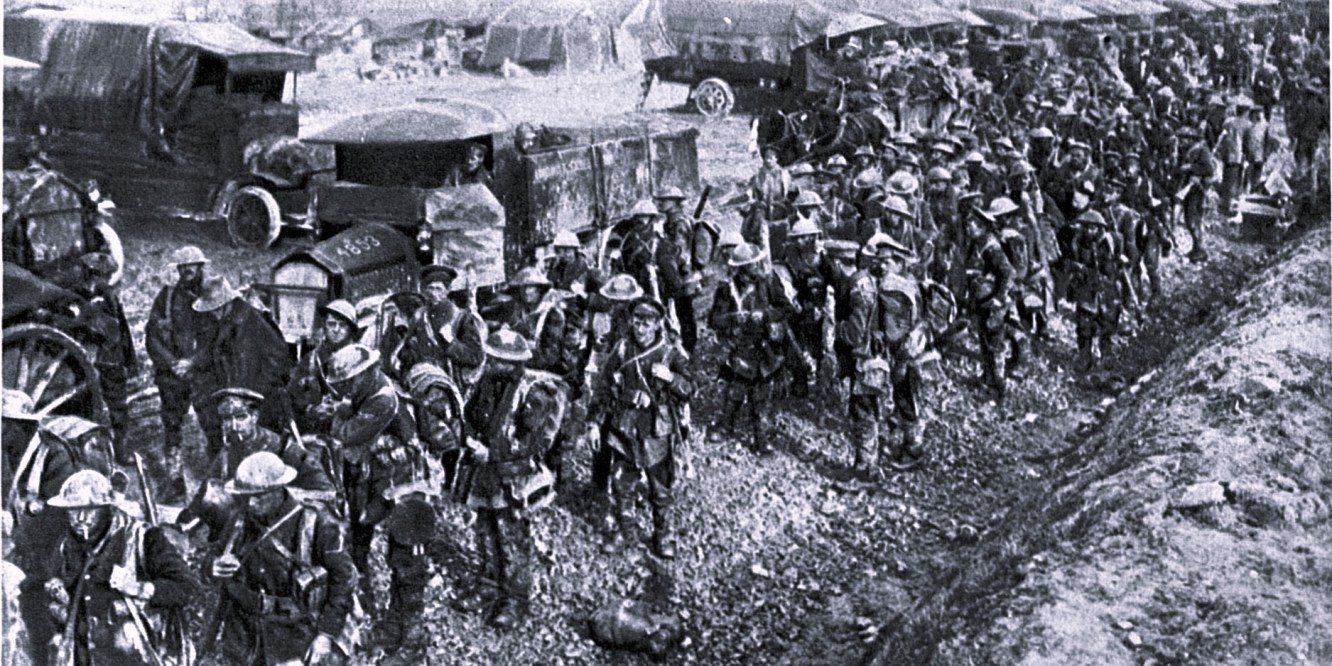
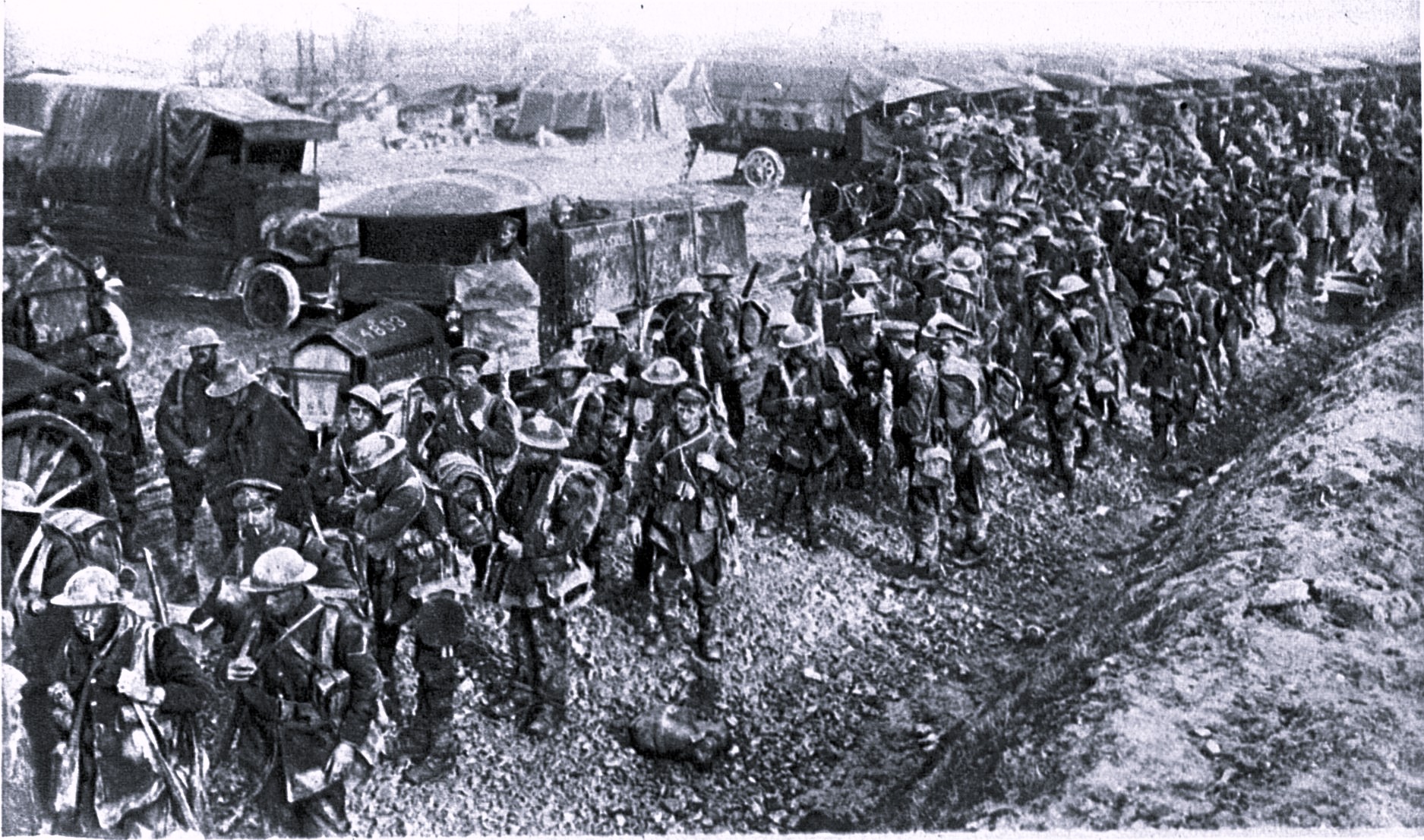
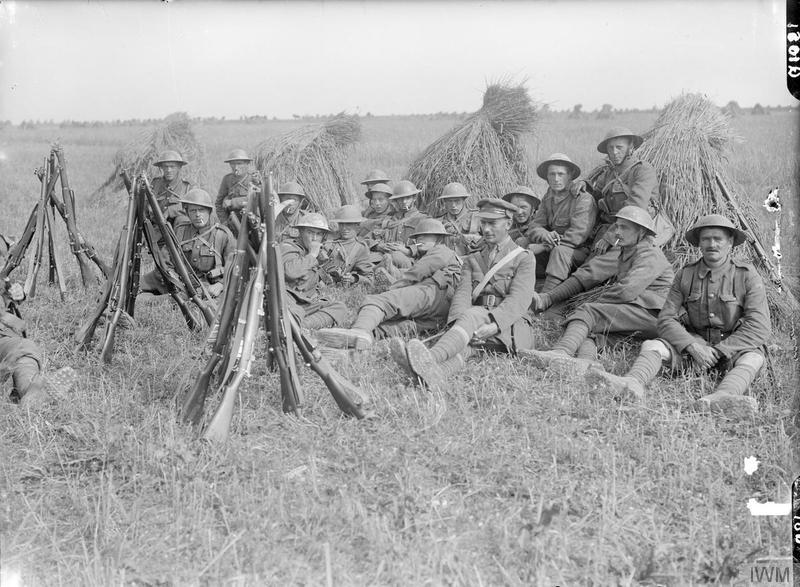
According to his medical John Thomas was just over 5 Ft 7 ins tall, had a 36 ins chest and good vision unaided. By March 1915, six months after joining-up, he was shipped to France in the British Expeditionary Force The “B.E.F.” The BEF fought the Germans to a standstill across the open landscapes of Northern France, and had a reputation for such accurate and rapid fire that in the early part of the war the Germans believed that they were facing machine guns rather than rapid rifle fire from the British troops.
After just over a year of fighting Private John Thomas Williams was picked out as a remarkable marksman among an army of remarkable marksmen. The eyesight that had been remarked upon in his first medical when he joined the army along with strong arms from working in an Iron Works, and cool concentration under fire, would mark him out for the elite role of a Sniper.
John’s role was to crawl out before an engagement to a forward position across the mud and shell holes of No Man’s Land, with his scoped Enfield rifle across his back, take up a concealed position, sometimes staying concealed from the nearby enemy positions for some hours, and then take out officers and NCOs from the enemy’s attacking force leaving them leaderless. He would also have needed to break up an enemy attack by taking out large numbers of enemy troops in quick succession if his unit was holding a defensive position. Snipers were greatly feared and would be the target of artillery and machine guns if they were spotted, there was the added risk that if he failed and his position was overrun, it was highly unlikely that he would have been taken prisoner, he would be shot on the spot by the enemy.
For most men on the front line the risk of death by bullet and shell and bomb was a matter of good luck or bad luck, but for a Sniper it was wholly personal. The enemy artillery men and machine gunners, the trench mortar men, the German Storm Troops with their flame throwers, and the infantry with their rifles and grenades were not just firing into an area on a map, they were specifically trying to seek out and kill you. You were both the hunter and the hunted.
GSW
John’s bravery under fire was unquestioned, but came with huge risk, he would be and within three months of becoming a Sniper, twelve days before Christmas 1916 the enemy spotted him and he took a gunshot wound to his right shoulder (GSW R Shoulder in records), fortunately he managed to get back to allied lines, and was shipped to the field hospital at Rouen. They patched him up, and when he returned to his unit in January 1917 he was appointed Lance Corporal, went back into the line.
The promotion also meant a rise in pay, so he had more money to send back to the family at home, to make up for the household’s loss of earnings when he joined up. The emotional roller coaster his parents and siblings must have endured hearing about him getting shot, recovered, promoted and sent back to the front, must have been a mixture of terror and pride, it would have caused a constant anxiety in the family knowing he had taken on one of the most dangerous and lonely tasks that a soldier could have on the front line. Wounded on the front line a Sniper would have to find their own way back if in a forward position and under fire, with only the expectation of a bullet or a bayonet if captured by the enemy.
The Defence of Gillemont Farm
17th-24th April 1917
John took part in a battle known as the Defence of Gillemont Farm. The extracts below are from the official War Diaries of the Regiment written by officers at the front at the time. They betray not a hint of compassion towards the enemy, which can seem quite shocking to those of us sitting in the warmth and safety of our homes today, but we don’t face their reality. We join the Worcesters as they were pinned down at the farm with a German Heavy Machine Gun firing down on them from a nearby ridge.
“These posts now saw the enemy deploying to the track from the Bony and Macquincourt Farm roads and opened heavy fire upon them as they appeared over the ridge. the barrage in answer to the SOS fell splendidly, and did great damage. Our front posts now fell back deliberately to their second line of defence, which proved to be the old German trench in front of the farm, and found it a strong position. The Lewis Guns and snipers did splendid work and the attack was broken up, the enemy retired into the sunken Bony road and over the crest towards Vendhuile, whilst a party seeking shelter in the farm itself were caught by our Lewis Gun and rifle fire from Captain Prescott’s post east of the farm and all wiped out, 20 bodies being counted. The forward lines were not again held our men finding the second line a much stronger position.”
“The counter attack was in strength; it is thought that at least 3 Companies were used. There is no doubt that the enemy was much shaken and lost a great many men. Many walked clear into the barrage and the first 4.5′ howitzer shell to fall was seen to fall into a bunch of six men, killing them all. The Lewis Gunner worked splendidly and assisted greatly in stopping the advance. Lance Corporal Williams, a sniper, was seen to kill 8 Germans on his own. This NCO also did good work in patrolling and message carrying.”
“At 6.45 another counter-attack formed, but this was not on a large scale and was thrown back by our men.”
At the end of the battle the 1/7th Worcesters had sustained 40 fatalities, 20 missing, and 179 wounded. For his conduct in helping to break the enemy attack, John was promoted to full Corporal at the end of the engagement.
Face Wound
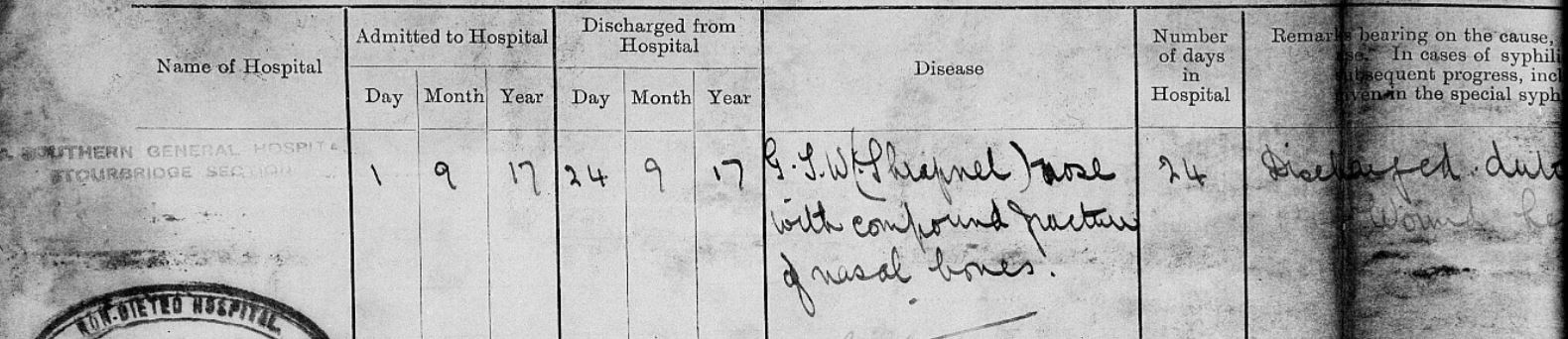
27th August 1917 during an attack on Langemark G Line John was hit in the face by shrapnel giving him a compound fracture of the face and a broken nose, which meant that he was ship to a field hospital hospital and arrived on 1st September, then shipped home the next day, where he was again hospitalised for 24 days, and stayed in the UK for the rest of the war.
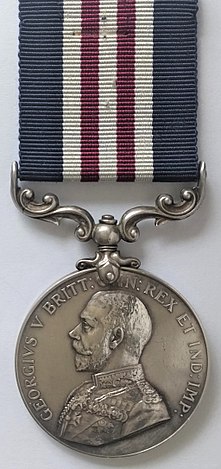
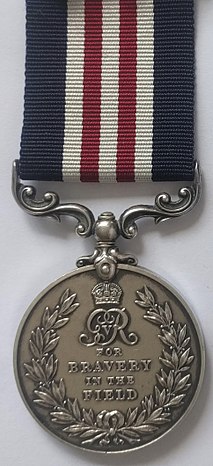
In recognition of his actions under fire, being wounded twice, and being credited with singlehandedly accounting for over forty enemy soldiers, eight in one action during the defence of Gillemont Farm, Corporal John Thomas Williams Sniper of the I/7th Worcestershire Regiment was awarded the Military Medal. The Military Medal (MM) was established by a Royal Warrant from the King on March 25, 1916. It was awarded to non-commissioned officers and men of the British Army for acts of bravery and devotion to duty in the field. The medal featured the Royal Effigy on the obverse and the words “For bravery in the Field” on the reverse, encircled by a wreath and surmounted by the Royal Cipher and a Crown.
Gold Watch
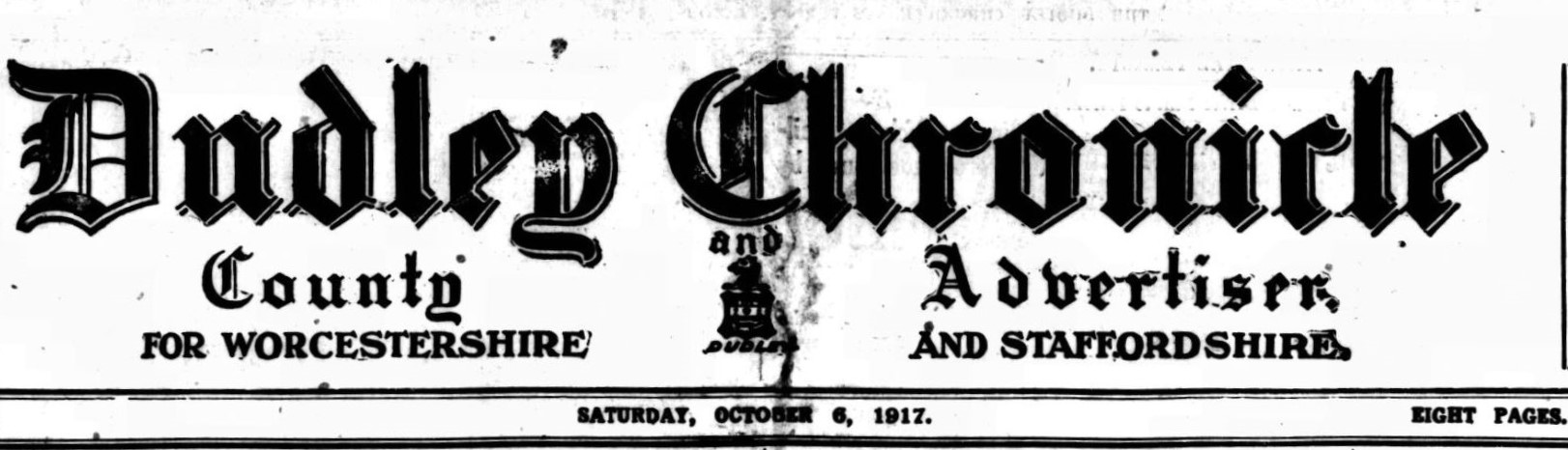
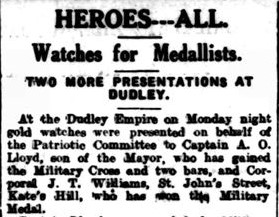
On 1st October 1917 John Williams was invited to a special event in his honour in his home town of Dudley sharing the stage with the son of the Mayor of Dudley.
This was a huge civic honour and would have meant John being thrown into a situation completely alien to any he would have experienced before.
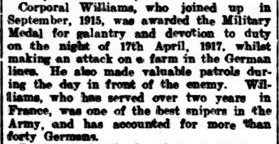
John had been invited alongside the Mayor’s son, who was a Captain from the Worcesters, by the great and the good of Dudley to receive a gold watch, quite likely the most expensive individual possession any of his family had ever owned.
It is quite telling that he was named as one of the best snipers in the British Army.
John obviously had a degree of confidence and wasn’t phased by the occasion, even if his Officer colleague gave a speech, John stole the show with his joke at the end of the speeches!
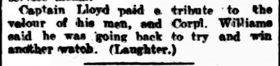
John Thomas Williams was an ordinary working man from a working class family who put his life on the line for his Comrades and his Country. He took on one of the loneliest and most exposed and dangerous tasks in a terrible war, was shot in the shoulder and hit in the face with shrapnel, but despite all of this he not only survived but maintained a wry sense of humour.
It is hard for those of us who have not found themselves in a kill or be killed situation, to fully understand what it must have taken for John Thomas Williams to have carried on fighting despite all that he had seen, and indeed to have known that if he failed to make an immediate impact on the the fighting ability of the enemy, he and his comrades would never see home again. He, like all the other allied troops who have served, should never be forgotten.
The Legacy
What was it for?
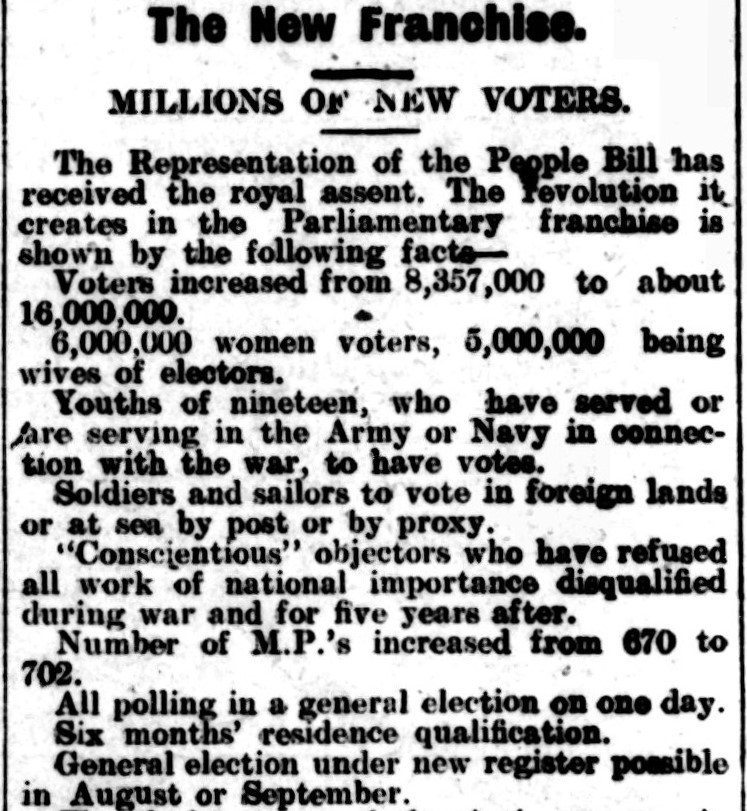
It is a much overlooked fact that the most abiding legacy of the men who fought for Britain in The Great War was to turn Great Britain, eventually, into a fully enfranchised Democracy. The sacrifice of 800,000 British War dead and the fear in the government of returning military men turning to armed uprising as had happened in Russia and Germany, directly led to the Government granting Working Class Men gaining the vote in Parliamentary Elections, and as part of the same Bill, to “counter” this, Middle Class Women were enfranchised, although it would take another ten years for Working Class Women to be given the vote in 1928. All of these occurrences can be traced back directly to the sacrifice made by men like John Thomas Williams.

 Travelling Through Time to Trace Your Ancestors
2 Replies to “War Hero: Robbie William’s Great Grandfather”