
We last looked at Robbie Williams’ Family Story in the last instalment (Robbie Williams Family Story Part 2) we found out about Robbie’s War Hero Great Grandfather from World War One, and now we look at how the Williams Family got their name.
An English Labourer
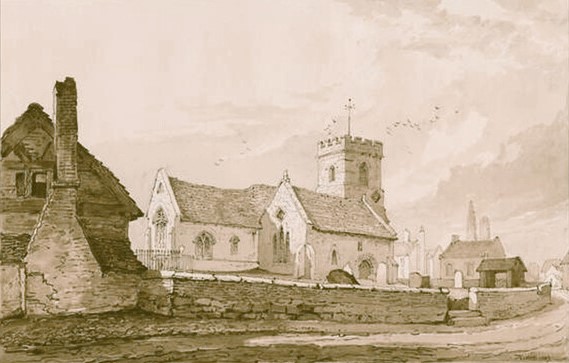
In the 1830s there lived in the village of Trysull in Staffordshire Thomas Williams, an honest labourer and his wife Mary Cole, a girl from the nearby village of Tettenhall about two hour’s walk away. Nine hundred years before they were born, Tettenhall had its moment of fame when a combined English Army from Mercia and Wessex, tracked down an invading Viking Army from Danish Northumbria that had been murdering and burning its way across country from Bristol. The Englishmen from the South and Midlands caught up with the Danes near Tettenhall, at a place called Wodensfield (Wednesfield), fell upon the Vikings in combat and annihilated them. Three Northumbrian Viking Kings were killed in the battle and this victory stopped Viking incursions to the area for a whole generation.

In more peaceful times in the early part of the 1800s, our Labourer Thomas Williams and Mary Cole raised a family and tilled the same earth that had been nourished with the blood of dead Vikings a millennium before. Thomas Williams and Mary Cole were Robbie William’s 4th Great Grandparents. Most of their neighbours were Agricultural Labourers’ families, as had been the case since their ancestors joined the men of Wessex to destroy the Viking invaders thirty generations earlier.
Turnpike Road
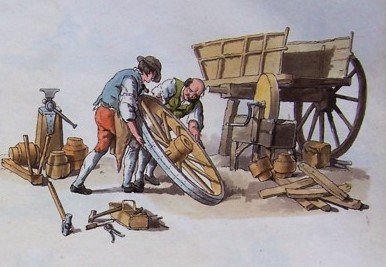
But times were changing, and the building of a turnpike road in 1790 that ran from Dudley to Monmouth through the southern part of the village meant that travel was easier as were opportunities for employment in the surrounding villages. On its route sprang-up pubs to sell their wares to travelers, wheelwrights’ yards to fix passing wagons, blacksmiths’ forges to shoe carriage horses, and butchers and millers found that they could send their produce further afield than the village itself.
Taking advantage of opportunities for provided by the turnpike road, by the 1850s the Williams family moved a few miles away to the village of Penn where Thomas continued to work the fields, and the family grew to seven children. By the 1860s they had moved again to the village of Wombourne three miles to the south of Penn.
This travel from village to village may not seem like a big deal by modern standards, and in the 19th century even the simplest Labourer could leave their village if they found employment somewhere else, but this was a luxury not known to their ancestors in the early Middle Ages. It wasn’t until The Black Death decimated the population in the 14th century that feudal laws were broken down in England when the peasants defied the Law that had become unenforceable due to the deaths of so many officers of the feudal landowners, and went where the wages were better. So even the biggest cloud could have a silver lining.
House Maid
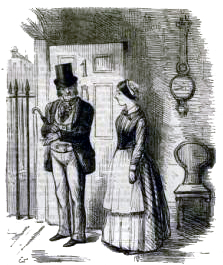
By the 1860s the older Williams children were adults and were finding their own way in the world. When the family moved to Wombourne their middle daughter Eliza stayed on in Penn working for a local Miller as a House Servant. Eliza is Robbie William’s 3rd Great Grandmother.
Being the only Domestic Servant in a House of a middle aged Miller’s Clerk and his young family was a full time job. Eliza lived in on the job, was the first up in the morning and the last to bed, she did the housework, helped with the children, washed and pressed the laundry, made the fires and cleaned the grates, as well as anything else that was required. She would not have been able to both marry and keep her job, as there was not enough time to be a wife and a full time Domestic servant, and because of this she may have had a lonely life emotionally, despite living in the middle of a the family she served.
How’s Yer Father
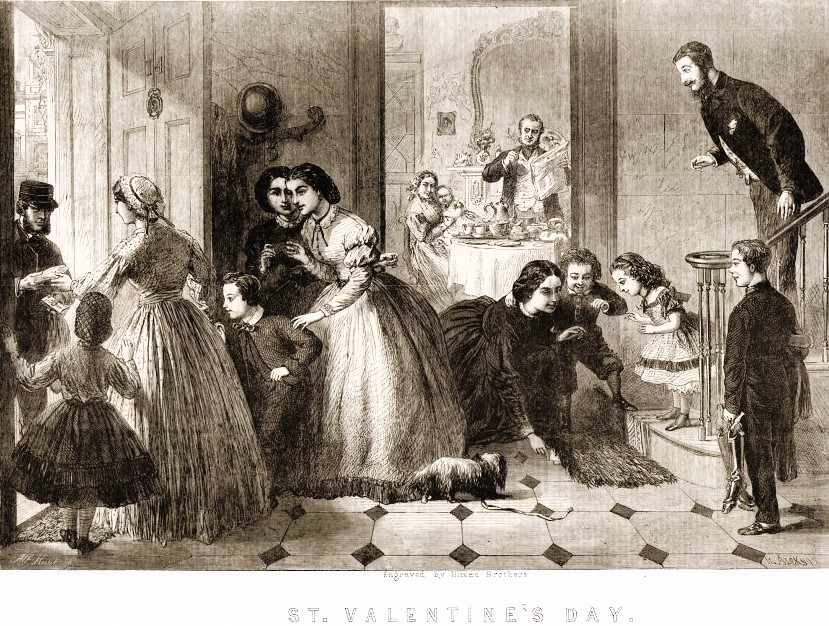
The options for conventional romance for a servant girl were therefore few and far between; many female servants simply never married, others could only marry if they were prepared to give up their income and rely on their husband. Despite this, romance or at least an encounter, did happen for Eliza, and took place sometime around St Valentine’s Day 1868 when Eliza had a tryst, that resulted in a probably unplanned pregnancy.
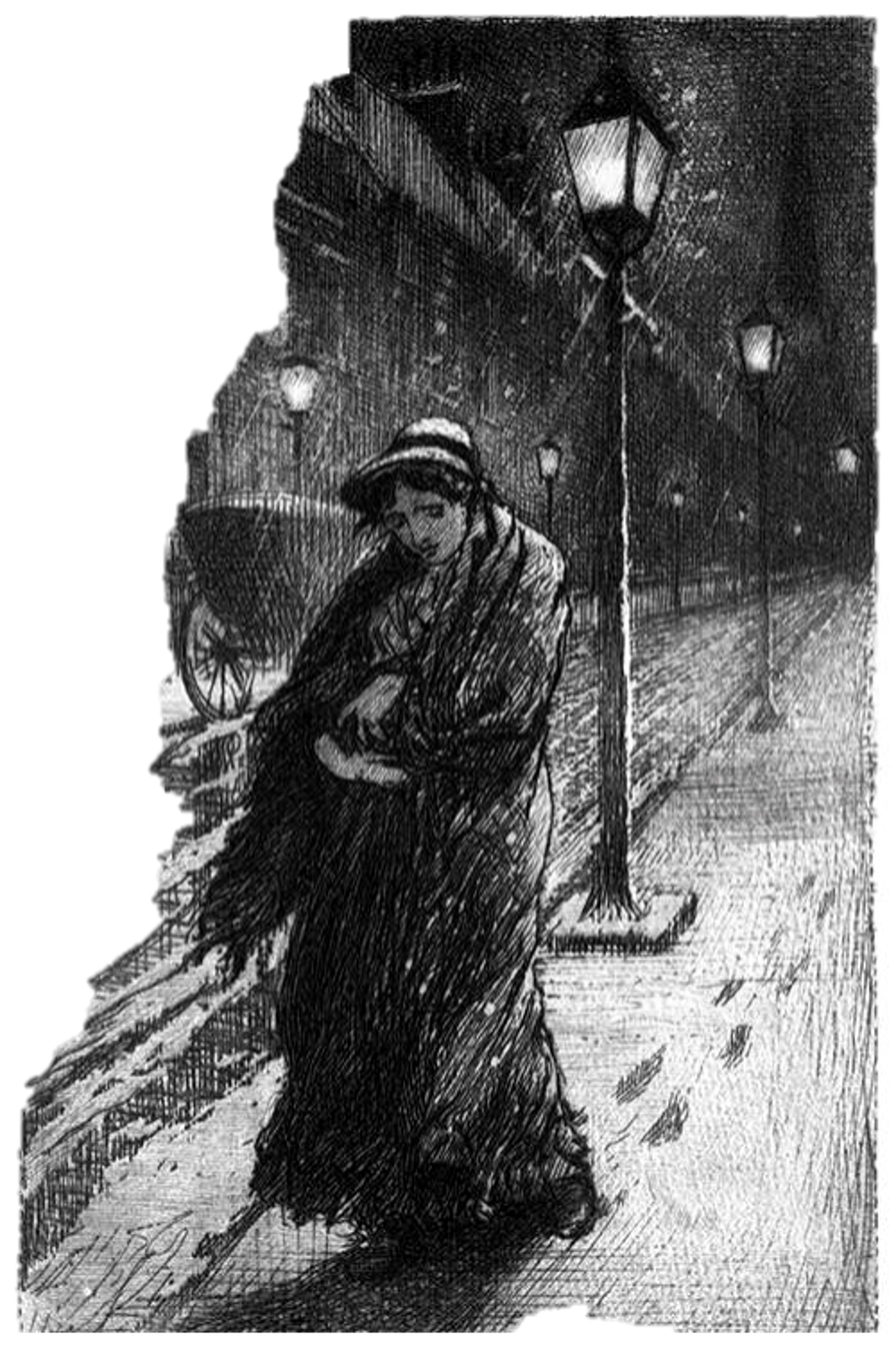
It’s hard to understate the shame associated with a young girl becoming pregnant in Victorian times, and the judgement that would have descended upon her. The immediate effect would have been that Eliza would have lost her job and been forced to leave her employer’s household. For many young women this proved too much to take and there are many cases of such young women taking their own lives as a consequence. But Eliza was lucky, as she was able to return to her parents and family, which she did.
Who’s Yer Father?
So here we come to the nub of the mystery in Robbie William’s paternal line, who was Robbie’s 3rd Great Grandfather? And what would his family name have been if it hadn’t been his mother’s name of Williams?
When tracing a young girl living away from home in Domestic Service who becomes pregnant, the immediate candidates for the male culprit I look for would tend to be members of the household she was serving in, as these were the main contacts she would have had, and she was both in close proximity to them twenty four hours per day, and was beholden to them for her livelihood, so coercive pressure could be brought to bear on a young girls by male members of her employer’s household. That would put two men in particular into the frame; the Miller’s Clerk, Joseph Stanley, the Head of the House in his mid-forties, and his Brother-in-Law John Fox in his late twenties, a Wine Merchant who lived in with the family.
But for reasons that will become apparent, in this particular case the culprit may lay elsewhere.
There was also another set of male protagonists from various backgrounds that a serving girl could expect to come into fairly regular contact with, and into this category fell men such as tradesmen who supplied the family and whose premises a servant would visit, and also the servants of other families that her employers were friends with, and neighbours and friends of the Household.
Pointing The Finger
To try to unravel the mystery without DNA evidence is difficult, but like many young women of the time, Eliza was smart enough to leave a clue with a clear implications to the surname of the culprit.
Up until 1875 a woman could name a father on an illegitimate child’s birth certificate, however, naming the father of an illegitimate child without an admission by the father could lead to complications and end up in the magistrates court. Also having the father’s surname as the child’s surname on a birth certificate would mean that if that child was brought up by the mother and her family, the child would stand out as illegitimate in the family context to outsiders, because of this illegitimate children were generally given their Mother’s family name as their surname.
However a Mother could give the child more or less any Christian Name, and more importantly Middle Name. Most Mothers would not wish to give a child an odd sounding Christian name that would mark them out for life, but a Middle Name was something more discrete, and in the case of Eliza’s child, she named him John Oakley Williams, he was Robbie Williams’ Great Great Grandfather. This naming of a recalcitrant father via a middle name of an illegitimate child became common practice, and I have seen this happen very frequently during my years of research.
This clearly points the finger at a man whom Eliza had come into contact with, as Oakley was not a family name within her own family. Eliza was ensuring that the father would be named and shamed in a way that would not bear legal or overt social consequences for her, her family, or her child.
This name of Oakley now brings two other men into the frame as the putative father.
The Butler Did It?
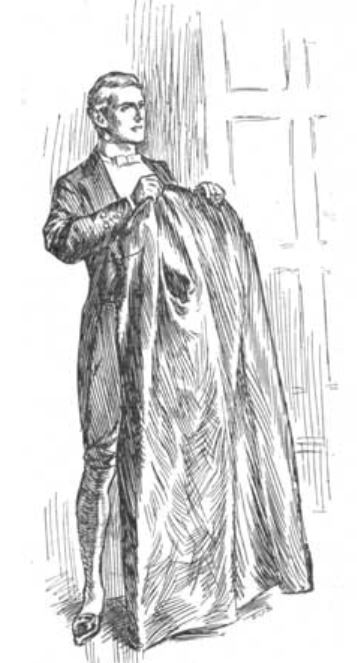
The first suspect as the father lived about a mile away from Penn in the 1860s. He was a thirty year old named Joseph Oakley, who worked in a factory owner’s home as his Butler.
There is no known link between the factory owner and the Miller’s Clerk who Eliza worked for, other than the proximity of where they lived, but, and it isn’t clear that they would have socilaised as they were levels apart in the Social Classes, so there is little room to see how Eliza Williams and Joseph Oakley’s paths may have crossed via their employers. but being living so close to each other there was still opportunity for them to have met.
After the birth of Eliza’s son John Oakley Williams, Joseph Oakley, still a Butler and a single man, had moved more than thirty miles away. If he was involved, perhaps he was putting as much space as he could between himself and an unwanted pregnancy?
Joseph then becomes illusive in the records, he doesn’t appear as a Butler in any records I could find after the 1870s, and it’s possible he moved abroad, or changed his employment and moved on, but it’s not proved possible to pin him down.
Despite the question marks, that may have been the end of it, “The Butler Did It”, we would have had our man, if another suspect hadn’t entered the frame.
Trust in the Law?
Rather than accepting just the possible name and proximity evidence and stopping with the Butler as the suspect, it’s only right to try to either disprove the idea, or look for other clues to other suspects. So tracing Eliza’s employers, the Stanley family, forwards in time to just after John Oakley William’s birth, we find that between 1861 and 1871 they had moved to Wolverhampton, and living next door was the family of an Edward Oakley, a Solicitor’s Clerk, who would have been 31 when Eliza became pregnant.
Edward Oakley was about the same age as Eliza, newly married, with seven children born in the 1860s, and would end up with twelve children by 1880, so to all intents and purposes were happily married successful man making a good living. Edward cut quite a figure working in the intellectual world of the Law, with clean clothes and clean nails, quite different from Eliza’s own family and that of the Mill owner she worked for. But William did not come from privilege, he had clawed himself up from a very working class family, his father was a Limestone Miner and toiled in the mines for the whole of his working life coming home each night looking like a ghost with his clothes, face and hands, covered in white dust. Edward had managed to climb up quite a few notches on the social ladder by first becoming an apprentice to a Solicitor’s Clerk, then becoming one himself. This was no mean feat in a time when children from working class families received little if any schooling, so we can infer that he was not only intelligent but had something about him that meant this son of a limestone miner had been singled out for advancement by a Solicitor’s Company.
Tragically in 1881 Edward died at only 45 years of age.
Who’s the Daddy?
The clue of the Oakley middle name means that we can most likely rule out Eliza’s employer the Miller’s Clerk Joseph Stanley, and his brother-in-Law John Fox the Wine Merchant, as the father of Eliza’s child. That leaves us with the two Oakley men, who, despite their shared surname show no immediate signs of being related, although there is a chance that they were distant cousins with the connection a long way back.
Could the shadowy figure of the Butler Joseph Oakley be in the frame? He was working within walking distance of the Stanley household where Eliza was working, and there is a fair chance that the two households were socially familiar with each other. He was also single, and in a superior position to Eliza, so could have seemed like a good match for a serving girl. The fact that he took other employment a good distance away from Eliza shortly after the pregnancy, and subsequently disappeared from the records could be construed as suspicious, or perhaps it was just coincidental?
If not Joseph, then what about Edward Oakley? What are the chances that Edward had strayed with Eliza? We can never know for sure, but we can infer the impact that a man like Edward could have had on a girl like Eliza, given his humble background, and his intellect and ambition that had lifted him out of poverty, his subsequent success, and his obvious virility with a house full of young children.
Conclusion
My money is on one of the Oakleys, and on balance Edward Oakley the Solicitor’s Clerk, he was obviously extremely fertile, a close neighbour of the Stanley Family at a similar social level and therefore may well have had many social interactions which would have involved contact with each other’s servants. It is easy to see how such a man could be attractive to a young woman, living away from her family, perhaps a little lonely, and with limited opportunities for social interactions with eligible men of her own age.
We may never really know, short of a DNA test, and a lot of research on the back of that! But what it does give is a line of subsequent descendants that lead to Robbie.
What we can perhaps surmise is that if history had been a little different Robbie Williams would have been named Robbie Oakley.
What Happened to Eliza?
Happily, what we do know is what happened to Eliza. But that will be for another time.
Catch the next installment here: The Dancing Durbers Robbie William’s Family History Part 4: A Brush with Hitler

 Travelling Through Time to Trace Your Ancestors
2 Replies to “The Butler Did It! (or Did He?) Robbie William’s Family History Part 3 How the Williams Family Got Their Name”