Interested in my latest outing on The Katie Martin Show on BBC Radio Solent?
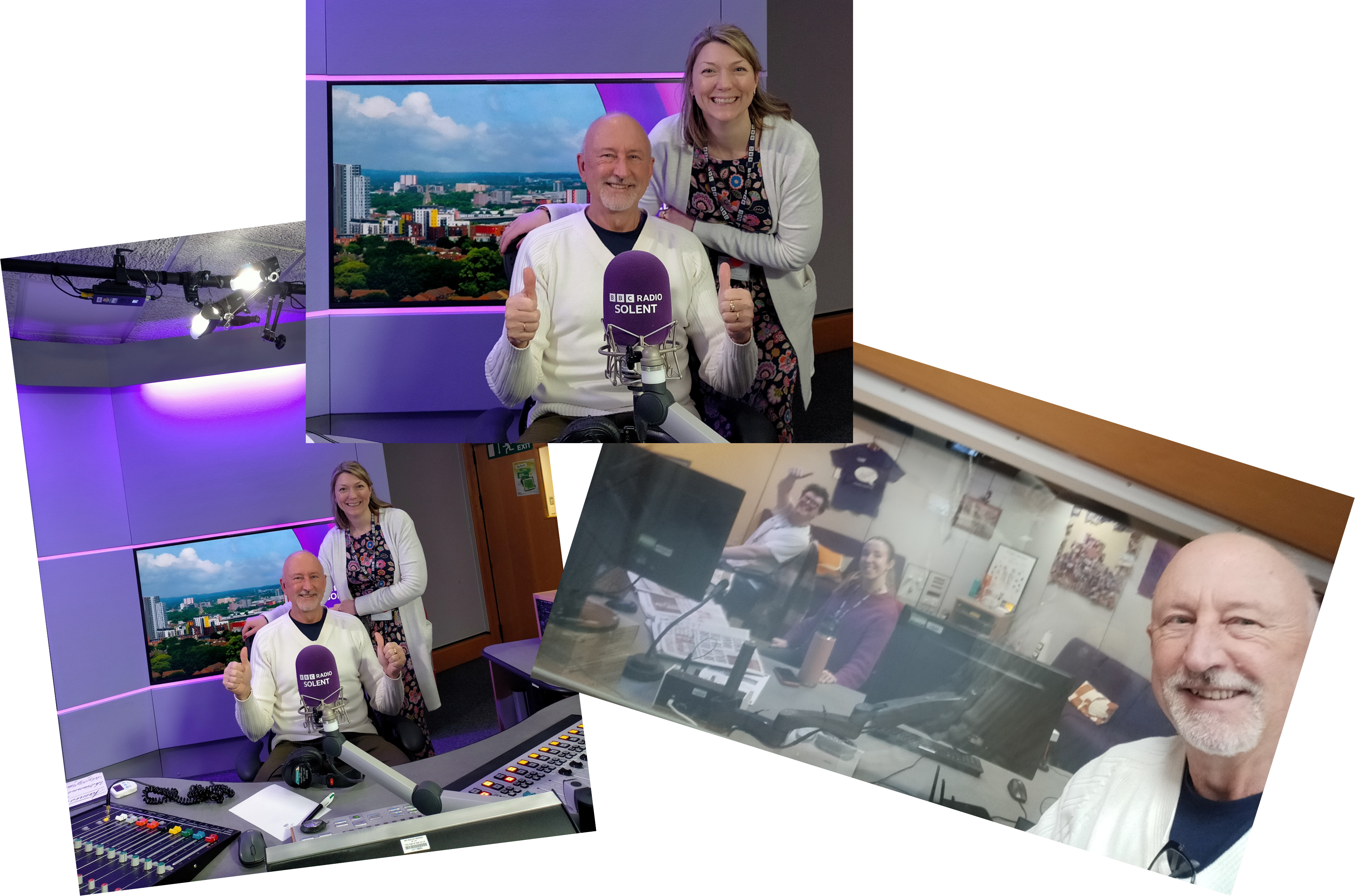
You can catch the recording here, I come on at about 2hrs 20mins:
https://www.bbc.co.uk/sounds/play/m002p96g
The 11 year Old Workhouse Girl
It’s always a pleasure to go on air with BBC Radio Solent, such a nice bunch of people, and nice and local for me. Whenever I do I like to try to bring in a little bauble of information that has lain undiscovered for a century or more to surprise and hope intrigue and delight my hosts and listeners. When I can find something personal to Katie Martin (the DJ) or a caller, even better. This time I turned up a corker! A fascinating story that was personal to Katie the DJ.
I had decided to look at Katie’s Great Great Great Grandparents to see what I could find. We all have 32 three times Great Grandparents, so I had to rapidly, so started with the more unusual surnames of the 32 ancestors, and then looked for the less obvious record collections. Rummaging through the records, I came up with a little girl names Elizabeth Hannah Whitely, Katie’s Great Great Great Grandmother.
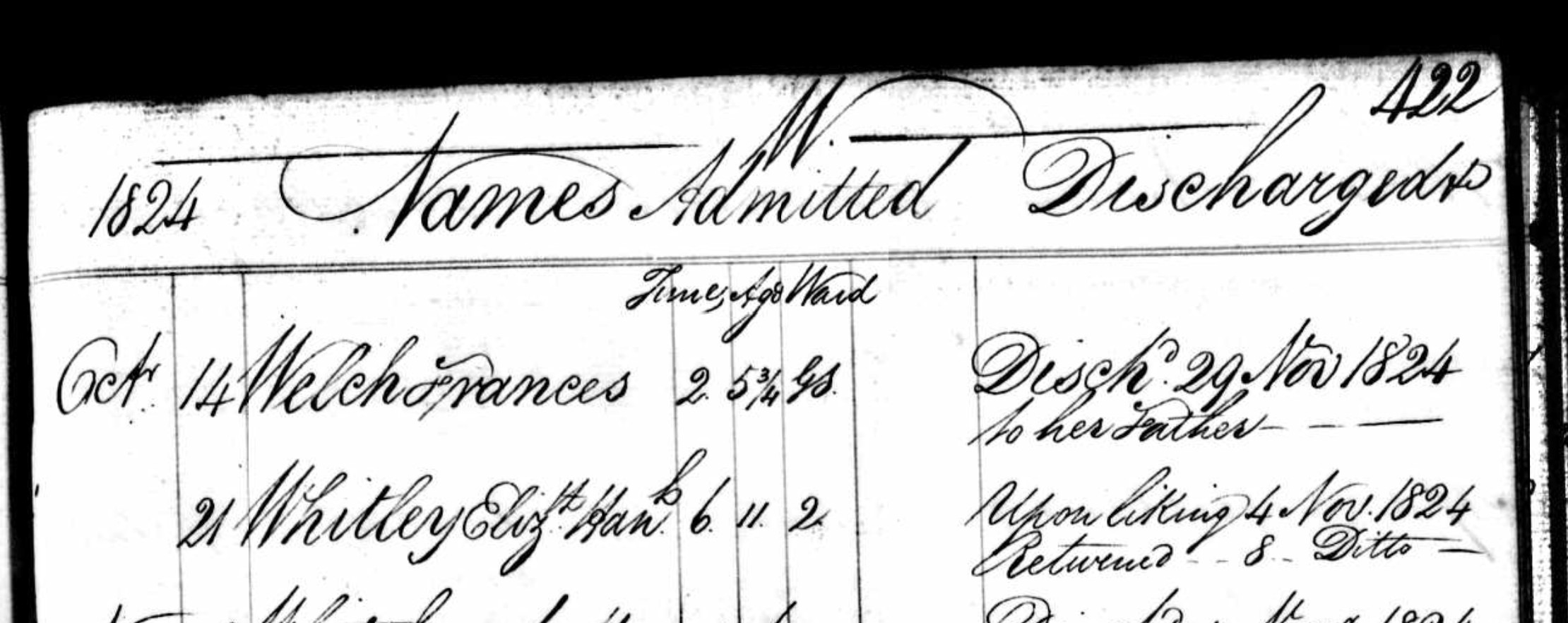
She appeared in the Westminster Workhouse Records on October 21st 1824. Aged just 11 years old she had walked into the Workhouse on a dark cold evening and asked for shelter. Workhouses at the time could be good or bad depending on where they were and how they were run. The worst of them in the early years of the 19th century were sometimes described as providing a slow death indoors as opposed to a faster death on the streets, but they did at least provide a roof and basic food.
The entry below is telling as it shows her being Discharged “Upon liking” on the 4th November, “Upon Liking” means through her own choice, so she wasn’t discharged by the Workhouse staff, nor taken out by a parent, she merely requested to leave and was allowed to walk out onto the cold harsh streets of Georgian London, from where she’d appeared a couple of weeks before. We don’t know what happened in the few days after this, but she was back in the workhouse on the 8th of November 1824.
Further digging showed that she spent much of her young life in and out of the Workhouse, and I had to try to piece together how this came about. A clue came in the 1825 registers that showed her being readmitted “due to the death of her father”, this would tend to imply that her mother had already died, and that she was left alone at 12 or 13 years of age.
War with Napoleon
I had to track forward to her adult life to find more clues, and one of the things that came up from a census entry was that she was “born on the Atlantic” this is fairly uncommon, but shows that the person was born onboard ship outside of site of land, either in the Atlantic or the Atlantic approaches in 1813. This was important for a number of reasons; firstly it implied that her mother was onboard ship during the Napoleonic Wars, meaning that it was unlikely that the family where migrating to or from the UK, secondly that that being the case, it was more likely that she was born on a Royal Navy Ship, and thirdly that that also being the case, her mother was most likely the wife of a Soldier or Sailor in the Army or Royal Navy above basic Rank as the wives of the lowest ranks were less likely to be onboard ship.
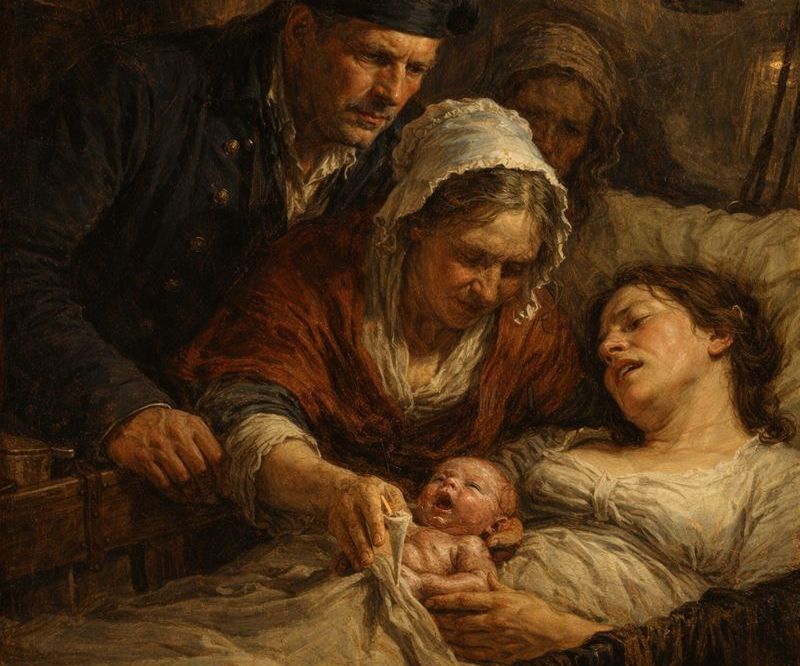
Using this information, the next step was to find Elizabeth’s baptism, and I found the baptism of an 11 month baby girl in Chatham. St Mary’s Church Chatham where the baptism took place, ,was a telling location as it was the official Parish Church for The Royal Dockyard, Barracks, and Naval Hospital. Sure enough, there amongst the children of Shipwrights, Mariners, Artificers, Ropemakers, Soldiers, and Mariners, was the daughter of John “Whitely” the Master at Arms of HMS Barfleur and his wife Elizabeth.
This fitted exactly with my supposition of Elizabeth’s background, the Master of Arms of a Royal Naval Ship was of sufficient rank to have been accompanied by his wife onboard ship, especially if the ship had been based in home waters or nearby. The Barfleur fitted that specification.
Master at Arms
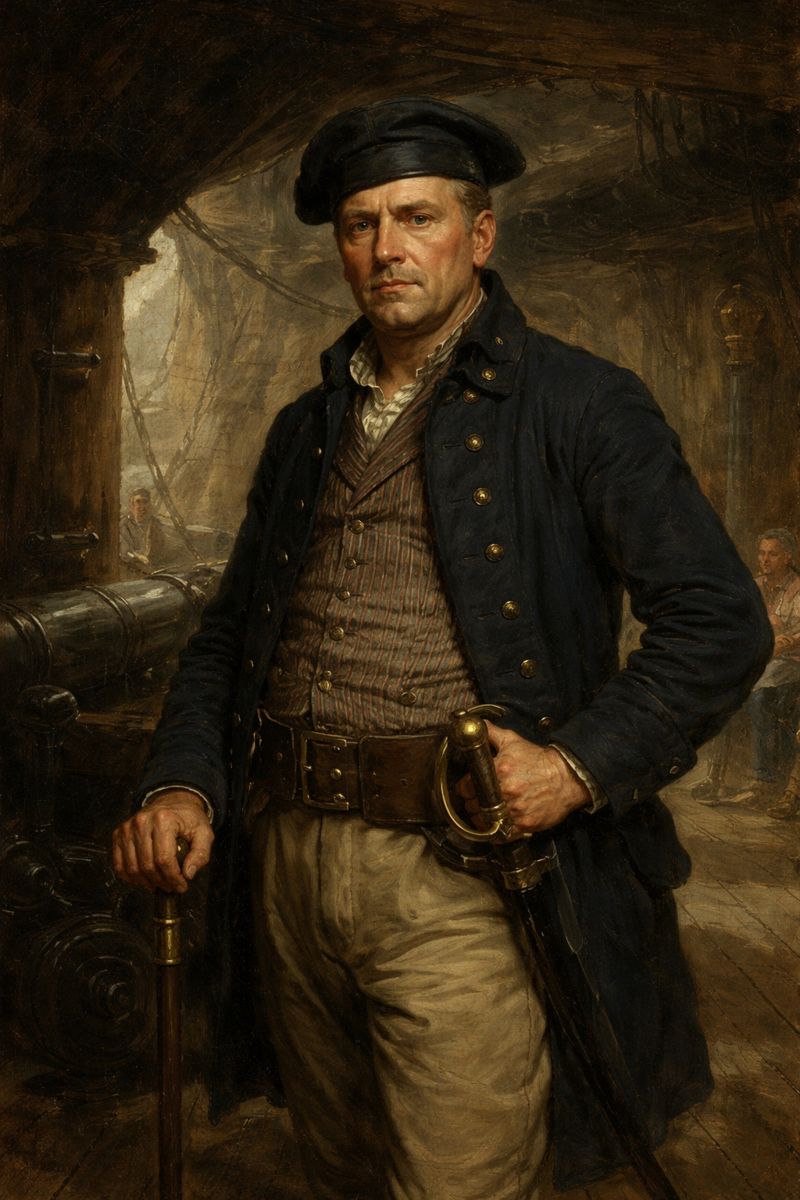
The Master at Arms of a Man-of-War, was the ship’s policeman and enforcer of discipline, acting under the authority of the Captain and first lieutenant. John would have enforced naval regulations, using the ship’s Corporals to prevent drunkenness, the, fighting amongst the crew, neglect of duty, and Desertion attempts. John would also have been responsible for the ship’s prison- the Brig, and any prisoners in it, as well as arranging for floggings and other punishments to be carried out in line with naval rules. During combat he would have been responsible for below deck discipline ensuring men did not desert their posts. He was more likely to have been feared on the ship than liked. Not a man to be trifled with.
John married his 17 year old wife Elizabeth on 11th July 1812 at Rochester, they were married by the Chaplain of HMS Barfleur and soon after they were at sea together.
HMS Barfleur at Sea
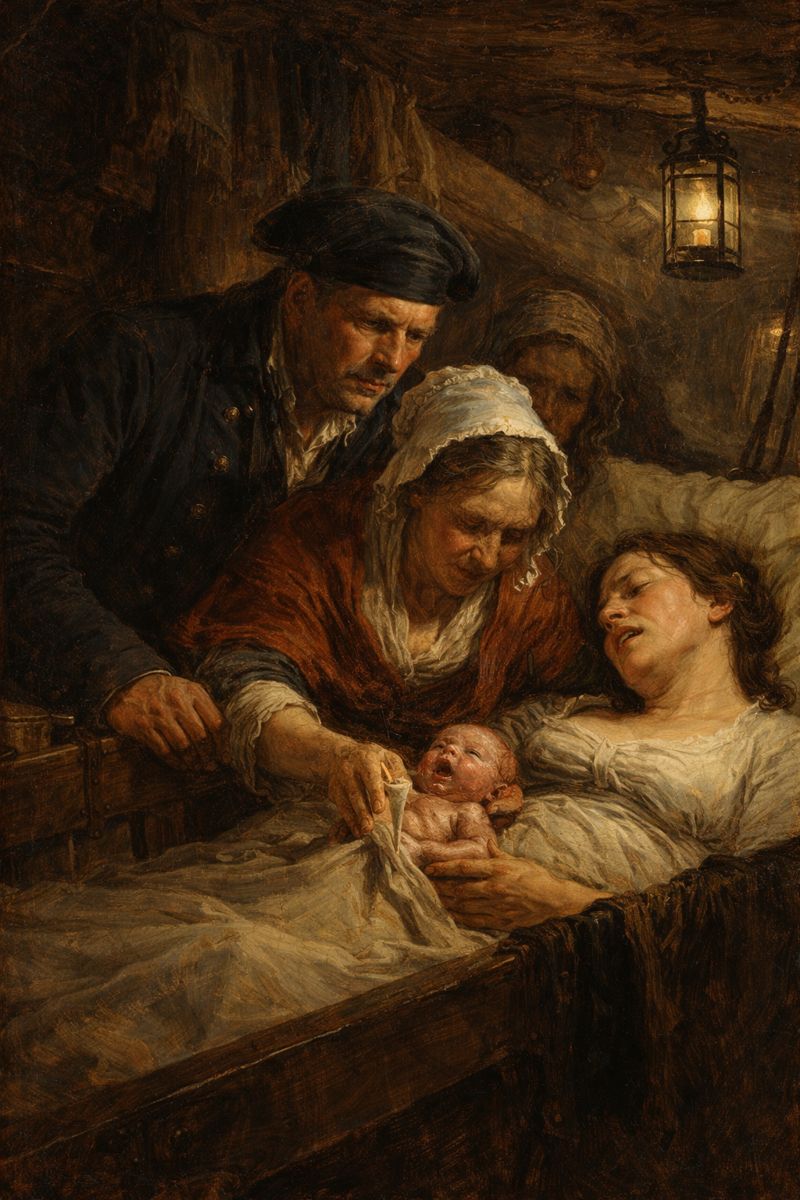
Elizabeth was born on 13th August 1813 whilst the ship was at sea, hence Elizabeth’s later status of “born on the Atlantic”.
Five days later the Barfleur was standing just off the French Mediterranean Coast between Marseilles and Toulon, where the ship’s marines were put ashore, and helped storm the French battery in the citadel, and drove the French to the heights above the town. Once this was achieved a division of boats, under Sir John Sinclair, entered the mole protecting the harbour where they captured or destroyed more than twenty merchant vessels, and three gunboats, for a cost of four killed and sixteen injured.
Eleven months later HMS Barfleur was “laid up in Ordinary” at Chatham (effectively “mothballed” out of service) and baby Elizabeth was immediately baptised in the parish Church of St Mary’s.
War is Over, Troubles Just Begun
The war with Napoleon ended a year later in 1815 the Barfleur was Out of commission at Chatham, and many of its crew would have found themselves out of work back on dry land. The ship was later re-equipped as a first class Ship of The Line in 1817, but two years later in 1819 she was broken up at Chatham.
This would seem to be the trigger for the family to move from Chatham to London, in search of work, which seems to have gone badly. I subsequently found from a Poor Law Settlement Document that Elizabeth (the mother) and John had rented a “Kitchen” i.e. a bedsit above a Snuff Shop in Drury Lane London for five years from around 1816 to 1821. What ever happened next, probably a lack of work, the family fell apart which brings us back to Elizabeth as an 11 year old walking into the Westminster Workhouse.
Elizabeth was admitted to The Greenwich Hospital School, set up to house, feed, clothe, educate, and supervise children who’s fathers had had long service in the Royal Navy, and had either died, become infirm, or were destitute. We don’t know her exact dates there, but I would surmise that after she left the Westminster Workhouse for the last time after the death of her father she may have been admitted to The Greenwich Hospital School around the later 1820s in her early teens. The alternative is that she was admitted at about 7 years of age, around 1820, as the establishment was full boarding, which may have allowed her parents to strike out for London to try to make a goof things.
Without each of these events happening as they did, Katie Martin the BBC Radio Solent DJ, would never have been born, and from such a few records in public archives, I would never have been able to unfold such a momentous story, worthy of a Dickens Novel!

 Travelling Through Time to Trace Your Ancestors