29th July

Danny Dyer’s Ancestors
Some time ago I did some research into Danny Dyer’s family tree (the non-royal bit) and came up with this pastiche of a day in the life of the family:
When Peter Dyer the Shipwright (Danny Dyer’s Great Great Great Great Great Great Grandfather) listened to his wife Eleanor singing to their sons, Peter, a toddler, and Edward a baby, in the summer of 1768, he most likely smiled and got on with hammering at the wooden ship that he worked on in the East India dockyard at Poplar. Eleanor sang to the boys, held their hands to make an arch that they would run through;
London Bridge is falling down,
Falling down,
Falling down,
London Bridge is falling down,
My fair Lady!
But what has this got to do with a ferocious Norwegian King, and how did he become a favourite Cockney Saint?
What Have the Romans Ever Done For Us?
Whilst researching another Family Tree for a Client, I found their Landlord to have been “The Bridge House Estates” It transpires that the Family’s landlord was a Company that had its origins as far back as the pre-Norman conquest eleventh century, 800 years before the family had dealings with them. But before we go there, we have to go back an additional 800 years again before that, to the Romans fighting against British defenders in order to force their way across a defended ford, reinforced with sharpened spikes placed below the surface of the River Thames. To make sure that they never had to do that again the Romans built the first London Bridge downstream across the Thames at one of the narrowest points in the tidal River, more or less in the same place that subsequent replacement iterations of what would be called ‘London Bridge’ would be built.
Vikings
Subsequent wooden bridges stood on the spot right up until the 11th century, when a substantially fortified wooden bridge was in place. That is until the 8th of September 1014 (or possibly 1009) when Ethelred The Un-Read (un-read = badly advised, rather than “Unready”) hired mercenary Norwegian Vikings and instructed them to sail up the Thames and help re-take London from an invading force of Danish Vikings. The Danish Vikings holding London were led by the King of Denmark, King Cnut’s father, King Sweyn Forkbeard.
The Norwegian Vikings, allied to Ethelred and the English tied ropes around the stanchions of London Bridge, hurled grappling hooks onto its fortifications, turned their longships around, hoisted sail to catch a westerly breeze, and rowed hard with the downstream tide to wreck the fortified bridge, and pull it down into the Thames. This allowed The Norwegians and English to bring their ships and troops up the Thames and outflank the Danes and force the Danish garrison to give up control of both London and Southwark and retreat.
Rhymes Old and New
This was a brilliant victory and was celebrated in a poem in a Viking Saga;
Yet you broke the Bridge of London,
Stout hearted warrior,
You conquered the land,
Iron swords made headway,
Strongly urged to fight;
ancient shields were broken,
Battle’s fury mounted
The Rhyme would obviously have scanned better in Old Norse, but it tells the tale, as does archaeology, with grappling hooks and Viking axes and swords found in the Thames at the site.
This became a folk memory, that may have given rise to the nursery rhyme sung and danced to by generations of Cockney Children as:
London Bridge is falling down,
Falling down,
Falling down,
London Bridge is falling down,
My fair Lady!
The tune and words were adapted and formalised in the 17th century, but the song and the children’s game of “playing at arches” in a dance whilst singing it, had roots going back to mediaeval times when the Bridge was built on arches. Beyond that in the Viking period the ‘Fair Lady’ may have been the Virgin Mary whose traditional birthday was 8th September, the date that the Battle of London Bridge took place, and who was credited with divine intervention to save the City.
St Olaf
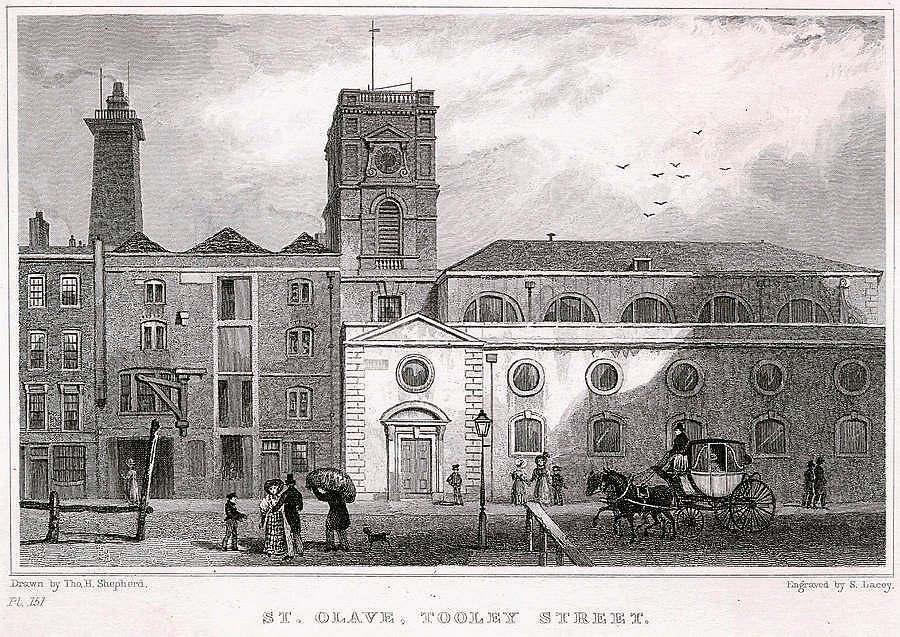
The Viking who pulled London Bridge down, Olaf Haraldsson, later became ruler of Norway, and on his death was hailed as a very popular Saint in England becoming St Olaf, with a Church on the Southwark side of the river next to London Bridge, which you can visit the site of today, now known as St Olave’s Church.
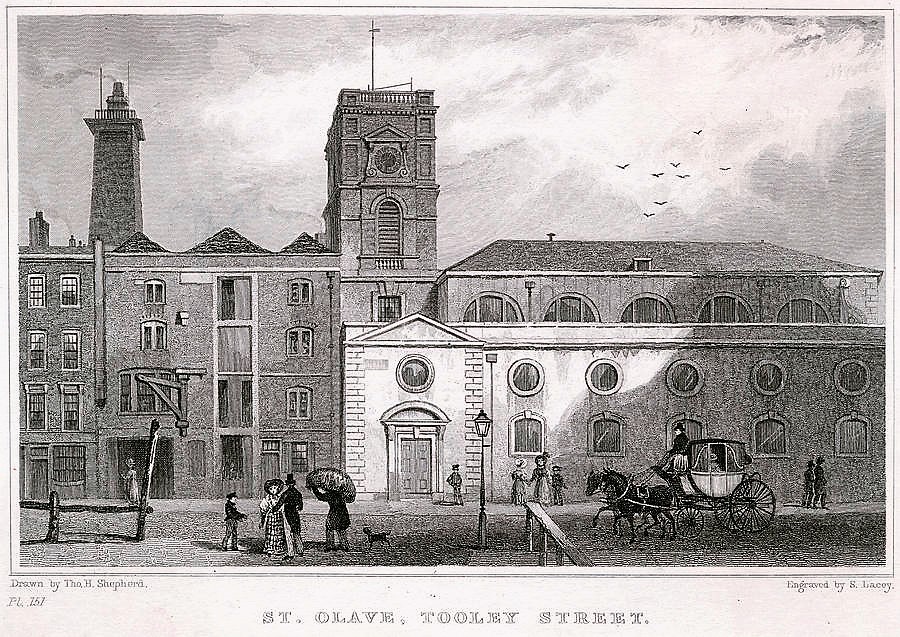
This was typical of robust British paganism lightly dressed as Christianity, a Norwegian Viking General hailed as a saint by the people of London for helping to recapture their City from the Danes. If ever Millwall Football Team were blessed with a Saint, it should absolutely be Saint Olaf!
Bridge House Estates
The wooden Bridge having been destroyed, it then had to be rebuilt and maintained, so Londoners gave money to help with this. In the 12th century the first Stone Bridge was built and dedicated to the native London Cockney Saint, Saint Thomas Beckett, murdered at Canterbury a short time before, a chapel for his worship was installed on the stone bridge alongside houses and shops, and more money poured in to maintain the bridge in deference to the Saint. These donations reached such a level that formal management was required, and this would evolve into the Bridge House Estates by Royal Charter in 1282, this chartered company, part of the Corporation of London, charged with the maintenance of all the London Bridges.

The name of the Company, and therefore the Landlord of my client’s ancestors, comes from the House on London Bridge that the Company was originally based in where tolls would be paid. It had a draw bridge that could be raised to allow passage to taller ships, and could also cut off an attacking force to protect the Bridge and London.
The Bridge House Estates was originally financed by donation and by tolls charged for crossing the bridge, then by these and rents from the buildings actually on the bridge, any surplus was used to buy property north and south of the river (including The Old Bailey) and eventually rents from these properties became the largest source of income. The Trust maintained and helped replace London Bridge in subsequent years, built Blackfriars Bridge, and Tower Bridge, and purchased Southwark Bridge from a toll-exacting company that had built it, it now also owns and maintains the Millennium Footbridge.
Thank you St Olaf
So thanks to London Bridge being pulled down during a battle between rival Vikings, Cockney families came to be living in houses in North and South of the River with their rents helping to maintain the Bridges of London.
Best of all, the actions of St Olaf and the Bridge House Estates effectively gave my dad a job for a good many years on Tower Bridge in London when I was a kid, putting bread on the table and keeping a roof over our heads (and of course some bragging rights for me) so personally from me, Thank you St Olaf, and Happy St Olaf’s Day!

 Travelling Through Time to Trace Your Ancestors