The Goddards
Following on from the ups and downs of The Three Cups Inn during and after the Restoration of the Monarchy in the 17th Century that we saw in Part 3, and one hundred and fifty years after the Goddards had acted as solicitors to the Wigge family who owned the Three Cups in the 1600s, they appear in the story of the Three Cups once again.
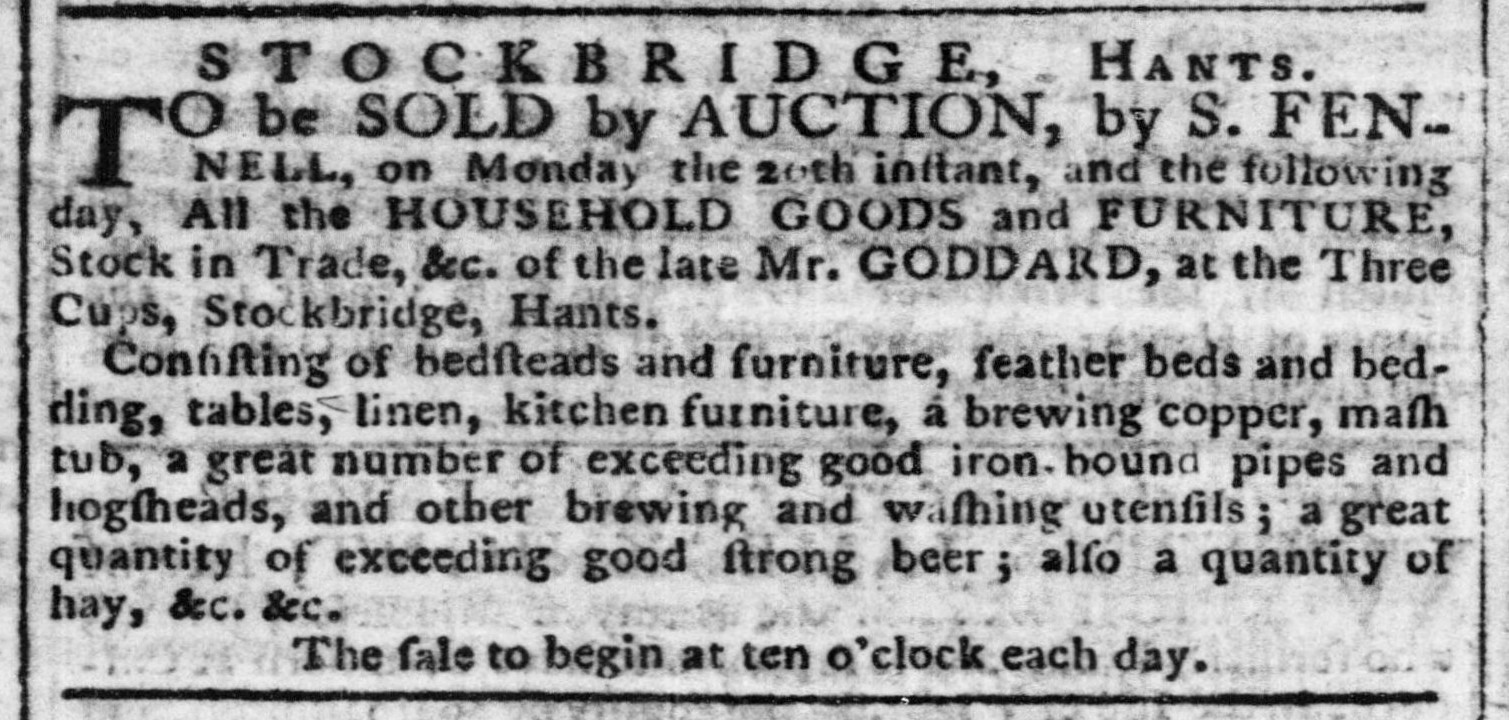
In 1788 an auction took place at The Three Cups. It consisted of the contents of a Household of a Mr Goddard including all his furniture, and and more interestingly from our point of view a host of Brewing equipment, and “a great quantity of exceeding good strong beer” although not stated , it’s probably safe to assume that the auction actually took place in the Three Cups, as Inns were frequently the place where such auctions were held.
The intriguing thing is that it seems that in 1789 The Three Cups Inn was insured under the name of Hugh Goddard, as innholder. Fire was a constant threat in timber‑framed towns, and insurance records often provide the only surviving evidence of a building’s structure and value, and indeed the owner’s name.
Now the only Goddard to die in 1788 in Stockbridge was a Michael Goddard, Michael was recordred in his will as a Victualler who left his estate to his wife Sarah, and looking at his family tree we find that Michael and Sarah were the parents of Hugh Goddard, so this gives us Michael as a Victualler with his wife Sarah selling by auction at the Three Cups his brewing materials and beer after his death , and Hugh Goddard his son tied to the Three Cups, taking out fire insurance on the Inn a year later. It seems logical to assume therefore that Michael Goddard had owned the Three Cups before his death, and Hugh his son owned it after his death, after Sarah, Michael’s wife had sold off surplus beer and possessions to pay off his debtors.
In 1791 John Wilkins, was registered as the licensed victualler at the Three Cups, which shows us that Hugh Goddard owned the business, but didn’t run it. Which wasn’t unusual. The Goddards were a highly influential family in the area, and and part of the family owned the Crown Inn in Stockbridge for a number of years. And as it turns out the Goddards and the Wilkins were related by marriage, so the business was definitely a family one.
Strong Women, Widows, Keep the Inn Running
In 1793 Hugh Goddard unexpectedly died, he was only 29 years old, and his will shows what happened to ownership of The Three Cups:
“I give and bequeath unto my Son Hugh Goddard the House I now live in known by the name of the Three Cups Inn in the Borough of Stockbridge aforesaid together with the stables Garden Backside and meadow and appurtenances thereunto belonging And to the heirs male of his body lawfully begotten for ever but in case my said Son Hugh Goddard should die without such male issue then to his female issue but in default of such female issue then to my next eldest Son Michael Goddard And the Male Heirs of his body so lawfully begotten as aforesaid but in case he should die without such male issue then to the next in Succession
Also I give and bequeath unto my Sons Michael and William Goddard All and singular my Household Goods Brewing utensils casks and stock in Trade together with the Book Debts to me owing and all and singular my Goods chattels and Effects whatsoever to me belonging at the Time of my Decease in just and equal Portions
And I nominate constitute and appoint my Beloved Wife Ann and Mr William Turner my joint and sole administratrix and administrators of this my last will and Testament to whom I commit the joint management of the aforesaid bequests And to my executrix the care and management of my children aforesaid born of her Body as also the Occupying of the House and premises now in my possession aforesaid and the care and management of the stock and Trade as now carried on on and within the same for the joint benefit of herself and the children aforesaid so long and during their minority if she so long continue my Widow
But in case she marry or cohabit with another Man and thereby imbezzle or otherwise imprudently diminish the property hereby bequeathed and remaining at my decease then and in such case I will that her executrixship cease and determine And that the same devolve to and remain in the sole care and management of Mr William Turner my executor above named.”
So the Three Cups passed from Hugh Goddard senior to his son Hugh Goddard junior, with the proviso that Hugh Goddard senior’s widow Ann, would also benefit from the business, provided she didn’t remarry, and his other two sons; Michael and William were given his brewing utensils, casks and stock in trade, so it appears that they also had a connection to Brewing The Three Cups. So the Goddards were in possession of the Three Cups for a good proportion of the later part of the 18th Century. Hugh’s children were infants when he died, so although they owned the business it was down to his young wife Sarah to look after it as a business on behalf of her children, no doubt with John Wilkins running it as Landlord.
So the 19th century dawns with the Three Cups operating under the ownership Hugh Goddard the younger, now being an adult, however, when Hugh married Sarah Burnett on 16th May 1812 his occupation was listed as a Farmer, which would confirm that The Cups was a business to the Goddards at this point rather than a family pub. Sarah’s mother was from the Wilkins family, so the family connections are deep, with John Wilkins the Innkeeper mentioned a few years before during Hugh’s mother’s ownership of The Cups. It was during this time that The Three Cups Inn became a social hub for Stockbridge, from at least 1824 there were meetings of the Stockbridge Benefit Society which were major social occasions.
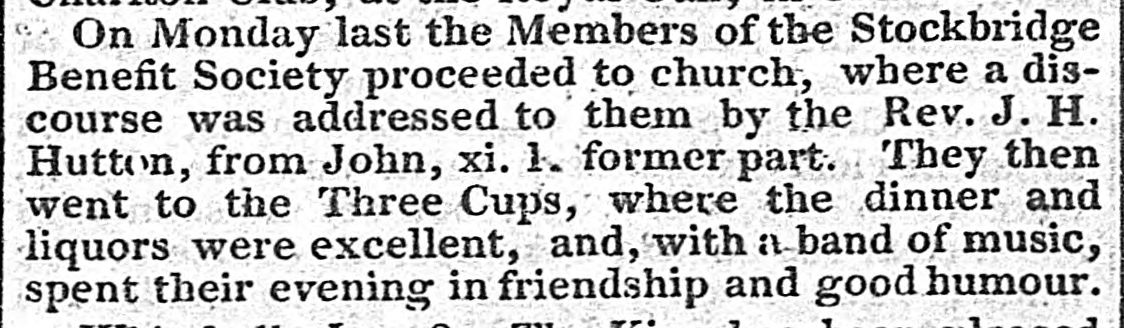
The “Stockbridge Benefit Society” would have been a type of Friendly Society, a mutual aid organisation common in early 19th-century England. Members—typically local labourers, tradesmen, and shopkeepers—paid regular subscriptions in return for financial support during illness, injury, unemployment, old age, or for funeral expenses. These societies operated under written rules, with appointed officers such as a treasurer or steward, and often met in inns. Their growth was encouraged by the Friendly Societies Act 1793, which allowed such groups to register and gain legal recognition. Records of small rural societies like those in Stockbridge are often limited, and surviving evidence typically comes from parish documents, local newspapers, or archival material. They were a serious source of succor for aspiring working people and tradesmen in a time before the safety net of the welfare state, when the alternative in tough times was charity, the workhouse, or the gaolhouse.
An Unexpected Death, And A Wife Steps Up
Sadly in 1826 Hugh Goddard Junior died at only 37 years of age, like his father he died young and left his wife Sarah to have to unexpectedly cope without him. Sarah inherited the farm and the Inn, and ran both, she had twelve acres of farmland with four Labourers working for her on it, as well as the Inn, which she would have overseen as a business, but with Landlords running it day to day for her.
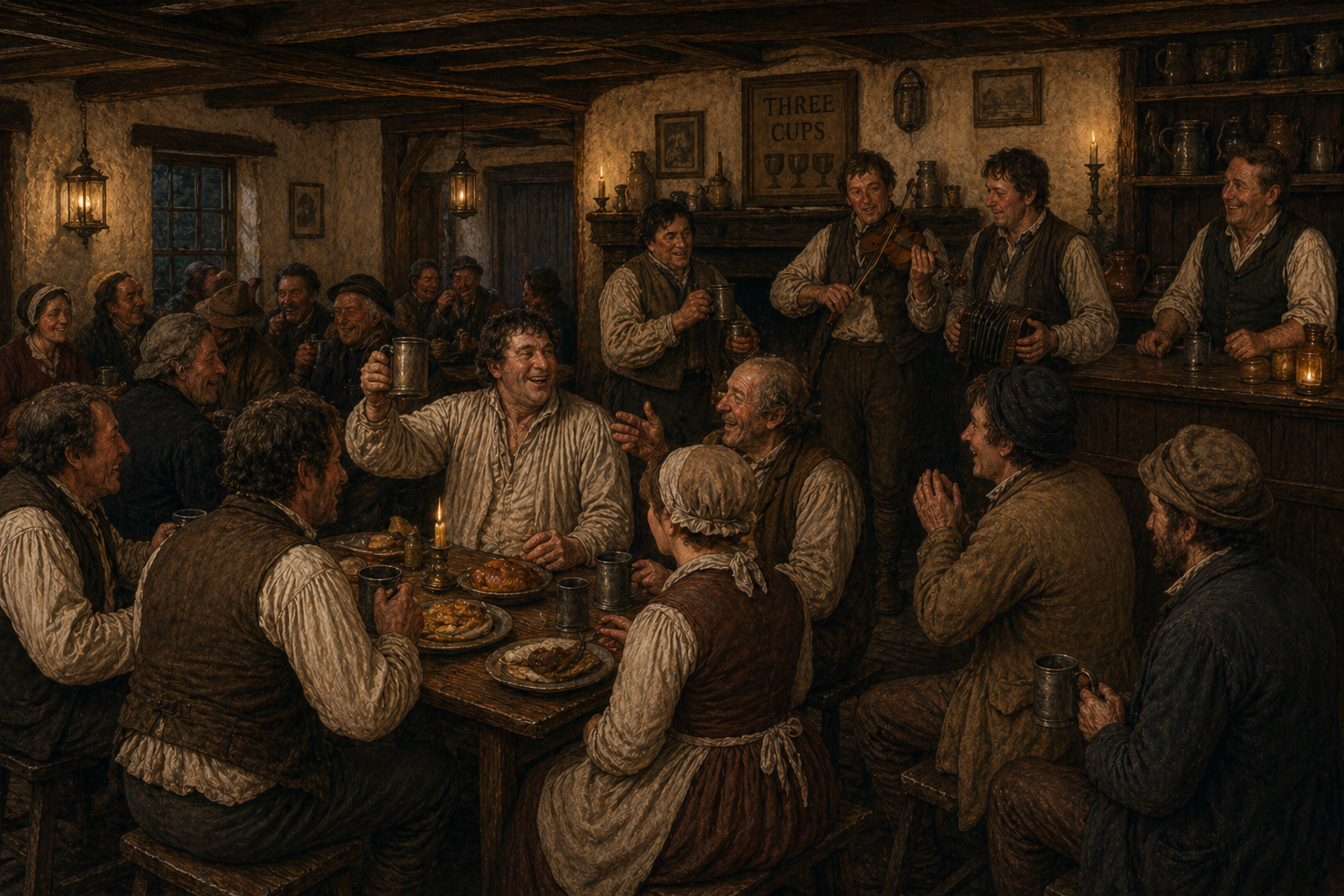
Sarah made sure that the Three Cups continued in much the same way as it had when her husband had been alive, and the local newspapers have many stories through the 1820s and 1830s of both The Stockbridge Benefits Society, and one The Stockbridge Friendly Society, holding very merry meetings with eating, drinking, and music for their members on the premises after listening to the local vicar read a sermon.
Having had to deal with the death of her husband Hugh in 1826, Sarah had to sort out the affairs of her father John Burnett in 1834, and was acting as executrix of her father’s estate from the Three Cups as her business base.
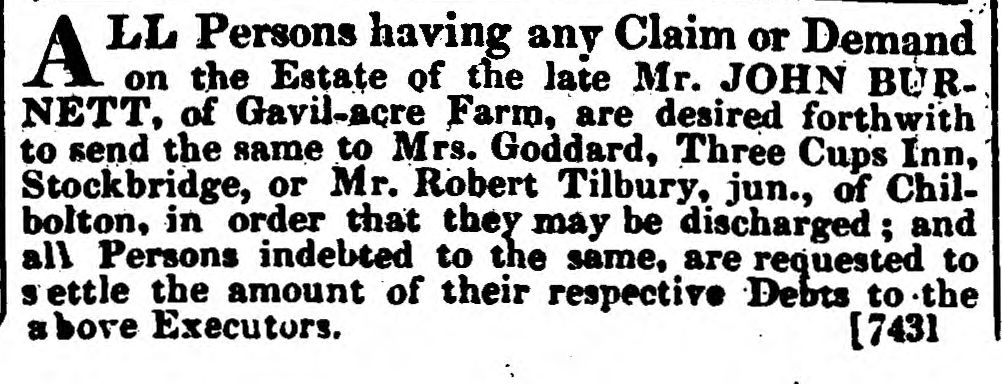
During the late 1830s to 1840 various Landlords operated as Ostlers of The Three Cups – John Wilkins had gone, Charles Young followed, in 1839, followed by James Tongs in 1840, and there are some indications that during this time the Three Cups may have started to become a burden to Sarah Goddard and her son Hugh, with a string of tenants following each other.
1840 Highway Robbery
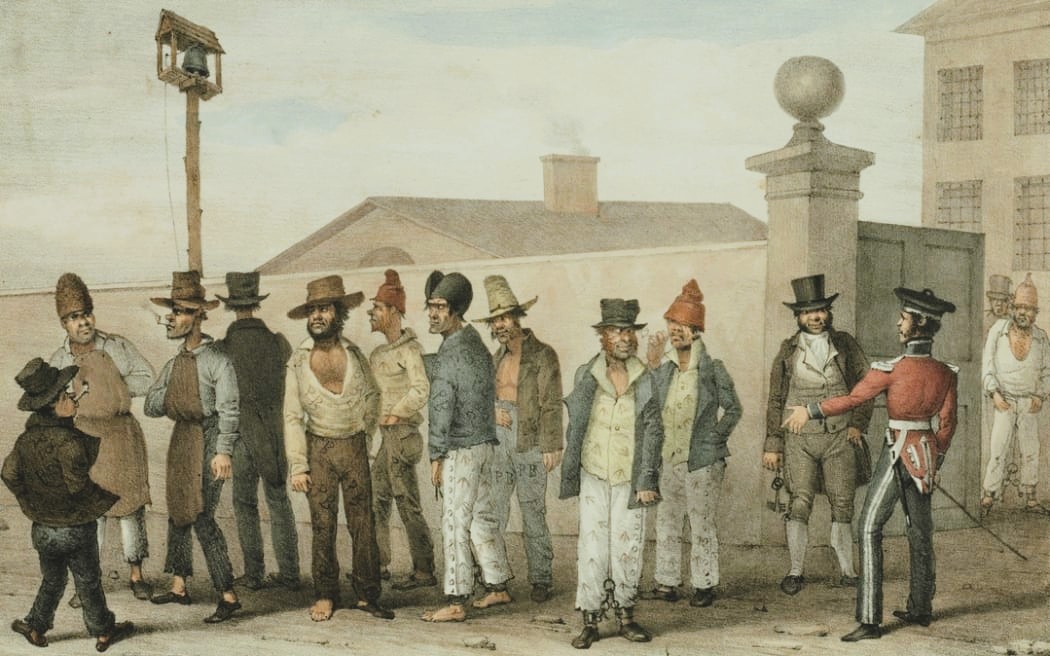
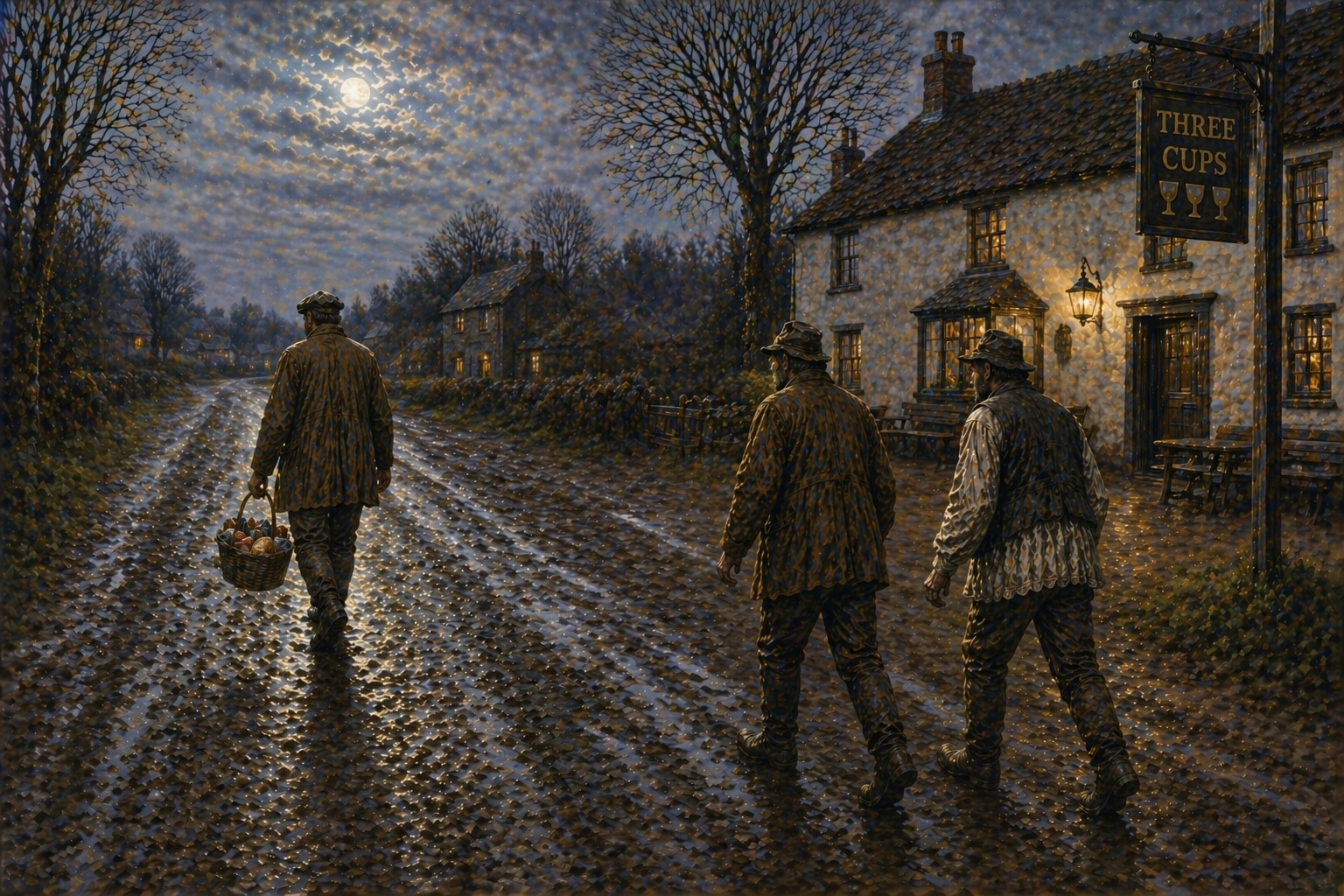
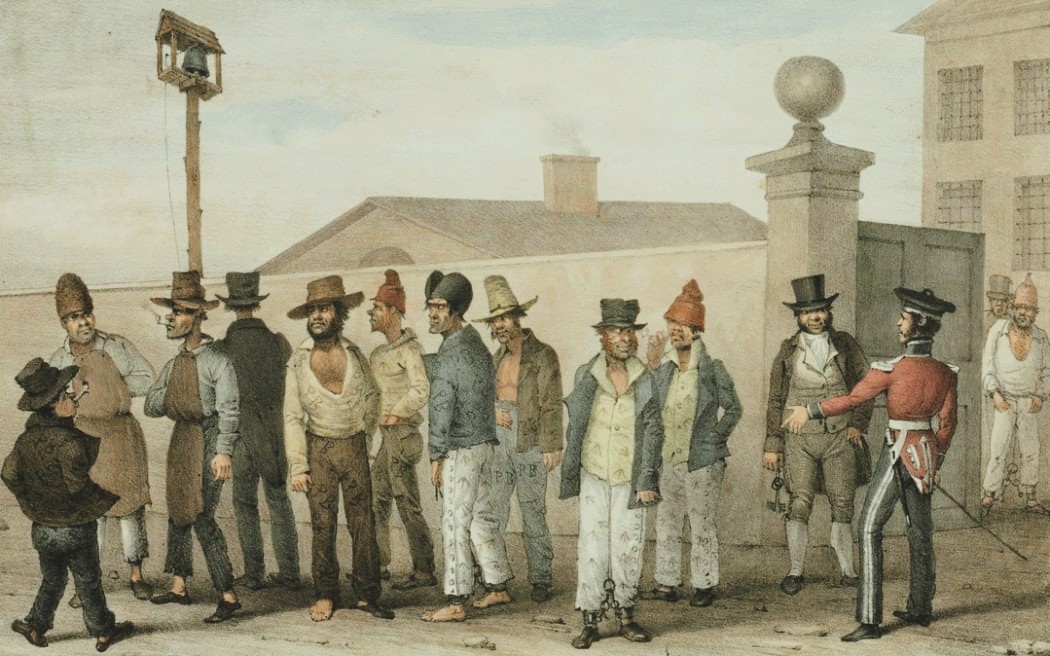
On a cold winter’s evening, 28th January 1840, a man named John Lovelock from Leckford stopped for a drink in the Three Cups, at about five o’clock in the afternoon. He had gone to Stockbridge to pay a bill so had a purse of money on him, and had a basket of bread and other provisions with him that he had bought at the local shops. At around the same time in Longstock, Thomas Salter was at home with his sister-in-law Jane, when there was a knock on the door of their cottage, and a man named John Faithfull came calling asking for Thomas, who left with him with a sack slung over his shoulder left the house. Jane was anxious, John Faithfull (despite the irony of his name) was known to be “a bad ‘un” and was suspected of sheep stealing, had been accused of breaking up a religious meeting, and had spent some time in gaol, and her brother walking off with John Faithfull with a sack over his shoulder, may have made her think that they were off poaching or sheep stealing. What trouble could he be bringing to her door? As they left the village a neighbour named Elisha Cox saw them going toward Leckford, Salter had a sack over his shoulders.
In the meantime John Lovelock had made himself comfortable and shared a drink with Charles Tongs the Landlord and Ostler of The Three Cups, and at seven o’clock he stepped out into the dark evening to make his way home. Unknown to Lovelock, Salter and Faithfull had been in the Inn closely observing him. As Lovelock left The Three Cups happy to be heading home after a few friendly pints, the Landlord of The Three Cups, Charles Tongs, noticed Faithfull and Salter hurry out after him.
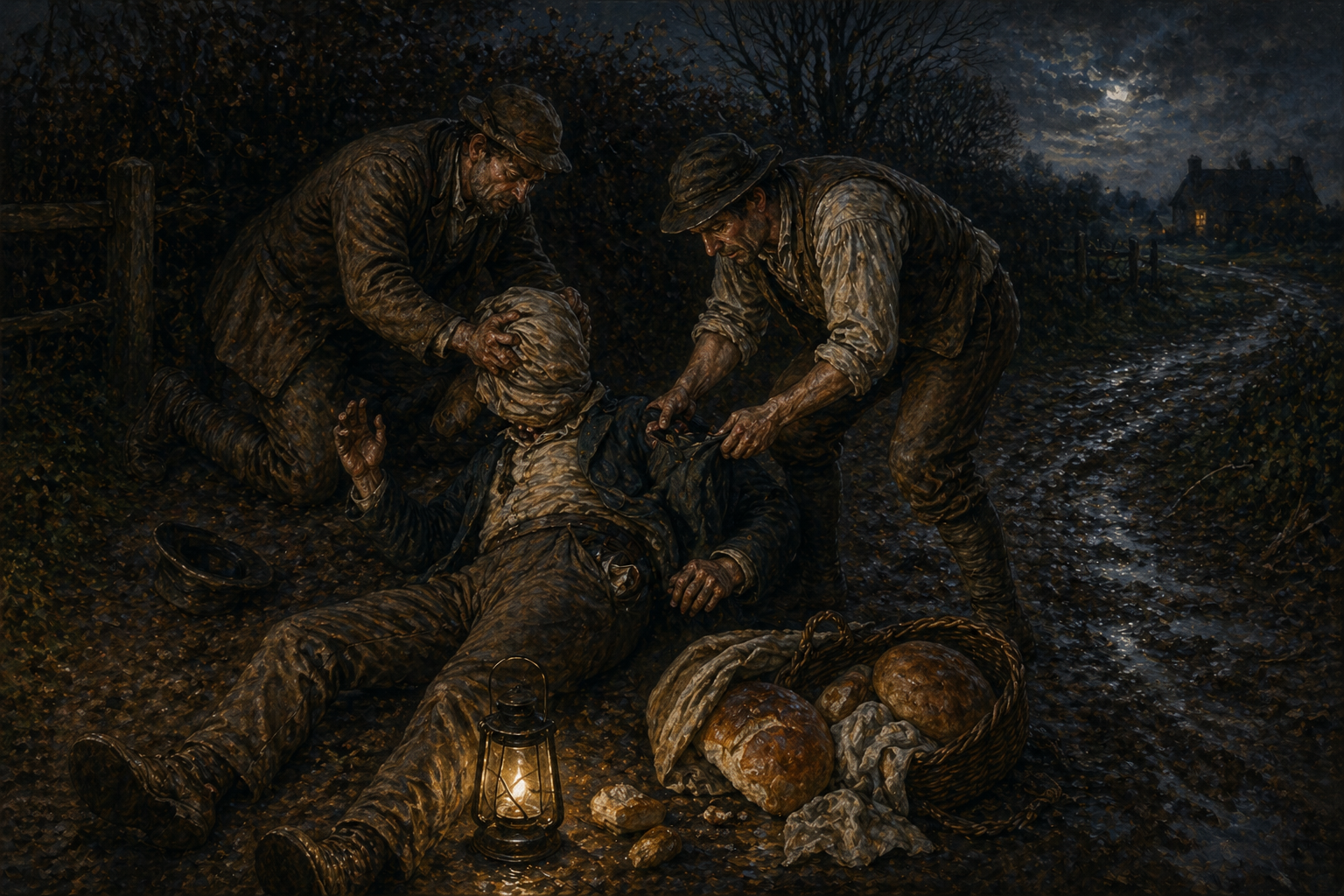
The pair followed Lovelock as he made his way home, and once in a quiet enough area, intercepted him under cover of darkness, knocked him to the ground, put a sack over his head, and robbed him of his watch valued at 9 shillings, plus his money, and the basket of food, then took to their heels and ran off.
A while later at about seven thirty James Noyes a Longstock resident saw both the prisoners heading home about a mile away from where the robbery happened; they bade him good night as they passed him.
In the meantime Lovelock had raised the alarm and Henry Tongue, the local constable’s son, who assisted as his father’s deputy constable, went in pursuit and saw the two men heading toward Leckford. Salter was captured and Deputy Constable Tongue, searched him and found a half-crown and a shilling, tied in his neckerchief, the bread and flour which had been in Lovelock’s basket were found in Salter’s sack that had been thrown into the River. Salter was taken into custody, and Faithfull tracked down by Deputy Constable Tongue the next day at Andover. He was found to have a watch and a purse containing two shillings. The watch and some of the money were later identified by Lovelock as his property.
Having been taken into custody the robbers were conveyed to gaol in Stockbridge. Whilst awaiting trial there, a farmer named William Russell from Longstock went to visit Salter in gaol to question him about some sheep he had had stolen. Salter denied any knowledge of sheep stealing, and Russell the farmer not believing him said that it would be better for him to mend his ways, and have a care for his own soul, if he had none for Rusells or his sheep. The effect on Salter was that he confessed to Russell the whole facts of the robbery. Salter admitted that he held the sack over Lovelock’s head while Faithfull robbed him. Salter then told Russell where to find some of Lovelock’s stolen property; a book and other things, hid in the furze (gorse) near a Lime-kiln, which were then found there.
The two went to trial at Winchester, found guilty, and were sentenced to 15 years transportation to the colonies. Another charge against the prisoners for sheep-stealing, was dropped as no evidence was offered.
Faithfull and Salter were taken from Winchester Gaol, to Gosport, and from there transported to the Prison Hulk Leviathan, here they were recorded, Faithfull as of bad character having been imprisoned before, but Salter as “unknown” with no known previous record of imprisonment.
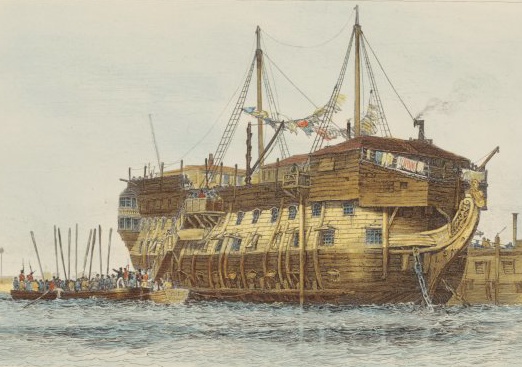
Then to the Thames and on to HMS Asia for transportation to Van Diemen’s Land – modern Tasmania – a trip that would haven taken between three to five months at sea.
Just imagine the tall tales told in the Three Cups after that crime. It would have been told and retold over a pint, gaining embellishments with the telling and each additional pint, men would have boasted of knowing the victim and the criminals, jokes would have been made about “Faithfull John” the felon, and what the pair would be doing on a Prison Hulk and then on the other side of the world in Australia. These were working people who may never have travelled beyond Salisbury or Winchester, and even the better off may never have taken a Stagecoach beyond London or Southampton, so the very idea of somewhere called “Van Diemen’s Land” on the other side of the world must have added a drop of horror into the retelling.
The following year, 1841 The Three Cups was up for let again as Mr Gilbert, the new tenant, was leaving “on account of ill health”:
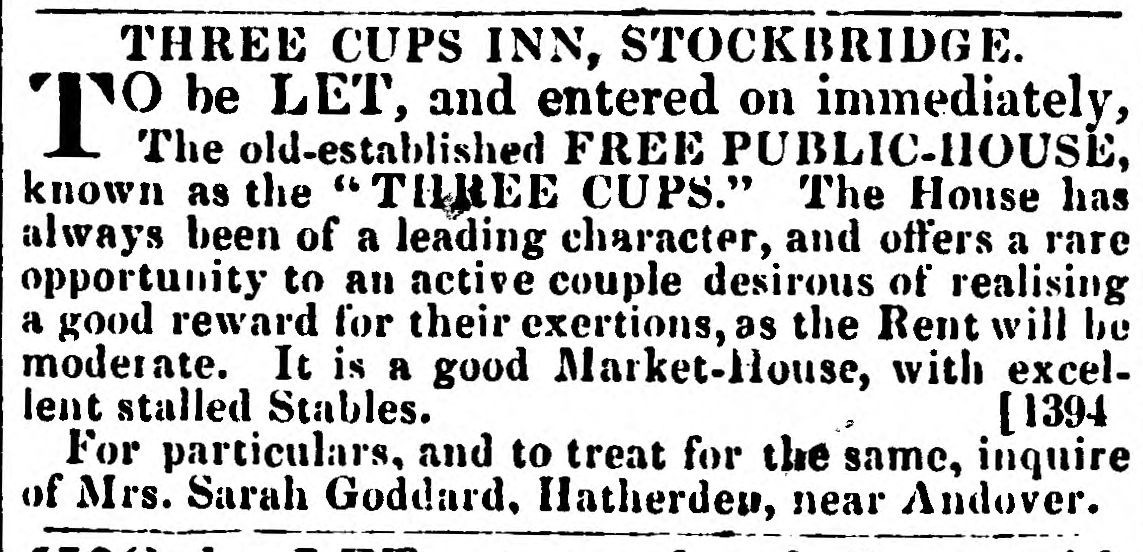
The offer was taken up by a Charles Herbert who appears as the registered occupant. During Charles Herbert’s occupancy the Three Cups continues with Meetings of Stockbridge Labourer’s Friends Association, hosting dinners for a hundred people at a time, in 1846 managing to take the event from THe Grovesnor Hotel across the road, which must have been quite a coup at the time. Interestingly between 1846 and 1849 a William Henry Beaton is recorded as the Publican.
Despite this it seems that in the second half of the 1840s the Goddards finally decide to sell the Three Cups Inn, and on 30th November 1847 it was advertised under a Lease for 21 years of messuage or Public House, with garden and outbuildings, a coach house, granary and a meadow, the papers for this are filed in the Archives in a bundle of papers Winchester Brewery, many Pubs and Inns at the time were being swallowed up by big breweries, so becoming corporate rather than privately owned.
So after about 20 years of running The Three Cups Inn, Sarah and her son Hugh gave up on The Three Cups Inn, ending perhaps 70 years or more of Goddard ownership, and the Goddards bowed out of the picture.
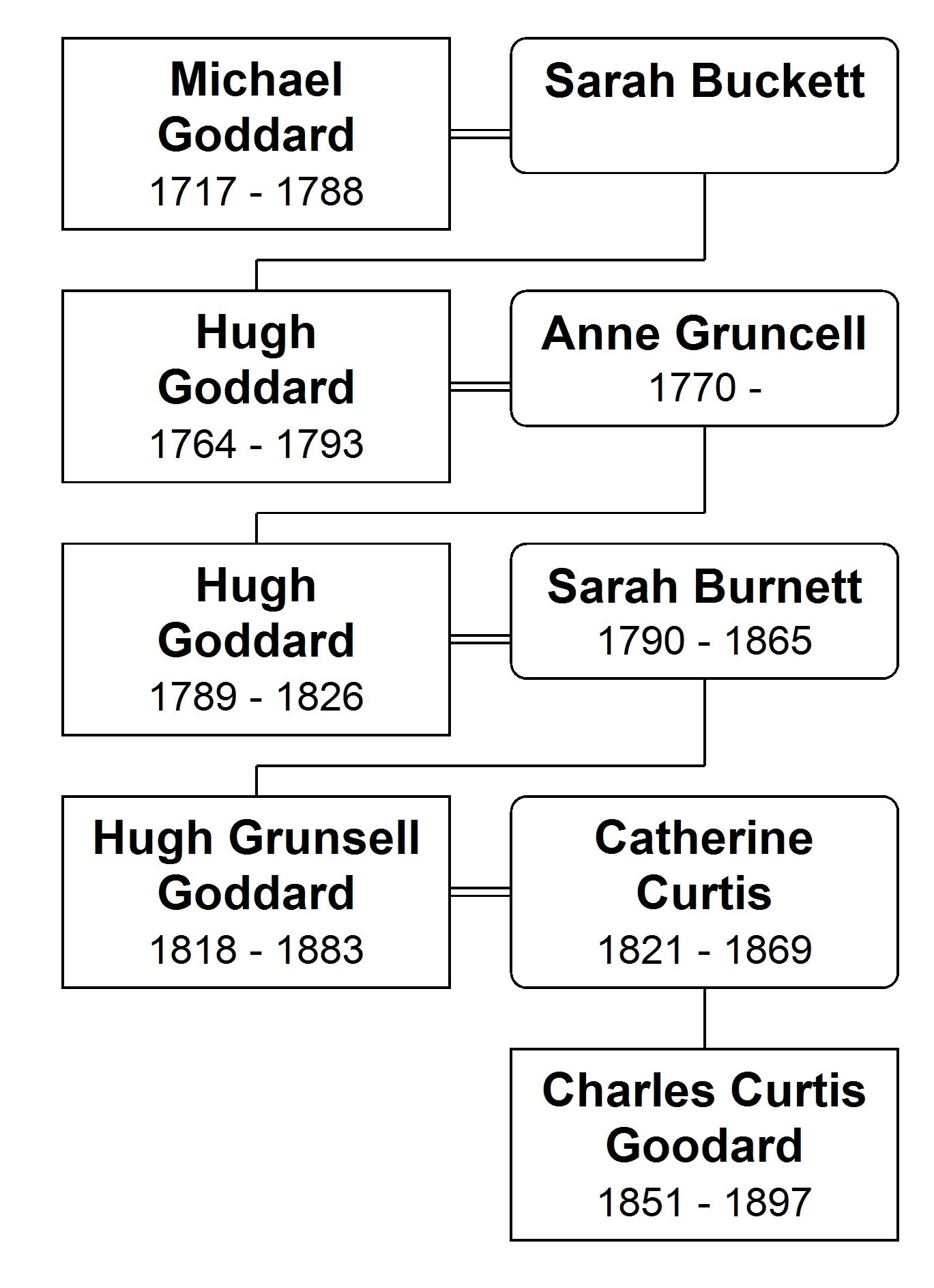
It was the end of an era, and a sad one, Sarah’s son (yet another Hugh) seems to have operated as a Farmer, then a “Gentleman” i.e. living off of businesses or investments without needing a trade, and sometimes mentioned as “No Occupation” or Annuitant” so it seems that he had a comfortable life without the need to work. Although there is one occasion in 1857 where he is listed as a Publican, although we can’t prove that this was at The Three Cups, although that is a possibility. The fact that he didn’t need a trade may point to his having sold off the Inn and possibly the Farm and was living from the proceeds of the sale.
Scandal and Impropriety!
But before we leave the Goddards and this instalment of the Three Cup’s Story, there are a couple of interesting stories that have came to light concerning the last mentioned Hugh, his second wife, and his eldest son.
After the death of his first wife, Catherine Curtiss in 1869, Hugh Gruncell/Grunsell Goddard lived as a Gentleman in Stockbridge at the end of the High Street near the White Heart Inn. Being a Gentleman of the 19th century and therefore not intending to look after the house himself, he moved in a widow, Eleanor (Ellen) Tributt Clark (nee North) 16 years his junior with her young children, to be his “General Servant”. Now, on the face of it, having a live in servant was not an uncommon thing at the time, but having their children live in the house was, and this would have had tongues wagging in the Town.
A hint of all not being right at home came in 1876 when a summons was preferred by Hugh Goddard against his son, Charles Curtis Goddard with a charge for assaulting Hugh on the 16th May 1876. The bench advised the parties to settle the matter out of court, which Hugh was willing to do, but his son refused. The case was then brought on for hearing. Hugh said that his 25 year old son Charles had come home on 15th May in the evening a little the worse for liquor. Charles then struck Hugh under the ear with his fist. Charles afterwards pulled off his jacket, and kept fencing at Hugh with his fists. In answer to the charge Charles stated that when he came home he found his father drunk and using bad language; that he afterwards went into the bedroom, threw down the things contained in there and broke them. This, however, was denied by Hugh—The bench stated it was a bad case, and accordingly committed the defendant to twenty-one days’ imprisonment in Winchester Gaol with hard labour.
Perhaps there was more to it than had come out in court, and we soon find out that Ellen was more than a Servant. For in 1878 Hugh was summoned at Andover Assizes for “Affiliation” by “Ellen” Clark to “show cause why he should not contribute towards the support of her child.” The difference in their ages was noted by the court, put at “around 40 and 60, a slight exaggeration. Ellen stated that she was a married woman, but had seen her husband once only in 13 years., and that till the last month she had resided for nine years with Hugh as his “housekeeper,” and that they slept together. The boy in question, John Robert “Clark” was born in 1871, and had lived with her and “the other children” at Hugh’s house in the High Street Stockbrige. She received no wages from the Hugh, but he had allowed her 5s. a week for the child till recently. Hugh now denied the paternity. He admitted that Ellen slept with him occasionally, but said that was only when he had the gout! Which is something I’ve never heard a doctor prescribe as a cure for gout but, it may at least have taken his mind off his ailment. Hugh maintained that the child “belonged to some racing fellow,” who on one occasion visited his house.
The Magistrates found in favour of Ellen and ordered Hugh to pay maintenance for John Robert of 3s 6d per week and 17s costs. The alternative would have been to have either tried, probably unsuccessfully to track down the “racing fellow”, or to have paid for John Robert’s upkeep out of the Parish Chest, so biological father or not, Hugh was on a hiding to nothing.
Having said that, the fact that Ellen had younger children than John Robert living with her in Hugh’s home without asking him for maintenance, ironically lends credibility to both Hugh’s conviction that she slept with other men, but also Ellen’s assertion that John Robert was Hugh’s child. If she had just been out to rinse Hugh of some cash she surely would have claimed for the other children as well?
Hugh’s use of the term “racing fellow” reflects the fact that at the time Stockbridge was a major centre of Horse racing, attracting all types of people from the villainous out to exploit the unwary, through the professional Horse Racing Fraternity, to members of the Royal Family, along with the run of the mill day trippers and families looking for a day out. Money and people flooded into Stockbridge when the races were on, and the carryings on can only be imagined.
In any case, with the court case out of the way, the couple came to a reconciliation, and in 1880 Hugh and Ellen were married, no doubt to mixed reactions in the Town of Stockbridge. Hugh’s family was complex to say the least. Ellen’s older children from her first marriage had gone off to find their way in the world, which left her younger children, at least one of whom was now legally recognised as having Hugh as a father, living with them, and out in the world there were three children from Hugh’s first marriage, whose father and possibly their inheritance, now appeared to have been hijacked by a servant and her family. Perhaps this had been the real bad feeling behind the assault by Hugh’s eldest, possibly drunken son Charles Curtis Goddard in 1876?
What happened after the passing of the Goddards we shall find out in Part 5.


One Reply to “Drinking with the Ancestors: The Three Cups Stockbridge Part 4 – The Goddards -Strong Women and Scandal”