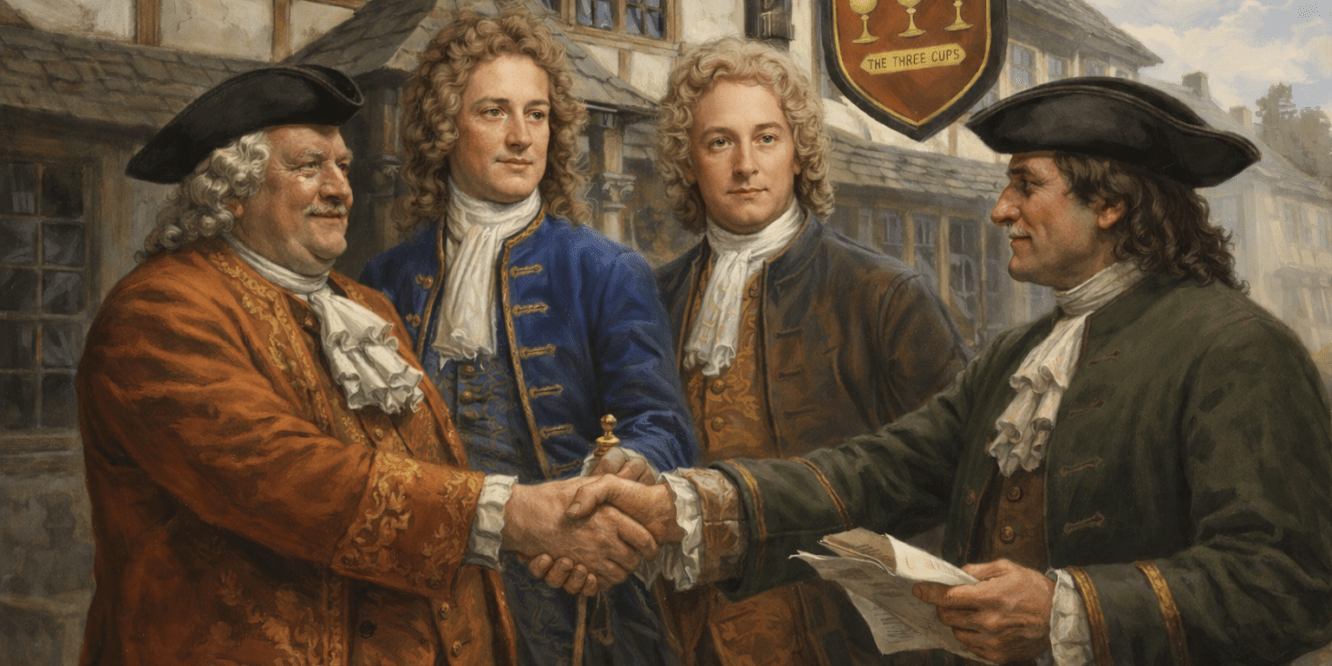
The Departure of the Whitheds
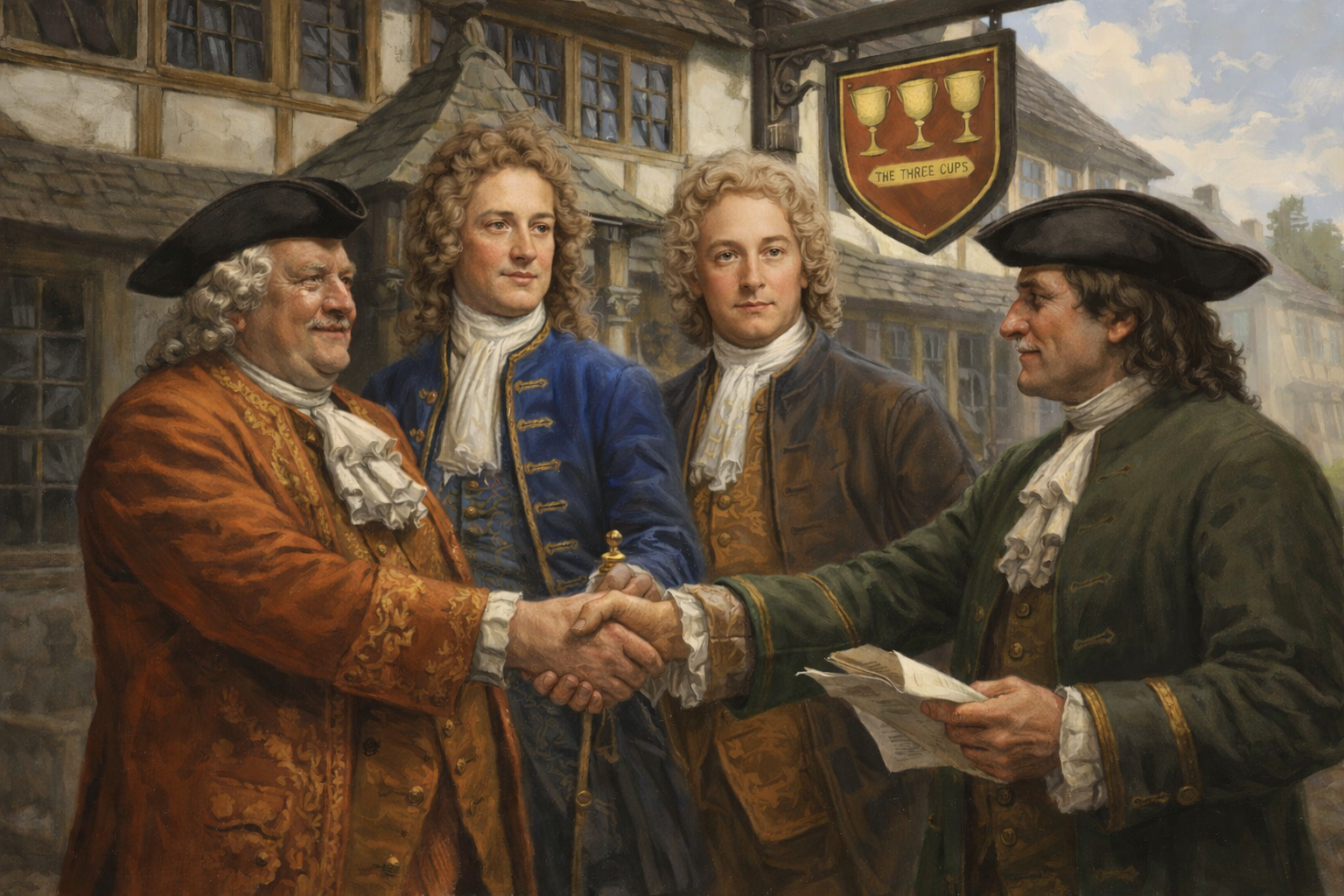
The Three Cups remained in Whithed ownership until 1717, when Henry Whithed of Norman Court — son of the MP who had fought the corrupt election of 1680 — conveyed the inn to Richard Hulbert, a Stockbridge blacksmith. The transfer marks the end of the Whithed family’s direct connection with the town’s political life, and their 38 year ownership of The Three Cups Inn.
The 1717 conveyance describes:
“Lease and release of the inn called Three Cups in Stockbridge (bounds given), a piece of meadow of one acre on the north side of the inn, with all buildings, yards, gardens, orchards, commons and common of pasture belonging.”
The Three Cups Inn was effectively a working estate at the heart of the Stockbridge economy and Richard Hulbert was one of the 28 registered voters in the Borough, so although a tradesman – a Blacksmith, he would have been a man who would have earned respect from any prospective candidate for election.
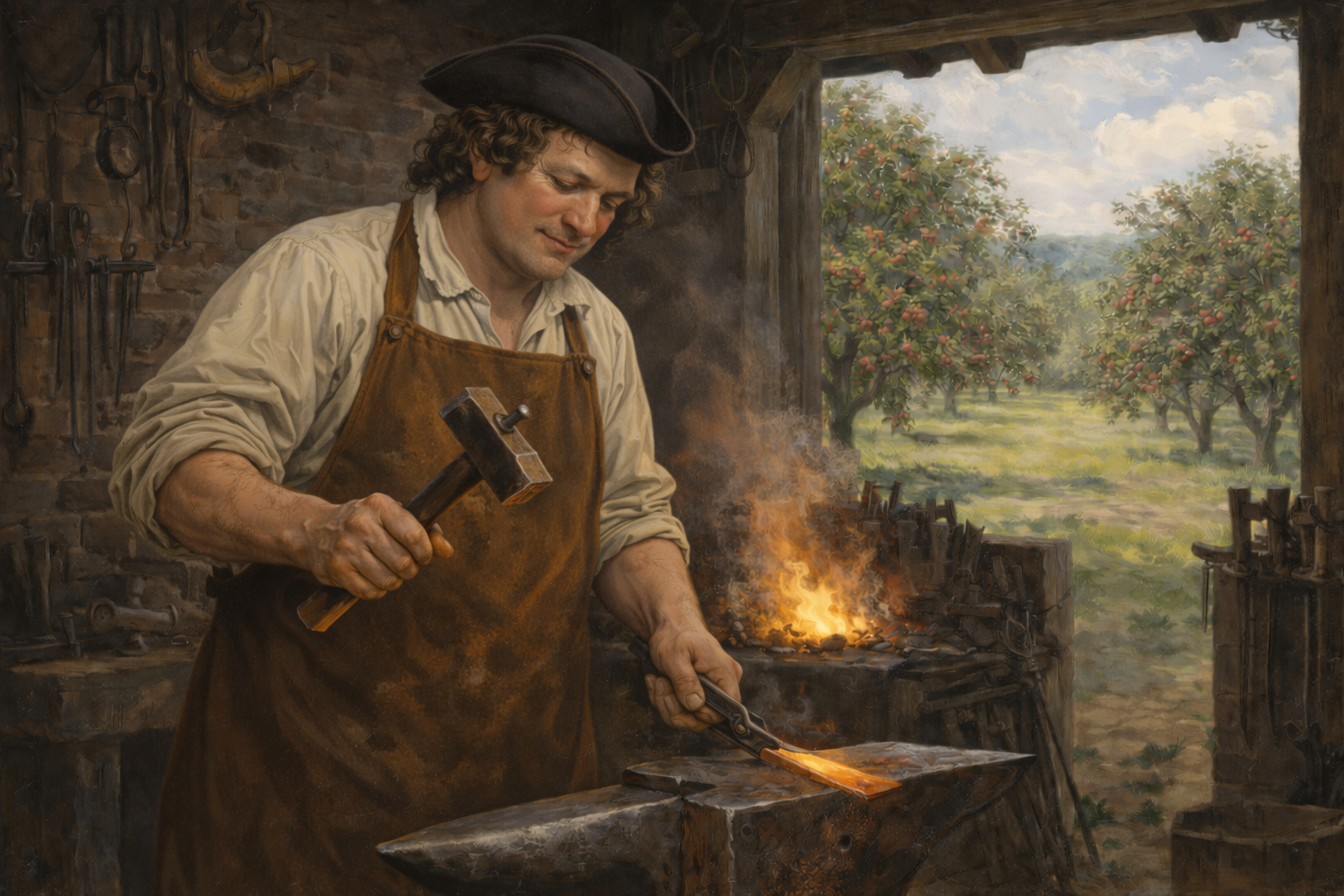
We know that he was a registered elector as his vote was counted and published (voting was publicly declared after the event at the time) in 1714, shortly before he took over the Three Cups.
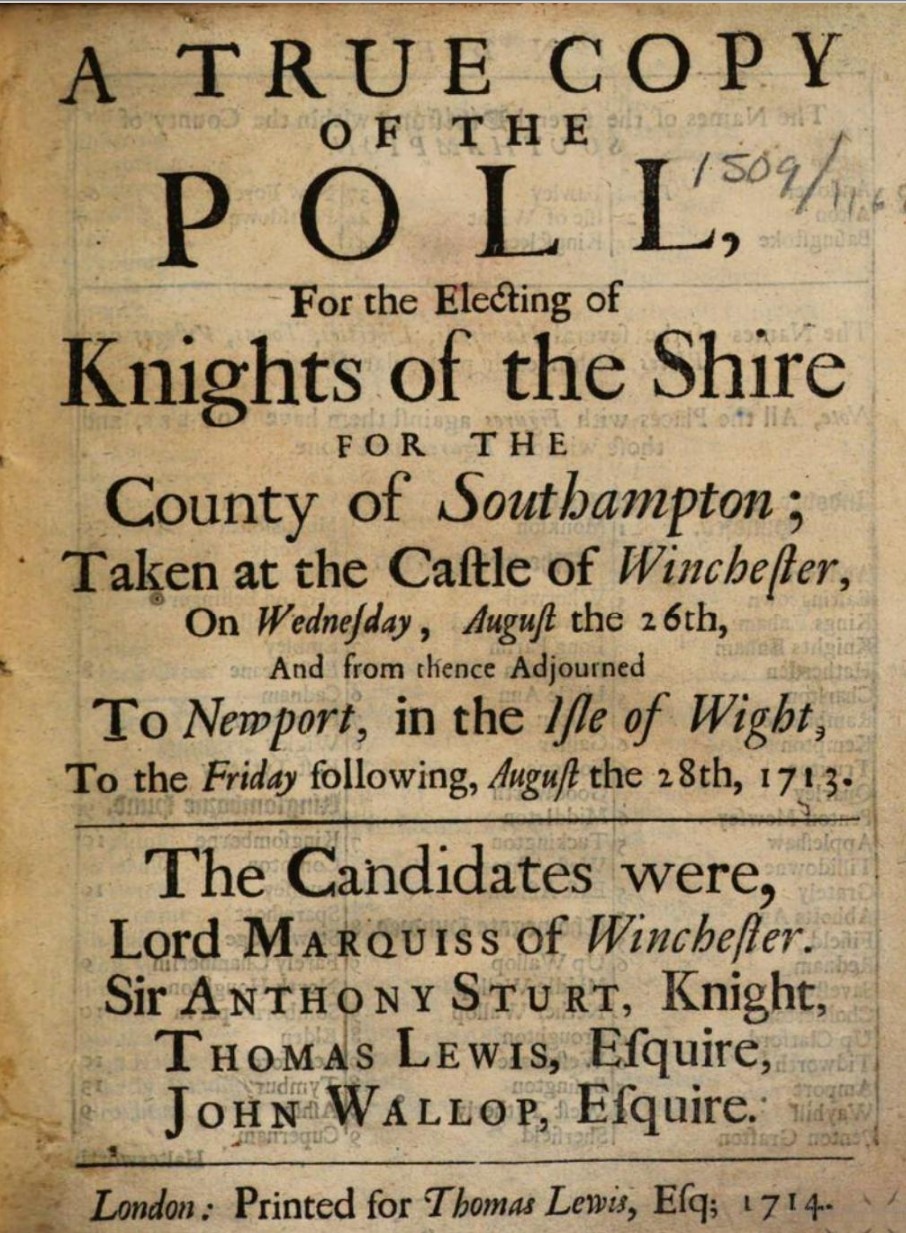
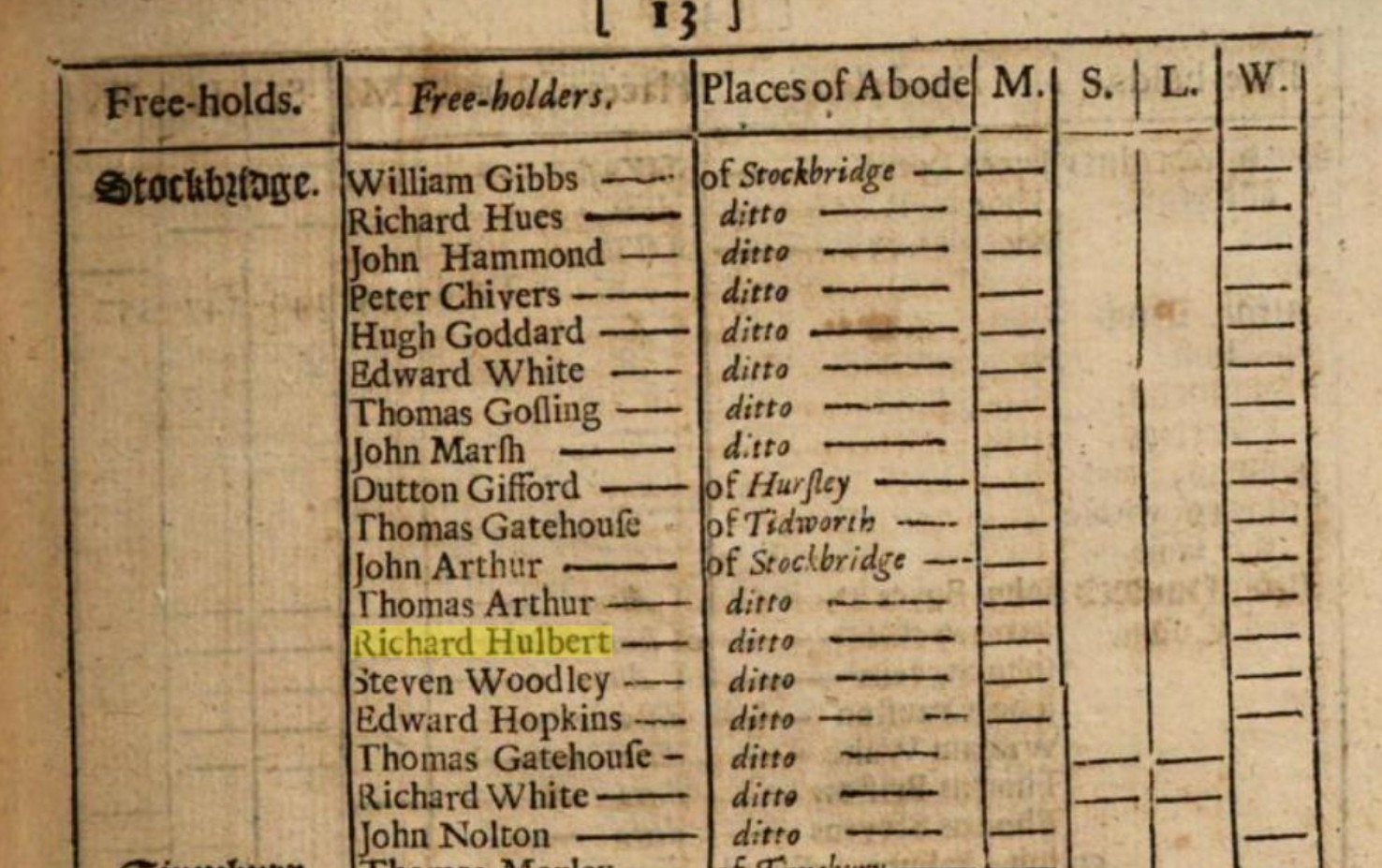
Here we see political influence playing a part in the day to day life of the Town, even down to who ran the Inns. If you look at the voting lists you will see a line in the first and last columns. Each column represented a candidate, the first was for the Lord Marquess of Winchester and the last for John Wallop (later the Earl of Portsmouth). Both were Whig politicians who favoured a limited Monarchy bound by Parliament, were very anti-Catholic influence in the Monarchy and strongly supported the crown passing to the Protestant Hanoverian’s after the death of Queen Anne in 1714. Their opposition were the Tories.
Sure enough the previous owners the Whitheds were also Whigs, so selling the Three Cups to Richard Hulbert the Blacksmith ensured a Whig vote in the Borough, and with only 28 voters that was a big deal. Stockbridge, quite rightly, having a strong reputation for political corruption in the voting stakes, Richard Hulbert would have no doubt benefitted greatly from his position. Richard Hulbert bought the Three Cups and the Whigs bought his vote.
The Hulberts were longtime residents of Stockbridge as property owners, owners of small holdings and Orchards, parchment makers, and notably Blacksmiths, with even a Mary Hulbert working as a female Blacksmith in her own right, which is fairly rare, virtually all Blacksmiths being men. There is a will for Richard Hulbert the Stockbridge Blacksmith in 1743 however The Three Cups Inn wasn’t mentioned in it, although a property, land, and an orchard are mentioned, so it is hard to tell if it stayed in the Hulbert family.
But the Inn trade was highly lucrative at this time and the Hulbert family certainly grew in wealth and were influential over the years in Stockbridge as tradesmen and property owners. The coach trade and associated Inn trade for rest stops, refreshment, bedding, and stabling, in the form of Inns was booming in the Georgian period. These profits are evident in the structure of the Three Cups and investment took place when it was refronted and extended C18 its timber-frame core, encased and extended in rendered brick, with a 1½ storey, 5 bay frontage with 2 right bays added.
The last Hulbert born in Stockbridge was in 1872, and the last registration of a Hulbert in Stockbridge was in the early 20th century, but connections to the Three Cups seem to peter out after Richard’s purchase. Although, amusingly, a Hulbert is mentioned in a court case involving an attempted bribe being paid to gain his vote in Stockbridge in 1830. It was perhaps a family trade passed through the generations?
What happened next? Scandal and Highwaymen? Prison Hulks? Find out in part 4.


2 Replies to “Drinking with the Ancestors: The Three Cups Stockbridge Part 3 Early 18th Century”